

More news on this day
Severe storms sweeping across the United Arab Emirates have plunged Dubai, Abu Dhabi and Sharjah airports into fresh travel chaos, with widespread delays, diversions and cancellations unsettling one of the world’s busiest aviation corridors.
Get the latest news straight to your inbox!
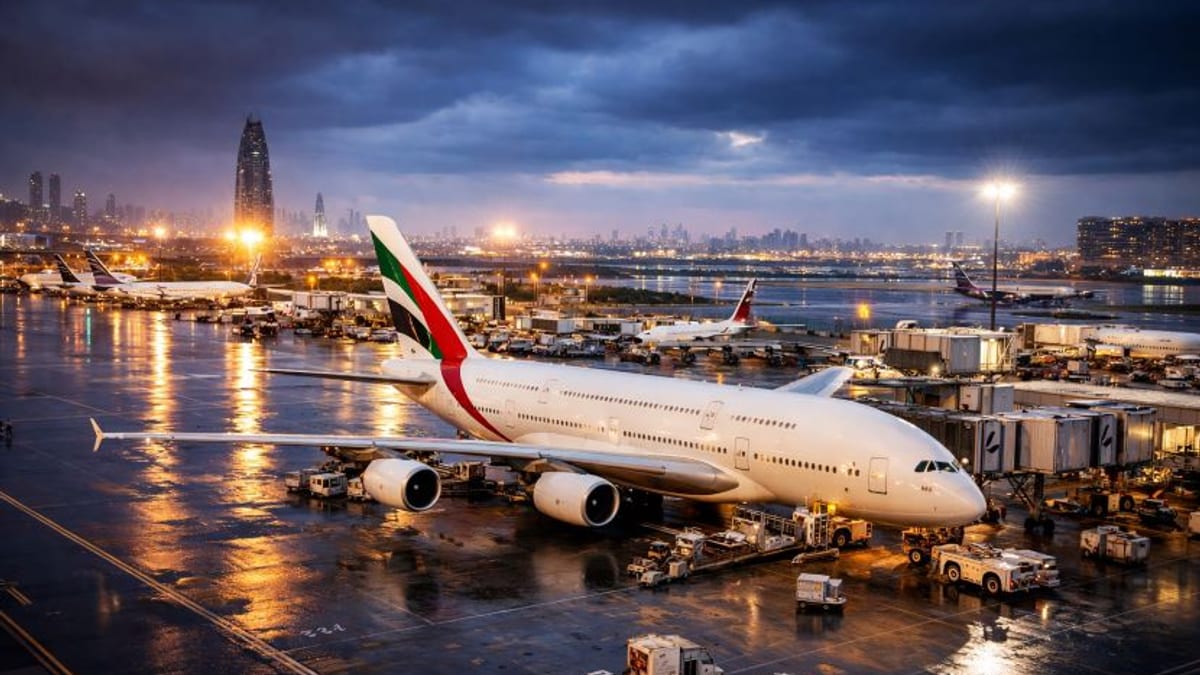
Image by Global Travel Alerts, Advisories, International Travel Alerts
Storms, Flooding and a Region Already on Edge
The latest bout of intense rain and thunderstorms has arrived at a moment when air travel to and through the Gulf is already strained by weeks of regional instability and airspace restrictions. Publicly available meteorological updates and local media coverage describe heavy downpours, overflowing wadis and flash flooding on key highways, particularly around Dubai and Sharjah, creating a knock-on effect for ground access to airports as well as for flight operations.
Weather-related disruption is not new to the UAE, but the current storms follow a pattern of increasingly volatile conditions highlighted during the April 2024 floods, when historic rainfall partially shut Dubai International and forced large numbers of diversions and cancellations. Aviation analysts now note that a combination of saturated infrastructure, ongoing airspace constraints and complex hub operations has made the major UAE airports especially vulnerable to cascading delays when severe weather hits.
Across the country, images and reports point to waterlogged roads, stranded vehicles and extended journey times between city centers and airport terminals. For many travelers, the immediate challenge is no longer just whether a flight is operating, but whether it is physically possible to reach the terminal in time, given widespread traffic disruption and intermittent public transport issues.
While the storms themselves are temporary, the scale of the disruption is amplified by the role of Dubai, Abu Dhabi and Sharjah as transfer hubs linking Europe, Africa and the Americas to South and East Asia. Even short periods of reduced capacity can ripple outward across multiple continents, affecting passengers who never planned to set foot in the UAE.
Dubai: Hub Under Strain as Delays and Diversions Mount
Dubai International remains the focal point of the turmoil, as the primary global hub for Emirates and one of the world’s busiest airports for international traffic. Travel and aviation tracking sites show waves of delays and diversions as thunderstorms move through the area, with some inbound flights holding for extended periods before being rerouted to alternate airports when weather conditions or congestion make landing unsafe or impractical.
Recent disruptions have come on the heels of earlier suspensions and capacity cuts linked to regional security concerns, meaning the system was already operating on a reduced and highly choreographed schedule. The latest storms have upset that fragile balance, creating clusters of delayed departures and arrivals that are difficult to unwind while convective weather continues to flare across approach paths.
Passengers connecting through Dubai are experiencing particularly acute impacts. When an incoming long-haul flight arrives late or is diverted, onward connections often cannot be held because of crew duty limits, slot restrictions and airspace caps. This leads to missed connections, unplanned overnight stays and long queues at transfer desks as travelers seek rerouting options on already constrained services.
In addition, ground congestion around the airport has intensified as flooding and traffic incidents restrict access from several districts of Dubai and neighboring Sharjah. Reports from travelers indicate journey times that are multiple hours longer than usual, forcing some to abandon original travel plans and rebook for later dates when roads are expected to clear.
Abu Dhabi and Sharjah: Secondary Hubs, Primary Headaches
Abu Dhabi International, a key base for Etihad Airways, has also been hit by the unsettled weather pattern, though often with slightly fewer movements than Dubai. Publicly available data on arrivals and departures suggests rolling delays and periodic ground stops during intense storm cells, particularly when visibility drops or lightning activity increases around the runways.
For passengers, the impact is similar: late departures, shifting departure gates and uncertainty over whether connecting flights will operate as scheduled. Airlines using Abu Dhabi as a transfer point for routes to South Asia and Europe have been forced to adjust timetables and, in some cases, consolidate services to maintain network integrity while storms pass and airspace restrictions elsewhere in the region continue.
Sharjah International, home to low cost and regional carriers, is experiencing its own set of challenges. The airport sits within the same congested airspace as Dubai, meaning that when air traffic control slows arrivals and departures for safety reasons, Sharjah’s capacity can be sharply curtailed even if local conditions appear marginally better. Passengers on budget carriers have reported short-notice schedule changes, with some flights pushed back repeatedly or shifted to different times of day as operators scramble for usable slots.
Ground reports also point to severe flooding on key routes linking residential areas in Sharjah to the airport and to Dubai, compounding travel times for both originating passengers and those trying to reposition after missed connections. The combination of restricted airspace, weather-related spacing between aircraft and flooded road networks has turned what is normally a tightly synchronized regional aviation system into a patchwork of ad hoc fixes.
How the Chaos Could Affect Your Flight Plans
For travelers with upcoming trips involving Dubai, Abu Dhabi or Sharjah, the storms raise both immediate and medium term planning questions. The immediate risk concerns flights scheduled over the next several days while unstable weather persists and airports work through existing backlogs. Even if a flight is still shown as operating, it may face significant departure or arrival delays as air traffic control meters aircraft into constrained airspace.
Connections are particularly vulnerable. Anyone booked on tight layovers through Dubai or Abu Dhabi may find that a minor delay on the first leg becomes a missed onward flight, especially where security checks and terminal transfers are required. Airlines are generally prioritizing safety and schedule stability over holding connections, which means travelers should assume that minimum connection times printed on itineraries may no longer be realistic during this disruption.
There is also a second layer of risk tied to ongoing reductions in overall capacity to the Gulf, as some carriers have already trimmed schedules or temporarily suspended certain routes in response to regional tensions and previous airspace closures. With fewer alternative flights available on many city pairs, rebooking options can be limited, resulting in longer waits for the next available seat and potential detours via secondary hubs outside the region.
Travel industry reports suggest that premium cabins and peak business routes are being restored first as capacity returns, leaving leisure travelers and those on lower cost tickets with fewer immediate alternatives. This dynamic means that travelers relying on last minute changes or standby arrangements may find the usual flexibility significantly reduced while airlines work through existing backlogs.
Practical Steps for Travelers Caught in the Disruption
In these conditions, the most important step for any traveler is to monitor flight status repeatedly in the 24 hours before departure and again on the way to the airport. Schedules are changing frequently as storm cells develop and dissipate, and flights that appear on time in the morning can move to delayed or canceled status later in the day.
Travelers are widely being advised in public updates not to go to the airport without a confirmed, operating booking, both to avoid unnecessary crowding in terminals and to reduce the risk of becoming stranded if check in is suspended. Those who do need to travel should allow additional time for flooded or congested roads, bearing in mind that ride hailing services and taxis can be in short supply during severe weather events.
Where airlines are offering free date changes or waivers, it can be prudent to proactively shift nonessential travel out of the current disruption window, particularly for itineraries involving tight connections or multiple segments across the Gulf. Rebooking for later dates, once weather patterns stabilize and airports have cleared accumulated backlogs, may reduce the risk of extended layovers or forced overnight stays.
Finally, travelers should keep boarding passes, receipts and documentation of delays, as these may be needed when seeking refunds, travel insurance claims or goodwill gestures. With storms compounding an already fragile regional aviation environment, flexibility and close attention to evolving conditions are becoming essential for anyone planning to pass through Dubai, Abu Dhabi or Sharjah in the coming days.