

More news on this day
UAE authorities have activated new emergency protocols for MSC Cruises operating out of Dubai, tightening coordination with the line’s security teams as regional tensions leave ships and passengers stuck in port.
Heightened Security as Gulf Cruise Season Grinds to a Halt
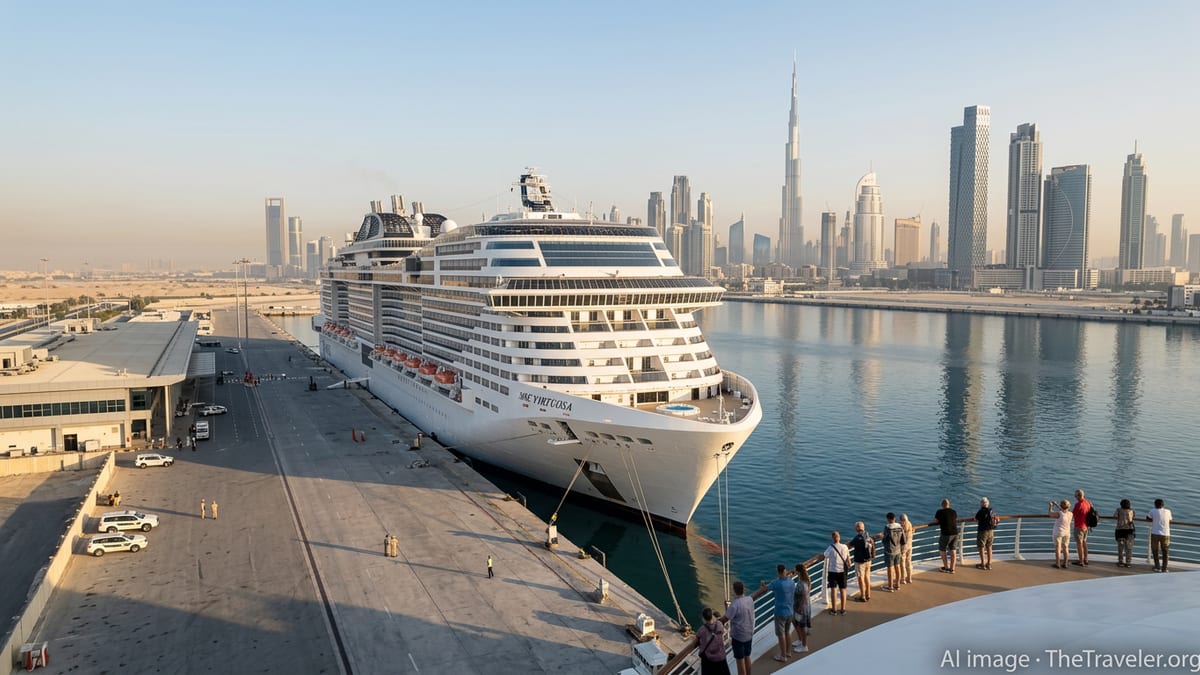
The new measures come as the Gulf’s once-buoyant winter cruise season has effectively shut down, with multiple ships, including MSC Euribia, remaining in Dubai instead of sailing scheduled itineraries. The ship has been held in port since late February, when the latest flare-up in the wider Iran–US–Israel confrontation triggered airspace closures and a sharp rise in perceived maritime risk across the Strait of Hormuz and the Arabian Gulf.
While commercial shipping has rerouted or paused transits, cruise vessels have faced a different dilemma: thousands of holidaymakers suddenly unable to continue their voyages or fly home as planned. UAE officials, working with cruise lines and local port operators, have moved to formalise emergency procedures for any MSC vessel in Dubai, focusing on passenger safety, controlled shore movements and rapid information sharing.
The protocols sit alongside MSC’s own global security standards, but industry observers say the level of direct state coordination now in place in Dubai is among the most intensive the Gulf cruise sector has seen outside the pandemic era.
Inside the New ‘Delta Tango’ Emergency Framework
Central to the latest changes is an updated set of emergency communication codes for MSC ships berthed in Dubai, including a new code phrase, widely reported by cruise specialist outlets as “Delta Tango,” to be used in connection with heightened external security incidents. The code is designed to alert crew and key shore-side partners without alarming guests or revealing sensitive details over open channels.
According to security briefings shared with passengers on affected sailings, drills now emphasise how guests should respond if the code is announced, including returning calmly to cabins or muster zones, avoiding unsecured deck areas and monitoring instructions via in-cabin television and public address systems. Staff have been instructed to minimise speculation and keep announcements short, factual and multilingual.
On the ground, Dubai authorities have created a dedicated liaison cell to sit between port security, federal emergency agencies and MSC’s crisis management team. This unit is tasked with validating threat assessments, clearing controlled shore excursions when safe, and coordinating any rapid embarkation or disembarkation if the situation deteriorates or safe departure corridors reopen.
Passenger Experience: Stranded, Safe and Waiting
For guests on board MSC Euribia and other ships in the region, the most visible impact so far has been the prolonged stay in Dubai and a steady stream of operational updates. Passengers describe a juxtaposition between the normality of life inside the ship and the seriousness of the notifications about the situation beyond the port gates.
MSC has expanded on-board programming, added extra entertainment and adjusted dining and housekeeping schedules to account for the unplanned extension. At the same time, guests are being reminded of curfews for independent movement beyond the terminal, with the new UAE-backed protocols requiring closer tracking of who is on or off the vessel at any given time.
Travel advisors say most clients have been reassured by the visible presence of security personnel at Port Rashid and by the calm tone of captain’s briefings. However, frustration has grown around the uncertainty of onward travel, as disrupted airline schedules, high demand for seats and shifting security assessments have delayed repatriation plans for some passengers.
Repatriation, Refunds and Itinerary Overhauls
The UAE’s emergency playbook for MSC in Dubai goes beyond on-board safety. It also lays out channels for fast-tracked immigration processing and airport transport when charter or commercial flights become available, allowing large groups of cruise guests to be moved quickly once departure windows open. MSC, for its part, has confirmed that it is chartering aircraft and working with multiple carriers to get stranded travellers home in phases.
In tandem with these logistical efforts, the line has cancelled remaining Gulf sailings for MSC Euribia and shifted focus back to European deployments. Affected customers are being offered refunds, future cruise credits or rebooking options on alternative itineraries, though the fine print varies by departure date and booking channel, prompting calls for clearer, standardised policies in crisis scenarios.
Travel agents in key source markets such as Europe and North America report a spike in inquiries from clients booked on upcoming Middle East cruises, many of whom are weighing whether to switch to Mediterranean, Canary Islands or Caribbean sailings instead. The expectation within the sector is that Gulf cruise offerings will remain sharply reduced at least through the current winter season.
What the Dubai Protocols Mean for Future Gulf Cruising
Industry analysts say the UAE’s swift move to codify emergency procedures for MSC and other international lines underscores both the importance of cruise tourism to Dubai and the vulnerability of Gulf itineraries to geopolitical shocks. The city has spent years positioning itself as a turnaround hub for winter sun voyages linking the UAE, Qatar, Bahrain and Oman.
The new protocols are widely viewed as a template that could be adapted for future seasons, even once the current tensions ease. Elements such as pre-agreed security thresholds for port closures, shared crisis communication frameworks and coordinated flight evacuation planning are likely to become standard expectations for cruise lines operating in the region.
For travellers, the episode serves as a stark reminder that even modern mega-ships and highly controlled itineraries remain exposed to broader regional dynamics. Yet tourism officials in Dubai are keen to stress that day-to-day life in the city continues largely as normal and that, within port limits, security remains tight and well organised.
Ultimately, the effectiveness of the UAE’s new emergency protocols for MSC Cruises will be judged on how safely and smoothly current passengers are brought home, and how confidently future guests are willing to return to Gulf sailings once the security picture stabilises.