

More news on this day
The United Arab Emirates has rolled out a reinforced package of travel rules, advisories and digital services designed to keep Emirati citizens safer abroad, as authorities respond to rising regional tensions, shifting aviation risks and a surge in outbound holiday bookings ahead of Ramadan.
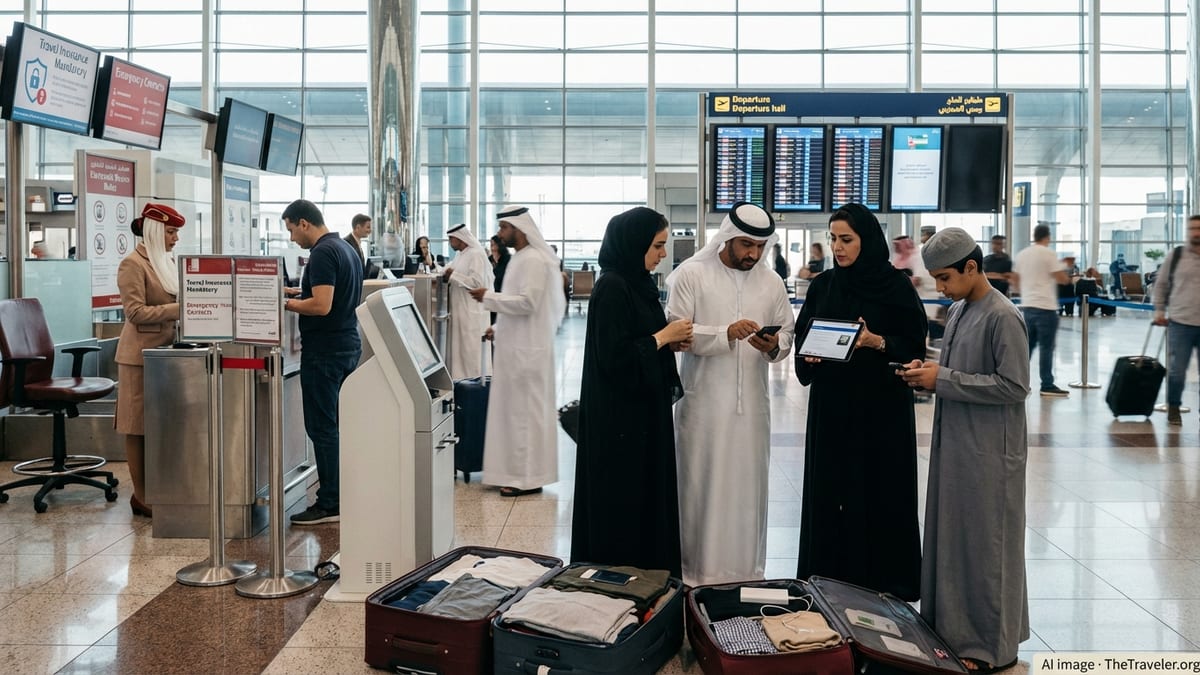
New Foreign Ministry Guidance Puts Safety First
The UAE Ministry of Foreign Affairs has issued updated travel guidance urging Emiratis to treat pre-departure checks as an essential safety step rather than a formality. Officials are asking citizens to verify that passports are valid for at least six months from the intended return date and to ensure that all visa and health requirements are fully met before they leave the country.
The ministry’s latest advisory, circulated this week through state media and social platforms, places particular emphasis on international health insurance. Emiratis are being told to secure policies that cover the entire duration of their trip and include emergency medical care and evacuation, a move aimed at reducing vulnerability if crises or accidents occur abroad.
With many destinations now requiring digital travel authorisations in addition to traditional visas, the guidance also urges travellers to apply well in advance. Authorities note that some countries will not allow boarding if electronic approvals are missing, turning small oversights into major disruptions at the airport.
Officials say the renewed focus on preparation reflects lessons learned from recent regional turmoil, when fast-moving developments forced sudden route changes, flight cancellations and emergency consular interventions for UAE nationals overseas.
Twajudi Registration Becomes a Core Travel Habit
At the heart of the new safety push is Twajudi, the UAE’s consular registration platform that allows the government to locate and assist Emirati citizens in an emergency. The Ministry of Foreign Affairs is strongly encouraging every traveller to register themselves and accompanying family members before departure, describing the service as a key line of protection rather than an optional extra.
Twajudi enables diplomats to quickly share alerts, verify who is in an affected area and coordinate evacuations or replacement travel documents when needed. Officials say the system proved its value during previous periods of regional instability, when registered citizens could be contacted rapidly with instructions and support.
To make the process more practical, the ministry is asking Emiratis to store digital copies of their passports, identification cards and key bookings in secure cloud storage or on encrypted devices. These backups can be shared with consular staff if original documents are lost, stolen or damaged, speeding up the issuance of emergency return papers.
Recent ministry statistics underline the scale of the challenge. In 2025, Emirati missions processed more than a thousand emergency return documents for citizens whose passports were lost, expired or damaged, as well as for newborns delivered while families were overseas. Officials say those figures justify the fresh insistence on registration and redundancy.
Emergency Contacts and Smarter On-the-Ground Decisions
Alongside digital registration, the UAE is highlighting a dedicated emergency hotline for nationals abroad, staffed around the clock to respond to crises from medical incidents to sudden unrest. Travellers are being advised to save the number in their phones and to share it with close relatives before departure, so that help can be requested quickly if something goes wrong.
The ministry is also urging Emiratis to follow safety advisories issued by both UAE authorities and destination governments. That includes monitoring alerts about security incidents, natural hazards, health outbreaks and traffic conditions that can change with little warning, affecting everything from airport access to road safety.
In its latest guidance, the government recommends booking only with reputable international travel agencies and car rental firms, and checking road and weather conditions before setting out by car. Officials suggest opting for air travel where possible, arguing that commercial aviation is generally safer and more controlled than long overland journeys across unfamiliar territory.
The message to citizens is that good decisions made on the ground are as important as the paperwork completed before departure. Authorities are linking everyday choices about transport, accommodation and local laws directly to personal safety and consular risk.
Regional Tensions Drive Precaution and Preparedness
The renewed focus on travel safety comes as airspace closures and missile threats across parts of the Middle East disrupt major flight corridors and force airlines to suspend or reroute services. Aviation regulators in the Gulf have imposed temporary restrictions described as precautionary safety measures, prompting carriers serving Dubai and Abu Dhabi to cancel or delay services while they monitor conditions.
In line with these developments, Emiratis, residents and visitors have been urged to stay in close contact with their airlines and to expect last-minute schedule changes. Travel alerts issued over the past year have repeatedly advised nationals transiting volatile areas to register with Twajudi and to be ready for itinerary adjustments, including extended stopovers or diversions.
Travel insurers have also warned that cover can be affected if passengers ignore official advisories. The UAE’s messaging to its citizens now explicitly links compliance with foreign and domestic guidance to the likelihood of receiving refunds, rebookings or emergency assistance when routes are suddenly altered or closed.
For many Emirati families planning holidays, study trips or medical visits abroad, this means building more flexibility into travel plans, setting aside additional time for connections and being prepared to adjust routes at short notice if security conditions deteriorate.
Airline Rules Tighten Around In-Flight Safety
UAE carriers are complementing the government’s policy shift with their own updated in-flight rules, particularly around the use of batteries and electronic devices. Emirates and other operators have tightened restrictions on power banks, limiting the number and capacity allowed on board and clarifying that such devices must be carried only in cabin baggage, where crew can respond quickly in the event of overheating.
Passengers are being told that failure to comply with these restrictions could result in devices being confiscated at the gate or passengers being denied boarding. Airlines say the measures are designed to reduce fire risk and to bring procedures into line with evolving international safety standards.
Carriers are also reminding travellers to complete any required digital arrival forms and to verify their contact details before they fly, so that operational updates can be delivered via email or mobile notifications. The intent, airline executives say, is to minimise confusion and speed communication when schedules are altered for safety reasons.
The combined effect of government advisories and carrier-level rules is a more structured, rules-based travel environment for Emiratis. Officials frame the shift as a way of protecting every journey, even as global travel demand rebounds and geopolitical risks remain fluid.