

More news on this day
Severe weather and ongoing regional turbulence are disrupting operations at Dubai International Airport, prompting the United Arab Emirates to issue a travel advisory warning passengers of delays, diversions and reduced services.
Get the latest news straight to your inbox!
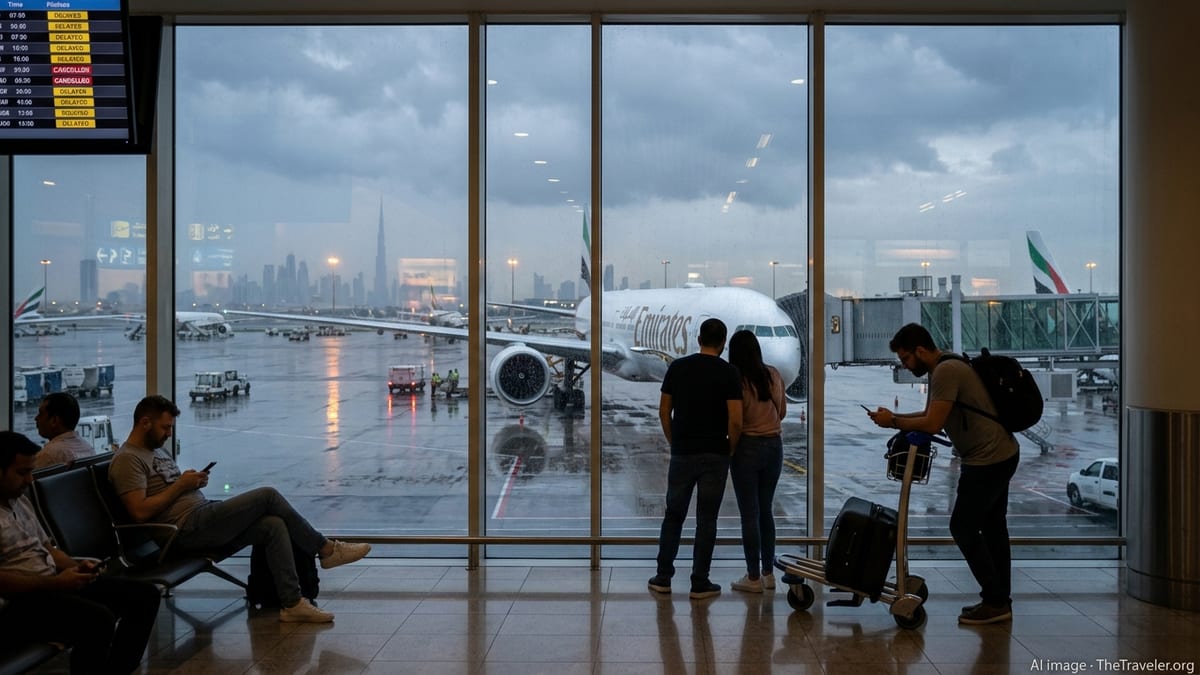
Advisory Urges Passengers to Expect Delays and Check Flights
According to publicly available information from regional aviation notices and government communications, the UAE advisory highlights that flight schedules at Dubai International Airport remain vulnerable to sudden change as severe weather interacts with an already fragile air traffic environment. Travelers are being urged to verify flight status directly with airlines before setting out for the airport and to prepare for longer processing times on arrival and departure.
Reports indicate that periods of heavy rain, thunderstorms and low visibility have compounded earlier disruptions linked to regional security concerns, leaving airlines with limited flexibility to recover normal timetables. Some carriers have introduced rolling adjustments to services, including same day cancellations and last minute retimings as weather cells move across the Dubai area.
Information from airline customer advisories shows that passengers with nonessential trips are being encouraged to consider postponing travel or making use of flexible rebooking policies now in place on many routes serving Dubai. Those who must travel are advised to arrive early, keep contact details updated with their airline and monitor airport and carrier announcements throughout their journey.
Travel industry analysts note that the decision to issue a formal advisory reflects the scale and persistence of the disruption, rather than a brief or isolated weather event. The message to passengers is that conditions affecting Dubai International Airport could fluctuate from hour to hour, and that even flights listed as operating remain at higher risk of delay, diversion or equipment changes.
Heavy Rain and Flooding Add New Pressure to Dubai Hub
Recent weather patterns across the UAE have delivered bouts of intense rainfall and localized flooding, with social media images and local coverage showing waterlogged roads and standing water in low lying neighborhoods. At Dubai International Airport, such conditions tend to trigger knock on effects, from reduced runway capacity to ground handling delays and pressure on aircraft parking stands.
Published coverage of past severe rain episodes in the emirate shows that Dubai International is particularly sensitive to heavy downpours due to the sheer volume of daily movements. When thunderstorms or cloudbursts coincide with peak arrival and departure banks, the result can quickly escalate into widespread delays, missed connections and aircraft being held on stand while lightning passes over the field.
Current advisories suggest that similar dynamics are now in play, with airlines spacing out movements during the worst of the weather and air traffic control implementing flow restrictions to maintain safety margins. These measures improve operational safety but inevitably slow the rate at which aircraft can land and depart, prolonging the disruption for passengers already at the airport.
Transportation observers add that the impact is not limited to the airfield itself. Surface access to the airport can also be affected when heavy rain leads to slow moving traffic, temporary road closures or congestion on main arteries serving the terminals. Travelers are being encouraged to allow extra time for the journey to and from the airport and to consider public transport options where they remain available.
Knock On Effects Across Airlines and Connecting Flights
Dubai International Airport is one of the world’s largest connecting hubs, and even modest disruptions can create ripple effects across multiple continents. Recent airline bulletins reviewed by travel media show that carriers based in the Gulf have been forced to reduce frequencies, consolidate services and prioritize passengers already affected by earlier cancellations.
According to these updates, some long haul flights connecting via Dubai have been rerouted through alternative regional airports or operated with different aircraft types to accommodate displaced travelers. In some cases, returning services have departed without all their intended passengers because inbound aircraft reached Dubai too late to complete the planned turnaround within crew duty limits.
Travel forums and passenger accounts describe crowded transfer desks, long customer service queues and difficulties securing near term alternative routings during peak disruption periods. Industry commentators point out that many carriers are managing constrained aircraft and crew availability at the same time as they work through a backlog of stranded travelers, making rapid recovery to full schedules challenging.
For passengers holding onward connections beyond Dubai, the advisory underscores the importance of checking the status of every leg in an itinerary, not just the first sector. Missed connections may result in involuntary overnight stays or rerouting through different hubs, particularly on routes with limited daily frequencies.
Regional Context Heightens Operational Uncertainty
The current weather related disruption comes against a backdrop of broader regional instability, with publicly available security and risk assessments noting intermittent airspace restrictions and route adjustments across parts of the Gulf. Travel advisories issued by international risk consultancies in recent weeks reference partial airport closures, altered flight corridors and the temporary suspension of some services as carriers navigate a complex operating environment.
Coverage from regional and international news outlets indicates that UAE airports, including Dubai International, have experienced several recent periods of limited operations due to security related airspace management decisions. While many of those restrictions have since been eased or refined, the system remains more sensitive than usual to further shocks, whether from weather, technical issues or renewed geopolitical tension.
Aviation analysts note that this combination of factors increases the likelihood that disruption at Dubai International may persist intermittently even as the most intense storms pass. Airlines are likely to maintain more conservative scheduling and higher levels of contingency planning, which could translate into thinner frequencies, reduced last minute availability and a slower return to familiar travel patterns for passengers.
Risk assessment specialists advise that travelers planning routes through Dubai in the coming days should pay close attention not only to airport specific updates, but also to any changes in regional airspace advisories that might alter routings, flying times or fuel stop requirements. While Dubai remains open and handling traffic, the operating environment is more constrained than usual, making flexibility and preparedness particularly important for those transiting the hub.
Guidance for Travelers Navigating the Disruption
In light of the UAE advisory, travel experts recommend that passengers adopt a more proactive approach to journeys involving Dubai. This includes confirming flight status repeatedly in the 24 hours before departure, ensuring that airline apps and notification settings are enabled, and keeping essential items such as medication, chargers and a change of clothes in carry on baggage in case of unexpected overnight stays.
Consumer guidance published by travel rights organizations notes that many airlines have introduced temporary waiver policies for flights to and from the UAE, allowing changes without standard penalties within specific date windows. Passengers are encouraged to review the conditions of these policies carefully, as they typically apply only to tickets issued before a certain date and for travel within an affected period.
Hotel and ground transport arrangements may also require more flexibility. Travel industry briefings suggest that travelers build in cancelable or refundable options when booking accommodation on either side of a Dubai flight, particularly if they are connecting onward the same day. This approach can reduce the financial impact if a transit stop unexpectedly turns into a longer stay.
For now, publicly available information indicates that Dubai International Airport remains operational but under strain, with the UAE advisory serving as a signal that conditions are subject to rapid change. Passengers are being encouraged to stay informed, remain flexible and plan for contingencies as severe weather and regional dynamics continue to influence one of the world’s busiest aviation hubs.