

More news on this day
Tourists and stranded travelers in Dubai and Abu Dhabi are being warned to put their cameras and phones away in many public spaces, as the United Arab Emirates tightens controls on photography and filming during the current regional security crisis.
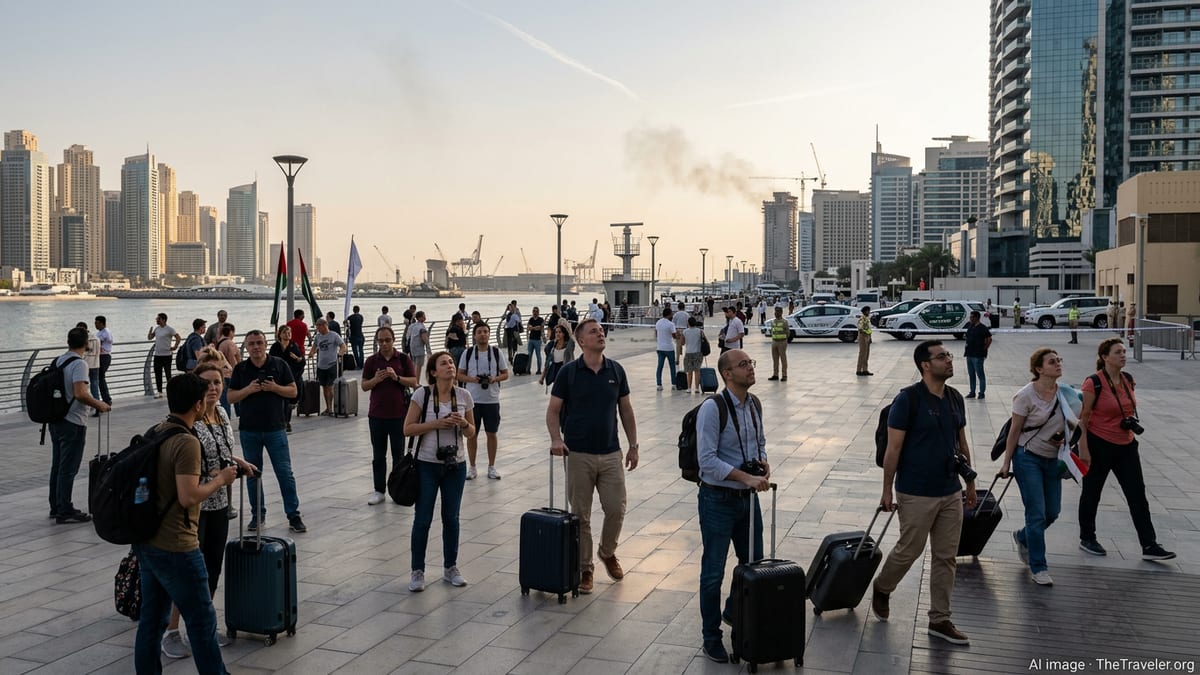
Security Crisis Puts Photographers Under New Scrutiny
The latest round of Iranian strikes across the Gulf and the resulting airspace shutdowns have pushed the UAE into one of its most sensitive security periods in years. While limited flights are now operating from Dubai and Abu Dhabi, authorities are focusing just as sharply on what people are capturing and sharing from the ground. Images of missile interceptions, damaged sites and emergency responses are proliferating online, and officials say some of that content risks revealing critical details to hostile actors.
Against that backdrop, photographers and casual visitors with smartphones are finding that long-standing UAE restrictions on shooting certain locations are being enforced more aggressively. What might once have drawn a warning or a request to delete images can now lead to detention, questioning and possible prosecution, particularly around airports, security installations and any area linked to recent attacks.
Travel advisories issued by several governments in recent days already urge visitors to reconsider non essential trips to the UAE due to the conflict. Consular officials are now adding a second layer of concern: even if travelers are not directly affected by missiles or flight cancellations, they could face legal trouble simply for taking or posting the wrong photograph at the wrong time.
Local residents, who are generally familiar with the country’s privacy and security norms, have taken to social media and community forums to tell newcomers to stop filming explosions, debris and emergency responses. Many stress that these are not just cultural sensitivities but legal red lines that can be enforced swiftly under national security legislation.
Firm Ban on Filming Sensitive and Incident Sites
This week, the UAE State Security Department and other authorities reiterated that photographing or sharing images of sensitive security sites is strictly prohibited. That phrase covers a broad spectrum of locations, including military facilities, air defense positions, certain government buildings, critical infrastructure and, during the present crisis, many incident sites where debris has fallen or interceptions have taken place.
Embassies in Abu Dhabi and consulates in Dubai are amplifying those warnings. At least one diplomatic mission has advised its nationals not to film restricted areas, airport interiors, security checkpoints or emergency operations without explicit permission. The guidance underscores that people can be held legally responsible not only for recording such scenes but also for posting or reposting them on social media.
Officials argue that seemingly harmless footage can disclose the position of defense systems, radar units or patrol routes, and that close up images of impact sites may help hostile forces refine future targeting. Under existing cybercrime and national security laws, distributing material that is considered to endanger public safety or aid an enemy can carry heavy penalties, including fines and jail terms.
Enforcement has already become visible on the ground. Travelers stuck in terminals report repeated loudspeaker announcements instructing passengers not to photograph security staff or control rooms, and airport authorities have tightened checks at access points. In city neighborhoods, residents say police patrols are intervening quickly when people attempt to film smoke plumes, sirens or alert messages on public screens.
What Counts as a Risky Shot in Dubai and Abu Dhabi
For visitors used to documenting every moment of a trip, the boundaries in Dubai and Abu Dhabi can feel suddenly opaque. Iconic skylines, waterfront promenades and malls may appear as innocuous backdrops, yet the same frame can inadvertently capture restricted subjects. A telephoto shot from a hotel balcony, for example, might include air defense batteries on a distant rooftop or cordoned off areas near a recent impact zone.
Aviation enthusiasts who habitually photograph aircraft movements at Dubai International or Abu Dhabi Airport are now being told to stop entirely. With military assets sharing already congested airspace and civilian operations running on limited schedules, authorities view any detailed recording of runways, radar arrays or aircraft parking stands as especially sensitive. Even inside terminals, images of security screening areas, passport control lines or operations rooms are currently considered off limits.
Street scenes can be just as problematic. The UAE maintains strict rules around photographing people without consent, particularly families and women, and those norms are being reinforced during the crisis. Filming crowds sheltering in safe areas, residents reacting to alerts or emergency services at work can be interpreted as an invasion of privacy and a breach of public order, on top of any national security concerns.
Social media adds another layer of risk. Authorities have warned that resharing existing videos of strikes, interceptions or damage inside the UAE can expose users to legal action, even if they were not the original source. Several Gulf states have already detained individuals for posting or amplifying such footage in recent days, reinforcing the message that the safest option is not to share at all.
Advice for Travelers: Photograph With Extreme Caution
Travel specialists and crisis response advisers say tourists should now treat Dubai and Abu Dhabi as highly controlled photography environments. Their core guidance is simple: if there is any doubt about whether a scene is sensitive, do not take the picture. That approach runs counter to the instinct of many visitors who view the cities as photogenic playgrounds of skyscrapers, beaches and luxury hotels, but it reflects the seriousness of the current security posture.
Experts recommend avoiding cameras entirely in and around airports, near ports and industrial zones, close to government districts, and anywhere visible emergency activity is underway. Inside the cities, travelers are urged to focus on clearly benign subjects such as restaurant interiors, hotel pools or generic street views where no infrastructure, police presence or crowds responding to alerts appear in the frame.
Some airlines and tour operators have begun incorporating photography warnings into their pre arrival briefings, alongside information on curfews, air raid alerts and shelter procedures. Hospitality companies are also reminding guests that their balconies, rooftop terraces and club lounges are not vantage points for recording the conflict. In several cases, properties have closed outdoor viewing areas entirely during heightened alert periods.
Legal specialists point out that arguing ignorance of local law rarely helps once an investigation has begun. They advise travelers still in the UAE to think of cameras and phones not as tools of documentation but as potential liabilities until regional tensions ease. Respecting the current red lines, they say, is as critical to personal safety as following air raid instructions or staying informed about flight disruptions.
Longer Term Impact on the UAE’s Photo Friendly Image
Dubai and Abu Dhabi have spent years cultivating a reputation as visually spectacular destinations, eagerly shared on social media by influencers and everyday tourists alike. The latest restrictions do not change that long term strategy, but they highlight how quickly the balance can shift when national security is at stake. For now, image control has moved decisively from marketing teams to security services.
Tourism analysts expect that, once the regional situation stabilizes and full commercial flight schedules resume, the UAE will again welcome cameras on its beaches and observation decks. However, they also predict that enforcement around government, military and critical infrastructure sites will remain tighter than before, with clearer signage, expanded no photo zones and more visible patrols.
In the short term, the crisis is forcing both authorities and the travel industry to recalibrate expectations. Content creators who previously built careers on glamorous Dubai backdrops are pausing projects or shifting to indoor shoots, while destination marketers are leaning on archival imagery rather than fresh on location campaigns. Travelers, meanwhile, are discovering that in this moment the safest souvenir from the Emirates may be a story told, not a picture posted.
As the strikes, airspace closures and emergency alerts continue to ripple through the Gulf, photographers of all kinds are being asked to play a new role in the UAE’s security posture. For anyone still journeying through Dubai and Abu Dhabi, the message is clear: enjoy the cities, but keep your lens pointed away from the crisis.