

More news on this day
Travel across the United Arab Emirates has been thrown into fresh turmoil as 187 flights were delayed and 81 cancelled across airports in Dubai, Abu Dhabi, Sharjah, Al Ain and Ras Al Khaimah, leaving thousands of passengers facing long queues, missed connections and rapidly changing schedules.
Get the latest news straight to your inbox!
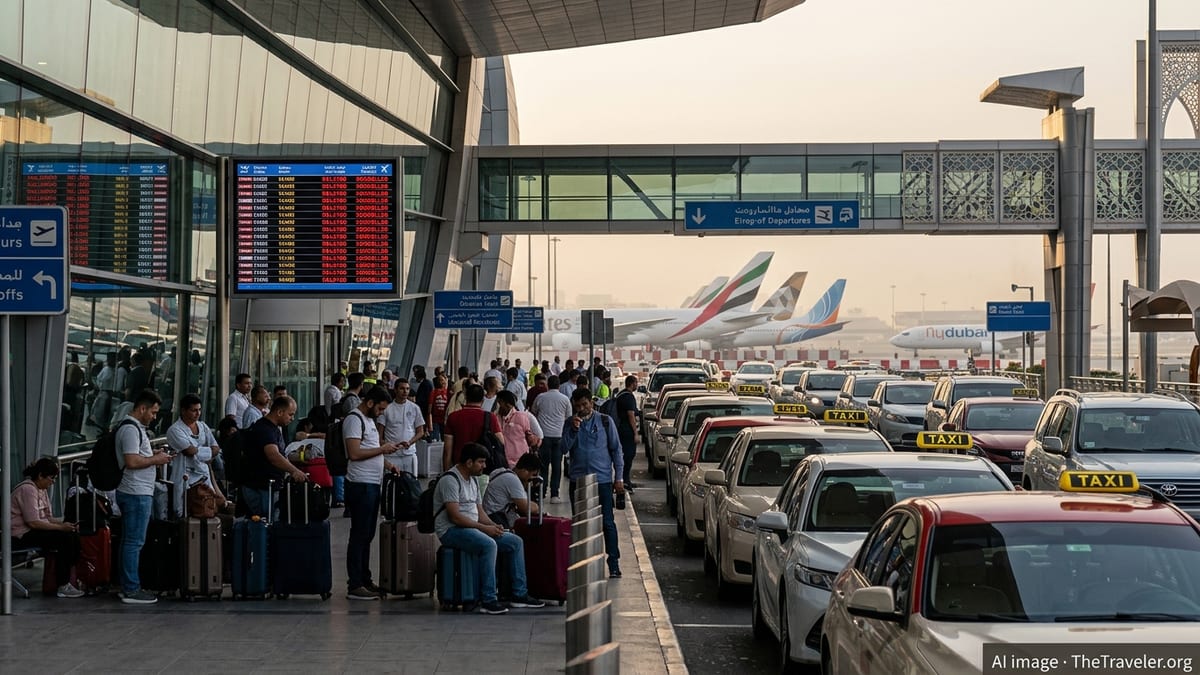
Widespread Disruptions Across Key UAE Hubs
The latest figures reflect a sharp escalation in operational disruption at the UAE’s main aviation gateways, with delays and cancellations affecting services on Emirates, Etihad Airways, flydubai and other regional and international carriers. Publicly available flight-tracking data and regional media coverage indicate that Dubai International, Zayed International in Abu Dhabi, Sharjah International, Al Ain International and Ras Al Khaimah International all experienced significant schedule disruption over the past 24 to 48 hours.
Dubai International, the region’s largest hub, has borne the brunt of the impact, with a sizeable share of the 187 recorded delays and a substantial portion of the 81 cancellations linked to services routed through its terminals. Delays have ranged from minor hold-ups of under an hour to prolonged disruptions stretching into multiple hours, complicating onward connections to Europe, Asia and Africa.
In Abu Dhabi, reports indicate that operations at Zayed International have been constrained, with a reduced schedule and a rolling pattern of delays as airlines adjust to changing airspace availability and congestion. Sharjah, Al Ain and Ras Al Khaimah, while smaller in scale, have not been spared, with limited flights and knock-on delays as carriers re-time or re-route aircraft and crews.
Analysts note that the combined total of 187 delays and 81 cancellations represents a notable strain on a network that ordinarily prides itself on high on-time performance, particularly during peak travel periods. The disruptions are also compounding earlier turbulence that has affected UAE air travel in recent weeks.
Airlines Struggle to Rebuild Schedules
Flag carriers Emirates and Etihad, along with low-cost operator flydubai, have been working with reduced and constantly shifting schedules as they attempt to keep essential routes open while complying with operational and safety constraints. According to published airline updates and travel advisories, services are being prioritised on key trunk routes and repatriation-style flights, with other frequencies scaled back or temporarily suspended.
Emirates has progressively reintroduced flights on selected corridors after earlier blanket suspensions from Dubai, but the latest tally of delays and cancellations shows that operations remain far from normal. Many services are operating with extended block times, holding patterns or diversions as aircraft navigate constrained airspace and congested regional hubs.
Etihad Airways has adopted a similar approach in Abu Dhabi, with publicly available information showing a mix of operating, delayed and cancelled flights as the airline attempts to reposition aircraft and crew. Flydubai, which relies heavily on regional routes, has been particularly exposed to airspace restrictions and shifting demand, resulting in a patchwork of last-minute schedule changes.
Industry observers indicate that airlines are frequently adjusting departure times on the same day of travel, sometimes only confirming whether a service will operate a few hours before scheduled departure. This dynamic environment has made it difficult for passengers to plan, and has increased the load on customer service channels and airport help desks.
Passenger Experience: Long Queues and Uncertain Plans
For travellers transiting through or departing from the UAE, the immediate effect of 187 delays and 81 cancellations has been seen in crowded terminals, extended waiting times and rapidly shifting itineraries. Social media posts, traveller forums and local reporting describe scenes of passengers queuing to rebook at airline counters, waiting for SMS or app notifications, and monitoring departure boards that change by the minute.
Many travellers with connecting flights have faced missed onward journeys and forced overnight stays, particularly in Dubai and Abu Dhabi, where hotels near the airports have reported elevated occupancy. Some passengers have described receiving multiple schedule changes for the same booking, with flights moving from “on time” to “delayed,” then “cancelled,” and occasionally back to “operating” as airlines revise their plans.
Travel advisories from corporate risk consultancies and travel-management firms are urging passengers to verify flight status repeatedly on the day of departure and to build in substantial extra time at the airport. Publicly available guidance also recommends carrying essential items in hand baggage in case checked luggage is delayed or separated due to last-minute aircraft swaps and re-routing.
Travel insurance has emerged as another point of concern, as some policies contain exclusions related to conflict, security incidents or extraordinary operational disruptions. Advisory notes circulating in the corporate travel sector highlight the importance of checking policy wording and, where possible, using airline-provided options for rebooking or credit vouchers.
Knock-on Effects Across the Wider Region
The disruption in the UAE is feeding into broader instability across Middle East air travel. With Dubai and Abu Dhabi acting as major connecting hubs for traffic between Europe, Asia, Africa and Australasia, the combination of 187 delays and 81 cancellations is generating ripple effects for passengers and airlines well beyond the Gulf.
Regional travel advisories describe unprecedented congestion at alternative hubs, as carriers divert flights or route them through corridors that remain open. Airports in neighbouring states have reported busier-than-normal transfer traffic, along with their own sets of delays as they absorb displaced passengers and aircraft from UAE hubs.
Operationally, airlines are facing challenges around aircraft rotations, crew duty limits and maintenance windows. When flights arrive hours behind schedule, crews may exceed maximum duty times, forcing further cancellations or extended delays. Maintenance checks may also need to be rescheduled, compressing already tight turnaround times and reducing overall resilience in the system.
Logistics chains that depend on reliable belly-hold cargo capacity are feeling the strain as well. Freight forwarders and exporters using Emirates SkyCargo, Etihad Cargo and other operators from UAE airports are contending with reduced capacity and irregular departure times, which affects delivery commitments and inventory planning for businesses around the world.
What Travellers Should Expect in the Coming Days
Publicly available forecasts from travel risk analysts and aviation data providers suggest that disruption across UAE airports is likely to remain elevated in the short term, even if conditions gradually improve. Airlines appear to be pursuing a phased restoration of services rather than an immediate return to full schedules, which means further adjustments, rolling delays and occasional cancellations can be expected.
Passengers planning to travel through Dubai, Abu Dhabi, Sharjah, Al Ain or Ras Al Khaimah in the coming days are being advised, in widely circulated guidance, to treat all itineraries as provisional until very close to departure. Experts recommend regularly checking both airline apps and airport departure boards, signing up for notifications, and considering alternative routings where feasible.
For those already in the UAE and attempting to leave, travel-management firms suggest being prepared for last-minute changes and remaining flexible on dates, routings and even destinations. With airlines prioritising certain routes and repatriation-style flights, some travellers may find that they can depart sooner by accepting an indirect routing or a different arrival airport and then making separate onward arrangements.
While the precise pace of recovery remains uncertain, the latest count of 187 delays and 81 cancellations across five key airports underscores the scale of the challenge facing the UAE’s aviation sector. The situation continues to evolve, and travellers are likely to face a fluid and unpredictable operating environment for at least the near term.