

More news on this day
Air travel across the United Arab Emirates remains severely disrupted as Qatar Airways, Gulf Air and Malaysia Airlines continue to cancel or curtail services, grounding more than 40 flights on key routes linking the Gulf with Kuwait, Kuala Lumpur, Amsterdam, Paris, Chennai, Bengaluru and other major hubs.
Get the latest news straight to your inbox!
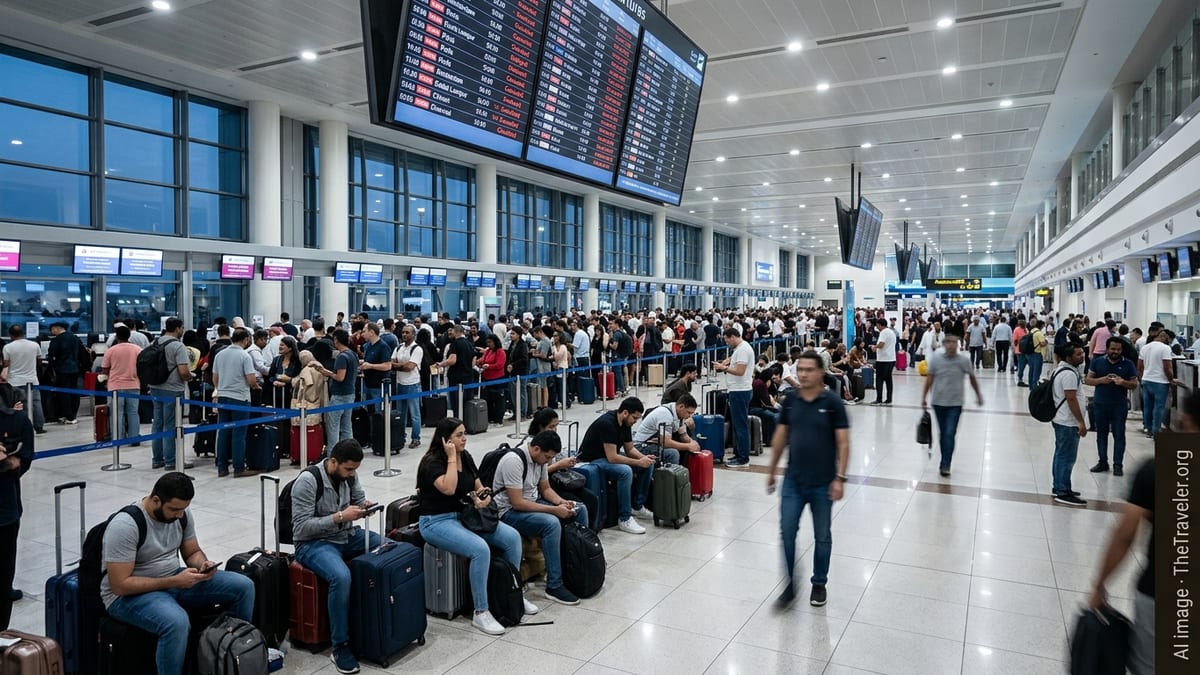
Regional Airspace Closures Keep Pressure on UAE Hubs
Travel through the UAE’s major airports in Dubai and Abu Dhabi has been volatile since late February, when a sharp escalation in regional tensions triggered missile and drone attacks and prompted widespread airspace restrictions across parts of the Middle East. Publicly available information shows that airspace over the United Arab Emirates, Bahrain, Qatar, Israel, Iran and Iraq has remained subject to tight controls through March, with commercial traffic limited and schedules frequently revised at short notice.
Advisories circulated to corporate travel clients in early March indicated that many carriers were forced into rapid operational suspensions or sharply reduced services as they navigated evolving safety assessments and regulatory clearances. These restrictions initially led to a near standstill in regular passenger operations at some Gulf hubs, followed by a gradual, highly managed reintroduction of selected flights as authorities allowed limited corridors to reopen.
While UAE-based airlines such as Emirates and Etihad have begun operating partial schedules, ongoing security concerns and constrained routings continue to affect foreign carriers using UAE and nearby hubs as key transit points between Europe, the Indian subcontinent and Southeast Asia. The result has been a patchwork of cancellations, reduced frequencies and last-minute aircraft changes that continue to ripple through airline networks.
Qatar Airways Trims Network Despite Limited Restart
Qatar Airways, one of the Gulf’s largest long-haul operators, has been running a significantly reduced network following the closure and subsequent limited reopening of Qatari airspace. After days of blanket cancellations in early March, publicly shared timetable updates and passenger reports indicate the airline has introduced an interim schedule that restores only a fraction of its usual operations.
According to these updates, services on core trunk routes such as Doha to Amsterdam, Paris, Kuala Lumpur and key Indian cities including Chennai have resumed on a limited basis, often at sharply lower weekly frequencies than before the crisis. Some schedules show, for example, reduced operations between Doha and Amsterdam and once-daily services on high-demand Asian and Indian routes, highlighting the airline’s cautious approach to rebuilding connectivity.
Despite the partial restart, many itineraries involving transit through Doha remain disrupted. Travellers report repeated cancellations, rolling rebookings and complex rerouting via alternative hubs in Europe and the Gulf as the airline works within constrained airspace corridors and shifting demand. Qatar Airways has published flexible commercial policies allowing date changes, refunds or rerouting on other airlines, but availability is uneven, especially for departures in late March and early April.
Gulf Air and Malaysia Airlines Extend Cancellations
Gulf Air, the Bahrain-based carrier, has also implemented sweeping schedule reductions affecting passengers traveling to, from or via the broader Gulf region. Information shared with customers and travel agents shows that the airline has offered extended free cancellation and change options through at least late March, reflecting an expectation of continued operational instability on routes that depend on overflying restricted airspace.
These measures have impacted itineraries that connect the UAE with onward destinations via Bahrain, including flights to South Asia and Europe. Travellers attempting to depart Dubai or Abu Dhabi on Gulf Air have reported multiple last-minute cancellations and the need to shift onto other regional carriers where capacity allows, further intensifying pressure on the reduced schedules of airlines still operating.
Malaysia Airlines, which relies heavily on Middle East connections to feed its Kuala Lumpur long-haul network, has likewise scaled back or suspended selected services that would normally transit affected corridors. A travel advisory from Malaysian aviation regulators highlights “operational disruptions due to Middle East airspace closures,” urging passengers to seek rebooking or refunds directly from airlines and to avoid traveling to the airport without firm confirmation of their flight status.
Key Routes to Europe and India See Ongoing Disruption
The cumulative effect of these changes is particularly visible on corridors linking the Gulf to Europe and the Indian subcontinent, traditionally among the busiest and most competitive long-haul markets. Routes between Doha and European hubs such as Amsterdam and Paris, as well as services into major South and Southeast Asian cities including Chennai, Bengaluru and Kuala Lumpur, are running well below normal capacity.
Published schedule snapshots point to reduced weekly frequencies, downgauged aircraft and, in some cases, temporary suspension of specific flight numbers. Even where flights are operating, seats can be heavily constrained due to consolidation of passengers from multiple cancelled services, leaving limited room for new bookings or same-day changes.
For travellers beginning or ending their journeys in the UAE, this has translated into longer journey times, more connections and an increased risk of missed onward flights. Some itineraries that once involved a single connection at Doha, Bahrain or another Gulf hub are now being rebuilt with two or three stops, occasionally routing passengers through less common gateways as airlines work to avoid sensitive airspace.
What Travellers Through the UAE Need to Know Now
With conditions changing rapidly, publicly available travel advisories emphasize the importance of monitoring bookings closely and maintaining flexible plans. Many carriers serving the UAE, including Qatar Airways, Gulf Air and Malaysia Airlines, have temporarily relaxed fare rules, allowing free date changes, rerouting or refunds when flights are cancelled or significantly rescheduled.
Passengers holding tickets over the next several weeks are being urged by airlines and aviation authorities to verify their flight status repeatedly in the days and even hours before departure. Reports from affected travellers underscore that schedules visible several days in advance can still be altered at short notice, particularly on routes crossing or skirting restricted zones.
Travel management firms advise building additional connection time into multi-leg itineraries, considering alternative routings that avoid the most heavily constrained areas, and keeping accommodation plans flexible in case of unplanned overnight stops. For those yet to book, some experts suggest prioritizing nonstop options or routes via hubs with fewer current restrictions, even if that means higher fares or longer detours.
While limited operations are gradually returning to key Gulf airports, the grounding of more than 40 flights across Qatar Airways, Gulf Air and Malaysia Airlines in recent days illustrates how fragile the regional aviation environment remains. For now, journeys that once relied on seamless Gulf connections continue to demand patience, contingency planning and close attention to the latest airline updates.