

More news on this day
Passengers flying to and from the United Arab Emirates are facing mounting disruption as Sharjah-based low-cost carrier Air Arabia resumes only a limited number of services, with many regional and international routes still suspended amid ongoing airspace restrictions linked to the widening conflict involving Iran, the United States and Israel.
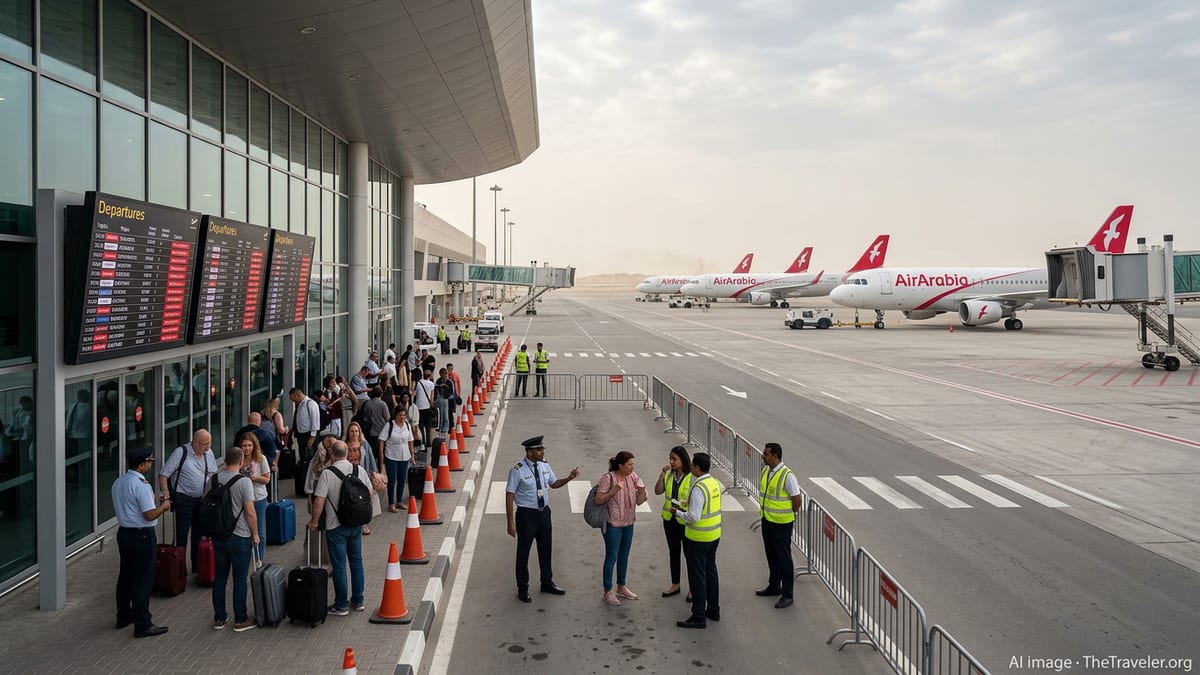
Air Arabia Operates Skeleton Schedule From UAE Hubs
Air Arabia, the UAE’s largest low-cost carrier, has shifted to a skeleton flight schedule from its bases in Sharjah, Abu Dhabi and Ras Al Khaimah, after days of near-total suspension. The airline began operating a limited number of flights in coordination with UAE aviation authorities, while maintaining a broad suspension of regular services as of Sunday, March 8.
Earlier this week, the carrier extended a blanket suspension of flights to and from the UAE several times, most recently until the afternoon of Monday, March 9, allowing only select services to operate subject to safety and operational approvals. Routes to high-risk destinations including Lebanon, Jordan, Syria and Iraq remain suspended, with the airline citing regional security concerns and airspace controls.
Air Arabia has urged passengers not to travel to the airport unless they have received confirmation that their flight is operating. Those booked on flights that do go ahead are being contacted directly, while customers on cancelled services are being offered rebooking and refund options through the airline’s channels.
The reduced schedule comes as UAE airports, including Sharjah International, report only a partial resumption of operations following widespread closures triggered by Iranian missile and drone attacks across the Gulf that began on February 28.
Regional Airspace Controls Reshape Short-Haul Networks
The sharp cut in Air Arabia’s operations is particularly affecting short-haul regional traffic, where the airline normally provides dense connectivity between the UAE and neighbouring states. With flights to destinations such as Amman, Beirut, Damascus, Baghdad and Erbil suspended or heavily curtailed, travellers across the Levant and Iraq have lost a key low-cost link to Gulf hubs.
Authorities across the Middle East have imposed full or partial airspace closures in response to the conflict, forcing airlines either to cancel services outright or fly lengthier diversionary routes around restricted zones. Analysts say this has eroded the economic viability of many short regional segments that low-cost carriers depend on, especially where flight times have effectively doubled due to detours.
UAE regulators are also limiting the number of departures and arrivals that can operate each hour, in order to manage risk and ease pressure on air traffic control. For Air Arabia, whose model is built on rapid aircraft turnaround and high utilisation across short hops, these constraints sharply reduce the number of daily rotations it can achieve and make it difficult to restore its usual point-to-point network.
Passengers who once relied on multiple daily options between secondary cities and Sharjah are now confronted with sporadic departures or no service at all, with many forced to consider overland alternatives or more expensive itineraries via other Gulf hubs where capacity is also constrained.
Knock-on Effects for Long-Haul and Connecting Journeys
While Air Arabia’s own long-haul footprint is limited compared with full-service Gulf carriers, the disruption to its schedule is rippling out across international journeys that depend on UAE connections. Many travellers from South Asia, North Africa and Eastern Europe use Sharjah and Abu Dhabi as low-cost transit points to reach destinations further afield.
Under current restrictions, a significant number of these connecting itineraries are no longer viable. Some passengers report being stranded after one leg of a journey operated while the onward Air Arabia connection was cancelled, leaving them to negotiate alternative arrangements or refunds at short notice amid overwhelmed customer service channels.
The strain is compounded by the fact that other UAE carriers, including Emirates, Etihad and flydubai, are themselves running reduced schedules. Although they have begun adding back limited commercial services in recent days, priority is being given to previously disrupted bookings and essential repatriation flights, leaving fewer seats for passengers displaced from Air Arabia’s network.
Travel agents say that even when alternatives exist, re-routed journeys often involve longer flying times, overnight layovers and substantially higher fares. Some international airlines have also suspended or cut back their own UAE services, further narrowing options for long-haul travellers attempting to bypass the low-cost carrier’s disruptions.
Passengers Face Uncertainty as Schedules Remain Fluid
On the ground, travellers describe a climate of uncertainty, with flight status updates changing rapidly and little guarantee that services scheduled in the coming days will actually operate. UAE officials and airlines have emphasised that all departures remain subject to last-minute operational and security assessments as regional tensions persist.
Air Arabia is advising passengers to monitor its digital channels closely and to rely on direct notifications from the airline before heading to the airport. However, sustained high call volumes and intermittent website congestion have left some customers struggling to secure timely information or process changes, according to social media posts and travel forums.
At UAE airports, authorities have urged only ticketed passengers with confirmed operating flights to enter terminals, in an effort to prevent overcrowding and reduce pressure on security screening and customer service desks. Even with those measures, scenes of long lines and anxious travellers have been reported in Sharjah and other hubs during brief windows when multiple flights were cleared to depart.
Industry observers caution that the fluid nature of the conflict and associated airspace controls means that Air Arabia’s schedule is likely to remain volatile for days, and potentially weeks. They recommend that travellers build in additional time, avoid tight connections through UAE airports where possible, and consider flexible tickets that allow for no-fee changes as the situation evolves.
Wider Impact on UAE’s Position as a Regional Transit Hub
The prolonged disruption to Air Arabia’s network also raises broader questions about the resilience of the UAE’s role as a key transit hub for budget-conscious travellers. Sharjah International Airport, in particular, has grown into a busy gateway for low-cost traffic linking Asia, Africa and Europe, with Air Arabia at its core.
With partial operations and limited slots, that role has been temporarily diminished. Aviation analysts note that while full-service carriers may be better equipped to absorb the financial and operational shocks of protracted airspace restrictions, low-cost operators like Air Arabia have less room to maneuver when their high-frequency, tight-turnaround model is disrupted.
Nevertheless, UAE aviation authorities and airlines are projecting confidence that they can gradually rebuild schedules once security conditions stabilise. Early signs of limited flight resumptions across the country indicate a cautious attempt to restore connectivity while maintaining a conservative safety posture.
For now, however, travellers using Air Arabia face a more fragmented and unpredictable network, with regional and international journeys alike subject to sudden change. As the conflict continues to reshape air traffic patterns across the Middle East, the experience of passengers at UAE airports offers an immediate glimpse of how geopolitical tensions can upend even the most established travel corridors.