

More news on this day
Air travel across the United Arab Emirates has been plunged into unprecedented turmoil as an explosive escalation in the US, Israel and Iran conflict triggers sweeping airspace closures, mass flight cancellations and rolling shutdowns at Dubai and Abu Dhabi’s crucial global hubs.
Airspace Closures Turn Global Transit Hubs Into Holding Zones
The UAE’s partial airspace shutdown, announced after waves of Iranian missile and drone attacks beginning on February 28, has knocked out two of the world’s busiest transfer points just as global demand for travel is peaking. Dubai International Airport and Abu Dhabi’s Zayed International Airport, normally handling hundreds of thousands of passengers a day, have seen large portions of their operations frozen as aviation authorities prioritize air defense and risk assessments over commercial schedules.
Emirates, Etihad, flydubai and Air Arabia have each confirmed sweeping suspensions of flights to and from the UAE, many now extended until at least the afternoon of Monday, March 2. The move follows coordinated airspace closures across parts of the Gulf, Iraq and Iran, transforming the region’s dense web of transit corridors into no-go zones or highly restricted airspace that airlines are reluctant to enter.
Analysts say the sudden loss of UAE capacity is reverberating far beyond the Middle East. Carriers that rely on Dubai and Abu Dhabi as key east west connectors are being forced into abrupt rerouting or outright cancellations, triggering a domino effect that is now disrupting itineraries across Europe, Asia, Africa and Australasia.
While authorities stress that closures are temporary and driven by safety concerns, industry observers warn that aircraft and crew displaced across multiple continents will take days to reposition, even if airspace is reopened quickly, prolonging the shock to global travel flows.
Thousands Stranded in Dubai and Abu Dhabi Terminals
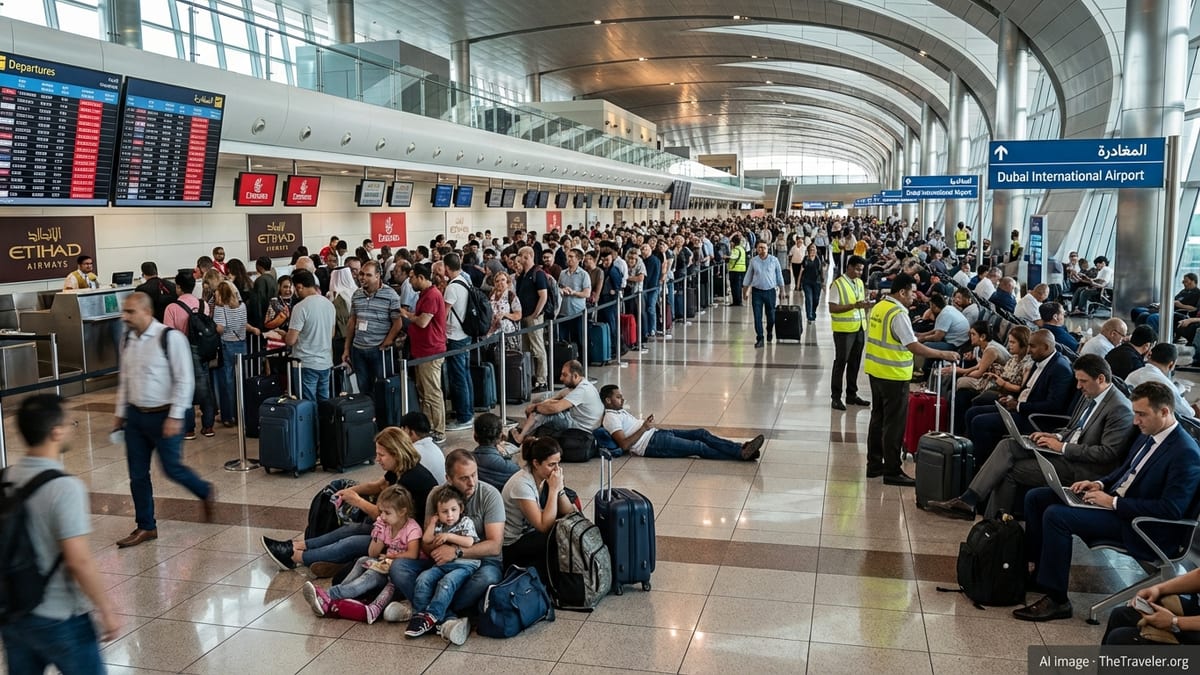
Inside UAE terminals, the disruption has rapidly turned into a humanitarian and logistical challenge. Dubai Airports and Abu Dhabi Airports report thousands of passengers in limbo, many sleeping in departure halls or stretched along concourses as rolling cancellations overwrite departure boards. Families bound for holidays in Asia, business travelers en route to Europe and migrant workers connecting home through Gulf hubs are now competing for limited rebooking options.
Officials say around 20,000 passengers have already been directly affected by schedule changes across the main Emirati carriers, with the figure likely higher once foreign airlines are included. The UAE government has stepped in to underwrite meals, hotel stays and ground transport for stranded travelers in the country, a measure aimed at easing immediate hardship and diffusing frustration in crowded terminals.
Even with that support, scenes of long queues at airline desks and impromptu camps around charging stations highlight the strain. Many passengers report limited information beyond broad assurances that safety comes first, as airline staff attempt to juggle rebookings, refunds and crew duty-hour limits against a fast-moving security backdrop.
For some visitors, the shutdown has left them in a holding pattern inside the UAE itself. Tourists facing extended delays are attempting to salvage their time with short hotel stays or excursions in Dubai and Abu Dhabi, only to find that new security advisories, temporary closures and nervous local transport operators are constraining even those plans.
Global Flight Networks Unravel as Airlines Reroute or Retreat
The crisis in UAE airspace is only one part of a broader aviation shock radiating from the confrontation between the United States, Israel and Iran. Regional hubs from Doha to Kuwait City and Manama have also seen waves of cancellations and restrictions, creating one of the most extensive coordinated pauses in Middle East aviation since the pandemic years.
Data from international flight trackers show that over the weekend close to 6,000 flights were cancelled across the wider region, with more than 1,200 additional cancellations recorded on Monday alone as carriers scrapped services or avoided closed corridors. Gulf giants such as Emirates, Etihad and Qatar Airways have cancelled a significant share of their networks, while European, Asian and Indian airlines have extended suspensions to the UAE, Israel, Qatar and other destinations amid heightened security concerns.
With air corridors over parts of Iran, Iraq and the Gulf restricted or shut, long haul operators are facing stark choices. Some are sending aircraft on lengthy detours that add hours to flight times and substantially increase fuel burn, while others have opted to pull flights entirely until they can be confident that missile and drone threats have subsided. Industry experts warn that even where flights continue, higher operating costs and compressed schedules could translate into last minute timetable changes and higher fares in the weeks ahead.
Air cargo flows are also being hit. The UAE’s airports are pivotal for high value freight moving between Asia, Europe and Africa, and logistics firms are scrambling to rebook shipments or divert via secondary hubs. Any prolonged interruption risks rippling into supply chains for time sensitive goods, from pharmaceuticals to electronics.
Safety Measures, Damage Assessments and Official Reassurances
Behind the travel disruption lies a rapidly evolving security picture. The UAE’s Ministry of Defence reports that since the onset of the Iranian attacks it has intercepted hundreds of ballistic missiles and drones, while acknowledging that a small number have struck civilian areas, including near airport facilities. Limited damage and casualties have been confirmed in Abu Dhabi and Dubai, where debris from interceptions has also caused minor fires and structural impacts.
Aviation and security authorities emphasize that flight suspensions are being driven by caution rather than uncontrolled chaos. Air defense batteries, civil aviation regulators and airport operators are coordinating on an almost hourly basis to balance the need to shield skies from potential further strikes with the imperative to restart commercial links. Recreational flying, including drones and light sports aircraft, has been halted nationwide for at least a week to reduce radar clutter and operational risk.
Local governments have also moved to calm nerves on the ground. Schools and universities in parts of the country have shifted temporarily to remote learning, and public guidance urges residents and visitors to avoid approaching debris, follow official information channels and refrain from spreading unverified footage or rumors on social media. Economic officials insist that food and fuel supplies are stable, pointing to strategic reserves intended to weather short term shocks.
For foreign ministries and consulates, the travel mayhem has triggered a wave of advisories. Several Western governments are now warning against non essential travel across parts of the Gulf, while urging their nationals already in the UAE to register contact details, monitor local news and be prepared for short notice changes to both outbound and inbound flights.
Uncertain Timeline Leaves Tourists and Businesses Recalculating
The most pressing question for travelers and the tourism industry is how long the disruption will last. While Emirates, Etihad, flydubai and Air Arabia have publicly targeted Monday afternoon, March 2, as a provisional point to resume some operations, all four carriers stress that their timetables remain subject to change depending on the military situation and regulatory decisions.
Hotels across Dubai and Abu Dhabi are bracing for a complex mix of last minute cancellations and emergency extensions. Beach resorts that expected guests to depart over the weekend are now hosting unplanned additional nights, while city properties near airports and transit hubs are filling up with diverted business travelers and airline crew needing rest between uncertain onward connections.
Corporate travel planners are also quickly recalibrating. Multinational companies with regional headquarters or major offices in the UAE have begun delaying non essential trips, switching urgent meetings to video calls and reviewing evacuation and continuity plans. Conferences, trade shows and leisure events scheduled for the coming days face potential postponement as organizers assess whether delegates will be able to reach the country at all.
For now, the message from UAE authorities and airlines is consistent: safety and airspace integrity will dictate the pace of reopening. Until the skies over the Gulf are deemed secure enough for sustained commercial traffic, thousands of passengers eyeing departures from Dubai, Abu Dhabi and beyond will remain stuck in a tense limbo, watching departure boards and hoping for the first signs of normality returning to one of the world’s pivotal crossroads of travel.