

More news on this day
Travelers flying to and from the United Arab Emirates face continuing disruption as Etihad Airways operates a reduced flight schedule from Abu Dhabi, updating waivers and guidance for passengers affected by ongoing airspace restrictions across parts of the Middle East.
Get the latest news straight to your inbox!
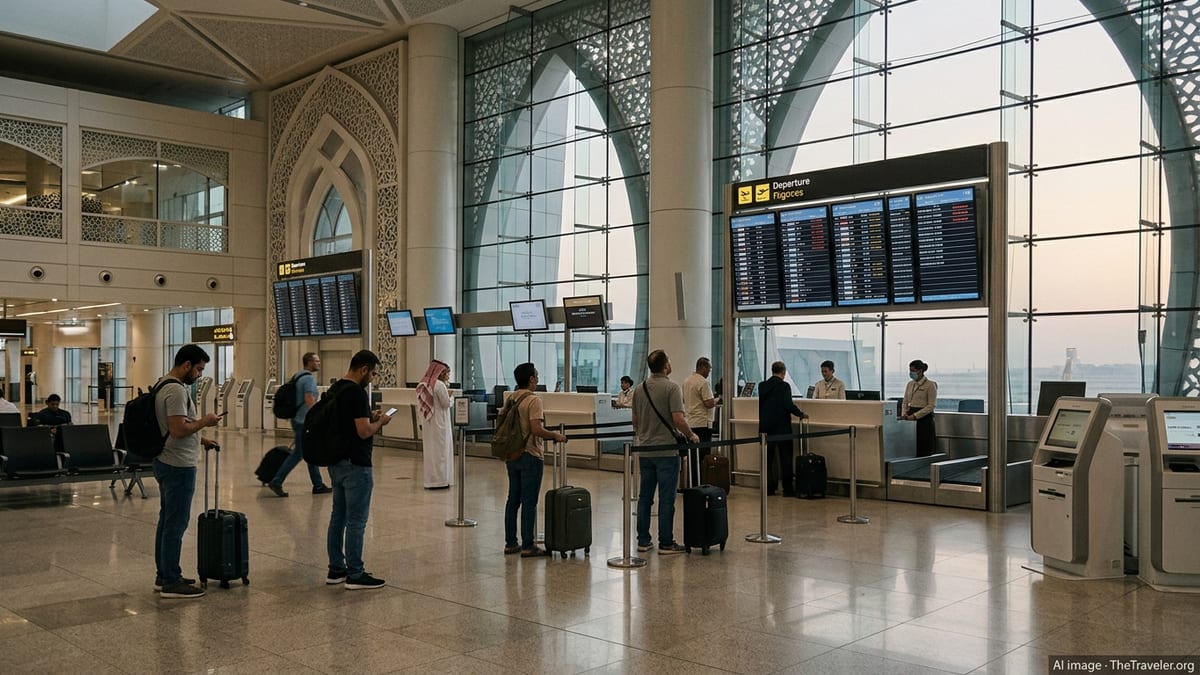
Reduced Schedule From Abu Dhabi Amid Regional Disruption
Publicly available travel advisories issued in recent days describe a significantly reduced Etihad Airways operation from Abu Dhabi, following airspace closures and restrictions that have affected multiple countries in the Middle East. Client updates circulated to corporate travel customers on 2 March 2026 reported that many departures from the UAE capital were temporarily suspended, with only limited services operating on select routes.
Subsequent updates shared by travel management companies and passenger reports indicate that Etihad has been gradually restoring a portion of its network from around 6 March, but the schedule remains far from normal. A smaller number of daily departures and arrivals is being maintained, with priority reportedly given to key long haul routes and cities with high volumes of stranded travelers.
The evolving situation has led to frequent timetable changes, making the official flight-status tools and airline communications essential for the latest information. Travelers planning to transit through Abu Dhabi in March 2026 are being advised in multiple advisories to consider their itineraries as subject to change at short notice.
Updated Waivers, Refunds and Rebooking Options
In response to the disruption, Etihad has issued commercial waivers that expand the options available to affected passengers. Information shared on travel-industry channels and summarized by corporate travel agencies shows that Etihad has extended its waiver coverage through the end of March 2026 for tickets issued on Etihad documents with travel dates overlapping the disruption period.
Under these waivers, many passengers whose flights have been cancelled or significantly rescheduled are being offered the choice of rebooking onto alternative Etihad services or requesting a refund. Guidance circulated to trade partners describes rebooking within a defined travel window, often allowing new travel dates later in March without additional change fees, subject to seat availability and cabin conditions.
Standard schedule-change policies published on Etihad’s trade portals already allow rebooking or refunds in cases of flight cancellation or substantial time changes. For the current disruption, the airline has layered additional flexibility on top of these rules, giving agencies and passengers clearer options when entire segments are removed from the schedule or when long connections become impractical.
How Affected Passengers Are Being Contacted
Reports posted by travelers and summarized across public forums suggest that Etihad is contacting many affected passengers directly with revised itineraries. In numerous cases, customers describe receiving a cancellation notice followed shortly afterward by an automatic rebooking onto a new date or time on the same route, sometimes several days later than originally planned.
Other passengers report that they first became aware of cancellations when checking their booking online, after which updated options appeared in the manage-booking tools. Some travelers with complex or multi-city itineraries describe partial rebookings, where one leg is automatically reassigned while others remain pending, requiring follow-up through customer-service channels or travel agents.
Several corporate advisories emphasize that passengers should not proceed to Abu Dhabi’s Zayed International Airport unless they have a confirmed new itinerary and have been informed that their specific flight is operating. This reflects a broader effort to reduce congestion at the terminal while the number of active flights remains limited.
Key Advice for Travelers Heading to or Through the UAE
Travel guidance issued by international travel-management firms and regional media encourages Etihad customers to take a proactive approach to monitoring their journeys. Travelers are being advised to check their flight status frequently in the days leading up to departure, as schedules may be adjusted repeatedly as airspace permissions and operational constraints evolve.
Those with flexible plans are being encouraged in several advisories to consider moving their trips to later in March or to alternative dates once normal operations are closer to being restored. Passengers who no longer wish to travel during the disruption window are turning to the expanded waiver and refund policies, which allow many to recover the value of unused tickets or to rebook once conditions stabilize.
Travelers connecting between non-UAE points via Abu Dhabi are also being urged to pay particular attention to minimum connection times. With reduced frequencies, missed connections can lead to multi-day delays rather than simple same-day reaccommodations, making it important to understand the rebooking rules attached to each ticket.
What This Means for UAE-Bound Tourism and Transit
The reduced Etihad schedule is having a ripple effect across inbound tourism and transit traffic through the UAE. Abu Dhabi and Dubai normally function as major connecting hubs between Europe, Asia, Africa and the Americas, and the current limitations have temporarily narrowed options for travelers planning complex multi-leg itineraries.
Industry commentary suggests that leisure travelers with non-essential trips are more likely to postpone travel, while those with urgent family, educational or business reasons are making use of the limited flights that are operating. Hotel and tour operators in the UAE are closely watching Etihad’s schedule updates, as the pace of flight restoration has a direct impact on visitor arrivals and last-minute bookings.
For now, publicly available information points to a cautious, step-by-step rebuilding of Etihad’s network as regional conditions allow. Passengers planning to travel to, from or through the UAE in March 2026 are being advised to remain flexible, keep documentation and contact details up to date within their bookings, and make full use of the waivers, refunds and rebooking options that have been put in place to manage the disruption.