

More news on this day
As Iranian missiles and swarms of drones continue to target the United Arab Emirates’ major cities and strategic infrastructure, the Gulf state has shifted into a full defensive posture, relying on layered air defences, disciplined crisis management and a message of national resilience aimed at citizens and millions of stranded visitors.
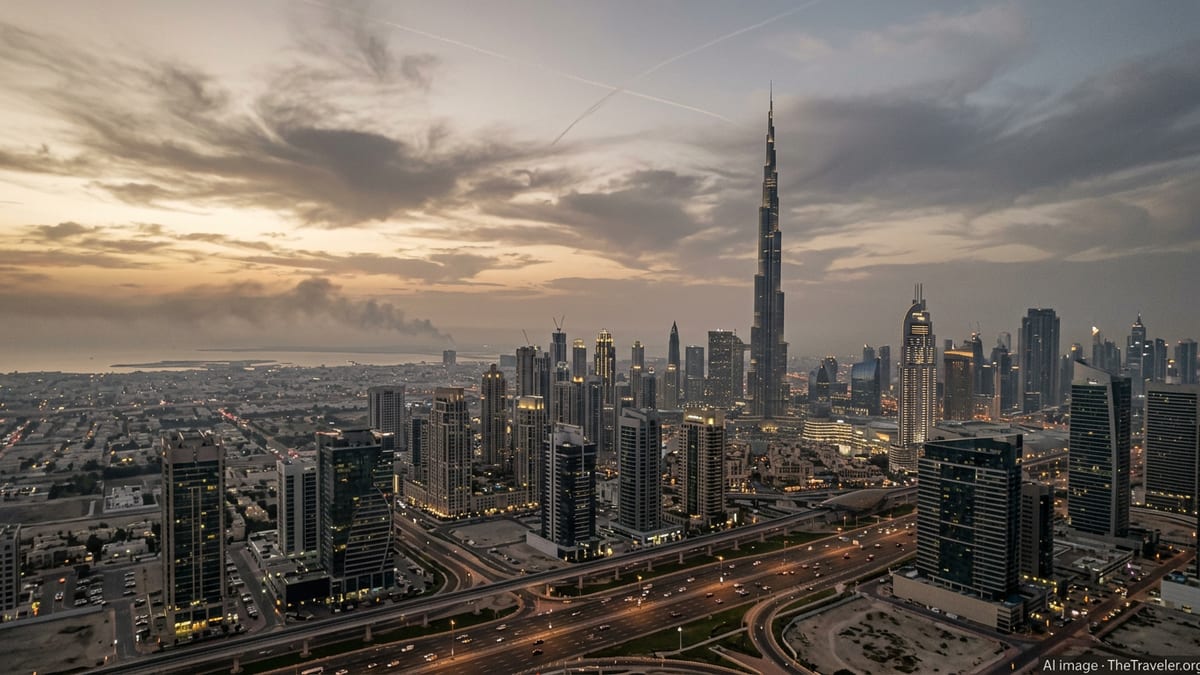
A Relentless Aerial Barrage Puts the UAE on a War Footing
Since February 28, Emirati authorities say Iran has launched well over a thousand ballistic missiles and unmanned aerial vehicles toward the UAE, in what officials describe as the most sustained assault the federation has ever faced. Most of the projectiles have been intercepted before reaching their targets, but debris and a small number of direct impacts have caused fires, damage to fuel facilities and at least a handful of civilian deaths.
Abu Dhabi and Dubai, the country’s political and commercial hubs, have borne the brunt of the attacks, with air raid sirens, loud interception booms and streaks of interceptor missiles now a regular feature of the skyline after dark. Defence officials say the country remains under what they call a state of defence, a posture that keeps air and missile defence crews on continuous high alert while civil authorities work to maintain essential services.
Despite the scale of the bombardment, the government continues to stress that the situation is contained rather than chaotic. Schools in several emirates have shifted to remote learning, some flights have been rerouted or suspended during peak alert windows, and fuel storage and data infrastructure have been hardened or temporarily taken offline. Yet power, water and core transport links remain largely operational, signaling a determination to project control even under sustained pressure.
Air Defences Tested but Largely Holding the Line
The backbone of the UAE’s response has been its multi layer air and missile defence network, an architecture the country has invested in for more than a decade. Combining long range systems, medium range interceptors and point defence assets around airports, desalination plants and refineries, the network is designed to counter exactly the kind of mixed missile and drone salvos Iran is now employing.
Officials report interception rates that would have seemed improbable only a few years ago, with the vast majority of incoming ballistic missiles destroyed outside populated areas and most drones either jammed, shot down or diverted. Military analysts note that such performance requires not only advanced hardware but also fast, well coordinated command and control linking Emirati forces with US and other allied assets in the region.
Nevertheless, the sheer volume of attacks is stretching even this robust system. Defence planners are rotating batteries, conserving interceptor stocks where possible and prioritising coverage over critical assets such as airports, energy terminals and major urban centres. The message from the defence ministry has been consistent: the country’s defences remain effective, but this is a real war environment and no system can guarantee a perfect shield.
Cities Under Strain as Residents and Tourists Adapt
On the streets of Dubai, Abu Dhabi and Sharjah, daily life has taken on a surreal duality. In some neighbourhoods, cafes still serve breakfast and malls remain open, while in others, residents keep emergency bags by the door and track air raid alerts on their phones. Tourist hotspots from Downtown Dubai to Yas Island have seen a sharp drop in visitor numbers, but thousands of foreign travellers remain in the country after flight cancellations and diversions cut off easy exit routes.
Authorities have opened additional consular coordination centres and are working with foreign embassies to organise evacuation flights when airspace permits. Hotels have been asked to be flexible with stranded guests, and transport operators are adjusting schedules around anticipated attack windows. For many visitors, the experience is a jarring contrast to the UAE’s usual image as a haven of stability and seamless connectivity.
For residents, the psychological strain is becoming more evident as air raid alerts disrupt sleep and debris incidents make clear that interceptions are happening close to home. Mental health hotlines have been publicised more aggressively, and community groups are using social media to share verified guidance rather than rumours. Still, in interviews carried by regional broadcasters, many Emiratis have framed the ordeal as a test of national unity that they are determined to pass.
Critical Infrastructure Hit but Functioning
The campaign has not only been symbolic. Several strikes and falling debris have damaged fuel depots, industrial sites and data infrastructure in and around major cities. One of the most significant incidents involved drone and missile attacks that temporarily disrupted operations at Amazon Web Services data centres serving the Middle East, causing outages that rippled across government services, banks and travel platforms.
Energy facilities in coastal emirates have also been affected, with fires at fuel storage sites bringing images of towering smoke plumes over usually placid port skylines. Rapid response teams have worked to contain blazes and reroute supply, with officials insisting that domestic fuel and electricity supplies remain secure. Shipping lanes through key ports continue to operate, albeit under tighter naval and coast guard protection.
Airport operations, a critical lifeline for the UAE’s economy and for stranded travellers, have been repeatedly disrupted by nearby interceptions and debris. At times, air traffic controllers have halted takeoffs and landings for safety checks, forcing long delays and diversions to neighbouring countries. Yet the runways themselves and core terminal infrastructure remain intact, and civil aviation authorities say they are coordinating minute by minute with defence officials to balance safety with the need to keep people and goods moving.
Diplomatic Push and Messages of Defiance
Even as interceptions continue, the UAE is mounting an intensive diplomatic campaign, framing its response as self defence under international law and seeking to prevent the conflict from spiralling further. Emirati officials have recalled senior diplomats from Tehran, coordinated closely with Gulf and Western partners, and pressed for emergency sessions at international forums to condemn what they describe as unprovoked aggression against civilian infrastructure.
At home, state media carry frequent briefings that pair sober casualty and damage updates with messages of defiance. Leaders have praised air defence crews and first responders, while urging the public to follow official instructions and avoid spreading unverified footage of strikes. The tone is calibrated to acknowledge the gravity of the situation without fuelling panic, emphasising that the federation’s institutions remain intact and fully functioning.
For now, the UAE finds itself in an uneasy balance: under sustained military pressure from a powerful neighbour, yet determined to keep its airports operating, its skyline lit and its reputation as a resilient hub intact. How long that balance can be maintained will depend on both the trajectory of the wider regional war and the continued performance of the defences that have so far kept the worst of the conflict at bay.