

More news on this day
The United Arab Emirates has moved to ease pressure on thousands of stranded travellers by waiving visa overstay fines for tourists and residents unable to leave the country amid sweeping airspace closures triggered by the escalating Iran conflict.
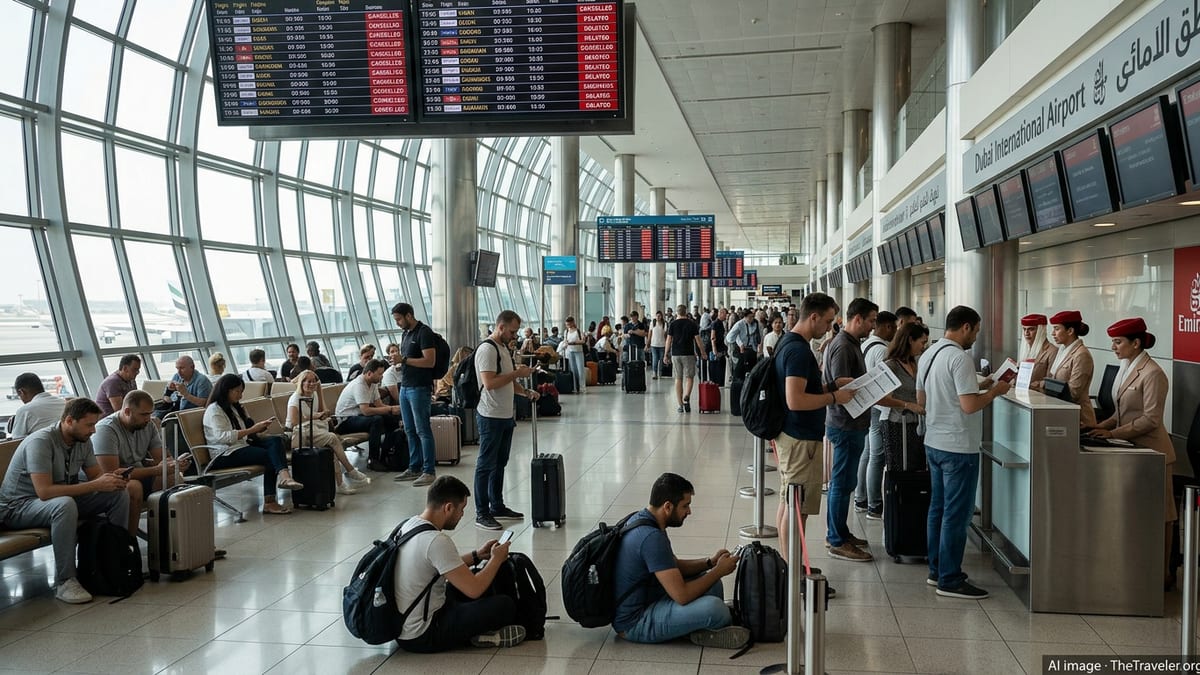
Humanitarian Relief Amid Unprecedented Flight Disruptions
The decision, announced in early March by the Federal Authority for Identity, Citizenship, Customs and Ports Security, comes as regional airspace shutdowns and mass flight cancellations leave visitors with overstayed visas through no fault of their own. Authorities confirmed that travellers who could not depart because of cancelled or severely delayed flights will not be penalised with the usual daily overstay charges.
Airspace closures across the Middle East followed a dramatic escalation in the Iran conflict on February 28, 2026, prompting airlines to halt or reroute services and effectively trapping tourists, business visitors and some residents inside the UAE. Dubai International Airport and Abu Dhabi’s Zayed International Airport have seen days of disruption, with only limited evacuation and special relief flights gradually resuming.
Officials framed the waiver as a humanitarian measure, stressing that the UAE would not punish travellers caught in a security and safety crisis beyond their control. The move mirrors emergency steps taken during the Covid-19 pandemic, when the UAE also relaxed immigration penalties for people unable to travel.
Who Is Covered by the Overstay Fine Waiver
The waiver applies to tourists on short-stay visas, visitors on longer-term visit permits and selected categories of residents whose visas or residence permits expired during the period of disruption. Crucially, it covers those whose authorised stay lapsed after February 28, 2026, and who can demonstrate that they were prevented from departing because of airspace closures or flight suspensions.
Travellers with cancelled outbound flights from the UAE, as well as those whose connecting flights through Dubai, Abu Dhabi or Sharjah were disrupted, are among the groups most likely to benefit. Embassies and consulates, including several from Asia and Europe, have begun issuing advisories reassuring their nationals that they will not face financial penalties at the border if they overstay solely due to the current crisis.
Authorities have indicated that people who had their residence permits cancelled but were unable to exit on time because of grounded flights will also fall under the exemption. However, the waiver is not an open-ended amnesty: it is tied directly to the period in which airspace restrictions and widespread cancellations made normal departure impossible.
What Stranded Travellers Need to Do Now
While the UAE has suspended overstay fines linked to the disruption, travellers are still urged to document their situation carefully. Officials and consular staff are advising passengers to keep copies of original flight bookings, airline cancellation notices, rebooking emails, and any messages confirming that flights were grounded due to security or airspace issues.
At airports and in city offices, specialist teams at Customer Happiness Centres and immigration counters are handling visa-related queries on a priority basis. Stranded visitors are being told not to head to the airport unless their airline has confirmed a new departure time, as terminals remain congested and many flights are reserved for repatriation and emergency travel.
Travellers whose visas are close to expiring are encouraged to contact their airline, embassy or consulate, and, where possible, the relevant immigration authority hotline before attempting to leave. Officials say that as long as overstay is directly connected to the disruption, exit procedures should be processed without fines. Those already charged in the early days of the crisis have been advised to retain receipts, as some cases may be reviewed for reimbursement.
How Long the Waiver Might Last
The overstay penalty suspension is tied to the extraordinary airspace closures and is expected to remain in place as long as large numbers of passengers are unable to depart on regular commercial services. UAE authorities have not published a firm end date, instead signalling that any return to normal overstay rules will be aligned with the phased reopening of airspace and broader stabilisation of regional security conditions.
Airlines based in the UAE are progressively resuming a limited number of flights as safety assessments continue, but many routes remain suspended or heavily restricted. Aviation analysts say it could take weeks before schedules begin to resemble pre-crisis operations, meaning that the waiver may need to stay in effect through at least the initial recovery period to avoid penalising passengers stuck on waiting lists for repatriation services.
For now, immigration officials are operating under emergency and business continuity plans that allow them to assess cases individually while applying the broad waiver policy. Travellers are being reassured that they will not be rushed out of the country or forced to make unsafe or impractical connections simply to avoid fines.
What This Means for Future UAE Travel
The response has significant implications for the UAE’s image as a global transit hub and tourism powerhouse. By moving swiftly to waive overstay penalties, the country is signalling to international visitors that they will be treated fairly if crises disrupt their plans, a message that could be critical once the region begins to stabilise and tourists reconsider their itineraries.
Industry observers say the policy could help preserve confidence in using Dubai and Abu Dhabi as stopover points, despite the shock of the current shutdown. Travel insurers and tour operators are also watching closely, as the fine waiver may reduce the financial burden on travellers and insurers alike, even as other costs such as hotel extensions and alternative routing mount.
For would-be visitors planning trips later in 2026, the episode underscores the importance of flexible tickets, comprehensive travel insurance and staying closely informed about geopolitical developments. Yet it also highlights how destination countries can cushion the blow of sudden disruption. The UAE’s approach, balancing strict border controls with targeted relief for stranded guests, is likely to become a reference point for future aviation and immigration crises in the region.