

More news on this day
The United Arab Emirates has announced a sweeping waiver of visa overstay fines for tourists and select residents stranded in the country by widespread Middle East flight cancellations and airspace closures linked to the escalating US Iran Israel conflict.
New Visa Relief Covers Overstays From February 28
The decision, confirmed this week by the Federal Authority for Identity, Citizenship, Customs and Ports Security, temporarily suspends overstay penalties for people who were unable to leave the UAE because their flights were cancelled, rerouted or indefinitely delayed. The move applies to visitors and certain categories of residents whose visas expired on or after 28 February 2026, when regional airspace restrictions began to bite.
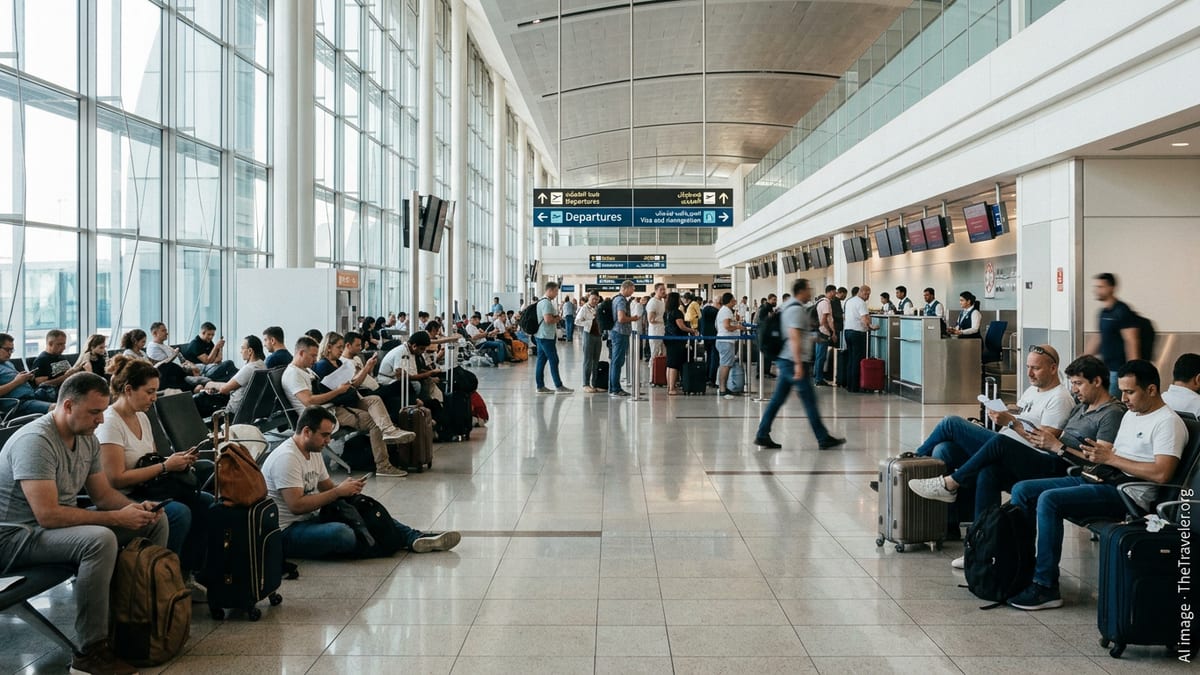
Officials have framed the step as a humanitarian response to circumstances beyond travellers’ control. With commercial schedules in turmoil and airport departure boards dominated by cancellations, many holidaymakers, business visitors and residents preparing to exit suddenly found themselves unable to comply with normal visa timelines.
The waiver is not an open ended amnesty. Authorities have stressed that it is limited to those whose overstay arose directly from the current disruption. Existing violations that predate 28 February must still be settled, and the standard reconciliation process remains in place for those cases.
Nonetheless, for travellers whose legal status flipped from compliant to irregular overnight purely because planes stopped flying, the announcement removes the immediate threat of mounting daily fines and potential entry bans.
Who Qualifies For The Overstay Fine Waiver
According to official guidance, the relief covers visitors on tourist and visit visas whose permitted stay has lapsed during the crisis period, as well as people holding exit permits and residents who had already cancelled their residency visas in preparation for departure. These groups are not required to pay overstay fines for days spent in the UAE after their documents expired, provided their departure was blocked by cancelled or suspended flights.
Passengers must still ensure that they leave the country once commercial services or arranged evacuation flights become available. Immigration experts note that border officers retain the right to ask for proof that travel plans were affected, such as cancellation notices or airline rebooking messages, even if many cases are expected to be processed with a light touch.
Travellers with earlier infractions, including those who overstayed before the airspace shut down, will not see those liabilities erased. In those situations, only the additional days accrued since 28 February due to the current suspension are eligible for relief, while prior fines must be paid in full before exit formalities can be completed.
Residents who are outside the UAE with visas close to the maximum permitted absence period remain a grey area, with consular missions advising individuals to monitor further announcements and seek case specific advice if they risk breaching residency rules through no fault of their own.
Middle East Flight Chaos Leaves Tourists Grounded
The visa move comes as airports across the region continue to grapple with one of the most severe and sudden disruptions to Middle East air travel in recent years. Following coordinated strikes by the United States and Israel on targets in Iran and subsequent retaliatory attacks, several Gulf states imposed partial or full airspace closures, sending airline schedules into disarray.
In the UAE, major carriers including Emirates, Etihad Airways, flydubai and Air Arabia suspended most regular services, operating only a limited number of special flights in coordination with the General Civil Aviation Authority to repatriate passengers. While some departures have now resumed, capacity remains sharply reduced and many routes are still paused, leaving tourists uncertain about when they can leave.
Hotels in Dubai and Abu Dhabi have reported guests extending stays day by day as they await confirmed seats, while travel agents and airline call centres face long backlogs from passengers trying to rebook. For many visitors, the immediate concern has shifted from missed itineraries and added accommodation costs to the prospect of being considered in violation of immigration rules.
By explicitly linking the waiver to the period starting 28 February, the UAE has sought to draw a clear line between normal visa enforcement and the extraordinary situation triggered by the latest round of conflict, signalling that passengers should not be penalised for disruptions outside their control.
Regional Neighbours Roll Out Parallel Measures
The UAE is not alone in introducing extraordinary visa measures as the conflict squeezes air corridors across West Asia. Kuwait and Qatar have both announced variations of temporary visa extensions and fee waivers for visitors whose permitted stay expired while flights were grounded or diverted, aiming to prevent stranded travellers from slipping into irregular status.
In Qatar, authorities have focused on extending entry visas for those already in the country when the closures began, clarifying that overstays predating 28 February remain subject to standard fines. Kuwait has similarly indicated that it will not penalise tourists who can show that cancellations or safety related suspensions prevented them from leaving on time.
Elsewhere, knock on effects are being felt far beyond the Gulf. Tourism officials in Thailand, for instance, have pledged to offer visa extensions and encourage discounted hotel rates to visitors whose itineraries through Middle Eastern hubs have collapsed, after dozens of flights to and from Bangkok and Phuket were cancelled by Gulf carriers.
Together, the moves highlight how a rapidly evolving security crisis has morphed into a complex travel and immigration challenge, forcing destination countries and transit hubs to adapt entry and exit rules with unusual speed.
What Stranded Travellers Should Do Now
Consular missions in the UAE are urging their nationals to remain calm, keep close contact with airlines and follow official updates from local authorities. Travellers whose visas have expired or are approaching expiry are being encouraged to retain documentation of cancelled bookings, keep copies of any advisories from their embassy and avoid making unnecessary internal movements while they wait for exit options.
Immigration specialists recommend that visitors regularly check their status through official UAE channels and seek clarification from authorised service centres rather than relying on social media rumours. While the overstay fine waiver provides important legal protection, it does not replace the need to formalise departures as soon as flights are realistically available.
For now, the decision buys time and peace of mind for thousands of tourists and residents who watched their visas tick toward expiry while departure boards went blank. As limited services resume and additional special flights are added in the coming days, attention will turn to how smoothly the waiver is implemented at airports and whether further extensions are required if the regional airspace crisis drags on.