

More news on this day
The United Arab Emirates has moved to ease the financial pressure on thousands of visitors and departing residents stranded by the ongoing regional airspace closures, announcing a temporary waiver of visa overstay fines for those unable to leave the country since February 28, 2026.
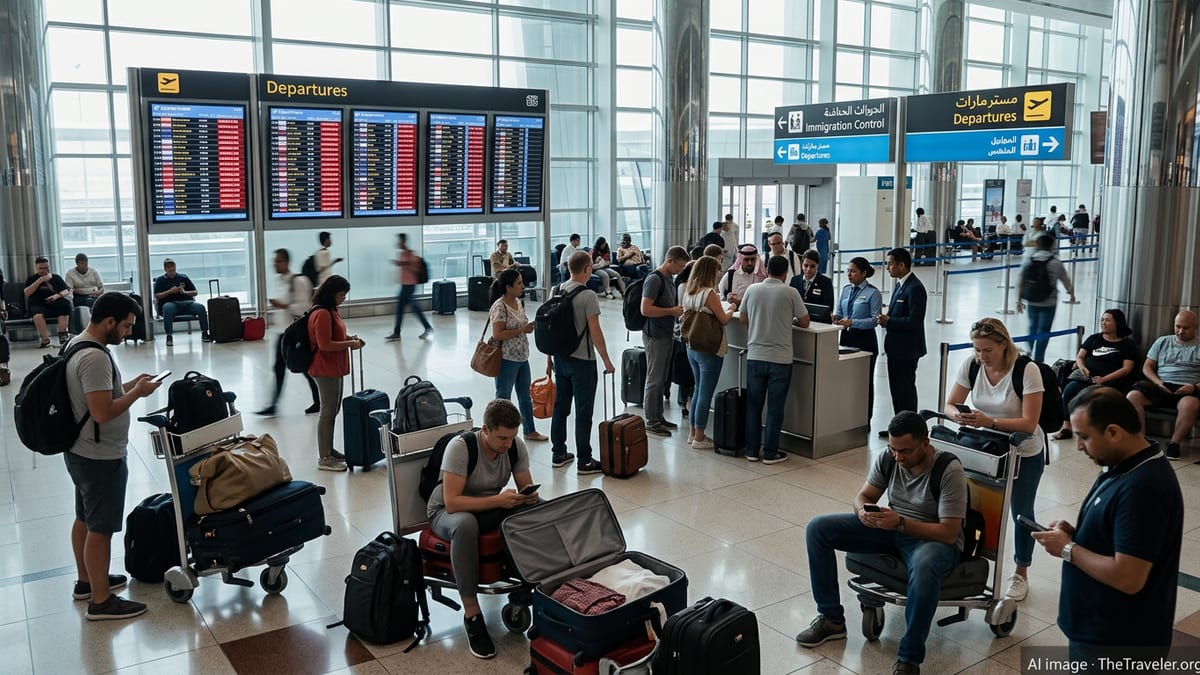
Relief for Travelers Caught by Sudden Airspace Shutdown
The Federal Authority for Identity, Citizenship, Customs and Ports Security confirmed this week that anyone prevented from departing the UAE because of the airspace closure and widespread flight suspensions will not be charged the usual daily overstay penalties. The measure covers violations incurred on or after February 28, when the UAE shut its airspace in response to escalating regional attacks and safety concerns.
Ordinarily, tourists and residents whose visas lapse while they remain in the country face fines of around Dh50 per day until they exit or regularise their status. With flights cancelled at short notice and major hubs operating only limited services, many travellers had feared mounting bills through no fault of their own.
Officials described the waiver as an exceptional step designed to reflect the extraordinary circumstances that have disrupted air travel across much of the Middle East. Authorities stressed that the aim is to ensure no one is penalised simply because they could not board a flight that no longer existed or reach a destination that suddenly became inaccessible.
The decision follows several days of mounting concern from stranded passengers at Dubai, Abu Dhabi, Sharjah and other airports, where travellers reported uncertainty over visa rules as they watched departure boards empty out.
Who Is Covered by the 2026 Overstay Fine Waiver
According to the federal immigration authority, the waiver applies to a broad group of people whose plans were derailed by the crisis. This includes visitors holding tourist or visit visas, travellers issued exit permits ahead of scheduled departures, and residents who had cancelled their residency visas as part of preparations to leave the UAE.
In practical terms, anyone whose visa or exit documentation expired from February 28 onward, and who can show that they were unable to travel due to the airspace closure or subsequent flight suspensions, will see their overstay fines cancelled for the affected period. The waiver does not legalise new entries or unrelated violations, but it removes the financial burden tied directly to the disruption.
Immigration experts note that travellers whose visas had already expired before February 28 are still expected to settle earlier overstay fines under standard rules. Only the penalties accrued from the date of the airspace shutdown are being written off, reinforcing the government’s message that the policy is targeted at people trapped by this specific crisis.
Advisers are urging affected passengers to retain boarding passes, cancellation notices and airline messages to support their case, although officials have indicated that airport immigration counters and service centres are working from central lists of cancelled flights and suspended routes.
How Stranded Passengers Can Check Their Status
Government guidance published in local media indicates that affected travellers do not need to rush to immigration offices while air transport remains heavily disrupted. Instead, officials suggest that people focus first on securing confirmed alternative flights, then address any remaining visa questions as part of their departure process.
At airports, immigration desks have been instructed to apply the waiver automatically for eligible passengers, clearing outstanding overstay amounts that arose after February 28 and stamping passports accordingly. Those already in the country on visit or tourist visas can also seek clarification at authorised typing centres and federal customer service centres once normal operations begin to resume.
Legal specialists say travellers who paid overstay fines in the early days of the crisis may be able to request refunds once formal procedures are fully in place, though detailed timelines and documentation requirements are still being communicated. For now, travellers are being told to keep receipts and proof of the disruption as authorities refine the process.
Residents, particularly those who cancelled visas ahead of planned relocations or extended travel, are being advised to monitor official announcements and check their status directly with the federal authority before booking complex onward journeys.
Limited Flights and Emergency Operations Continue
While most scheduled passenger services on the country’s major carriers remain suspended, the General Civil Aviation Authority has authorised a limited number of exceptional operations to help clear the backlog of stranded travellers. These include special commercial and charter flights from Dubai, Abu Dhabi and Sharjah, as well as services coordinated with neighbouring states to offer alternative routings.
Airlines such as Emirates, Etihad Airways, flydubai and Air Arabia have been issuing rolling updates on gradually expanding relief schedules, encouraging customers to wait for direct notifications before heading to airports. Many flights are operating with adjusted routings and longer travel times to avoid closed or restricted airspace.
Airport operators have urged passengers not to travel to terminals without confirmed bookings, warning that check in and security facilities are under strain even with the reduced flight schedule. Separately, tourism bodies and local authorities report that thousands of hotel rooms have been secured for involuntarily stranded visitors, with some costs covered by carriers and government-linked agencies.
Officials say the overstay fine waiver is intended to complement these aviation and hospitality measures, ensuring that extended stays prompted by cancelled flights are not compounded by immigration penalties as passengers wait for a seat home.
Regional Context and What Travelers Should Do Next
The UAE’s decision comes as part of a broader regional response, with neighbouring Gulf states such as Qatar and Kuwait also announcing temporary relief on visa rules and overstay penalties for passengers stuck amid the conflict-related airspace restrictions. Together, the measures aim to prevent a secondary humanitarian problem emerging from what began as a security-driven aviation shutdown.
Travel analysts note that Dubai and Abu Dhabi serve as critical hubs for global long haul routes, so the closure of their airspace and that of surrounding countries has sent shockwaves through international networks. Passengers en route between Europe, Asia, Africa and the Americas have found themselves unexpectedly rerouted or marooned mid-journey.
For those currently in the UAE, the overarching advice from officials and airlines is to stay closely tuned to verified government and carrier announcements, avoid speculative travel to airports, and treat any overstay concerns as a secondary issue that will be resolved under the new exemption framework. The fine waiver is intended to reassure travellers that they will not face surprise bills when they finally reach the immigration desk to leave.
Looking ahead, authorities have signalled that the policy could be adjusted or extended depending on how long the airspace disruption continues. For now, the waiver covering overstay fines from February 28 represents one of the most concrete forms of relief for ordinary travellers caught in the middle of the region’s fast-moving crisis.