

More news on this day
The United Arab Emirates has announced an emergency waiver of visa overstay fines for tourists and residents stranded in the country after regional airspace closures and widespread flight disruptions triggered by a sharp escalation in conflict involving Iran, the United States and Israel.
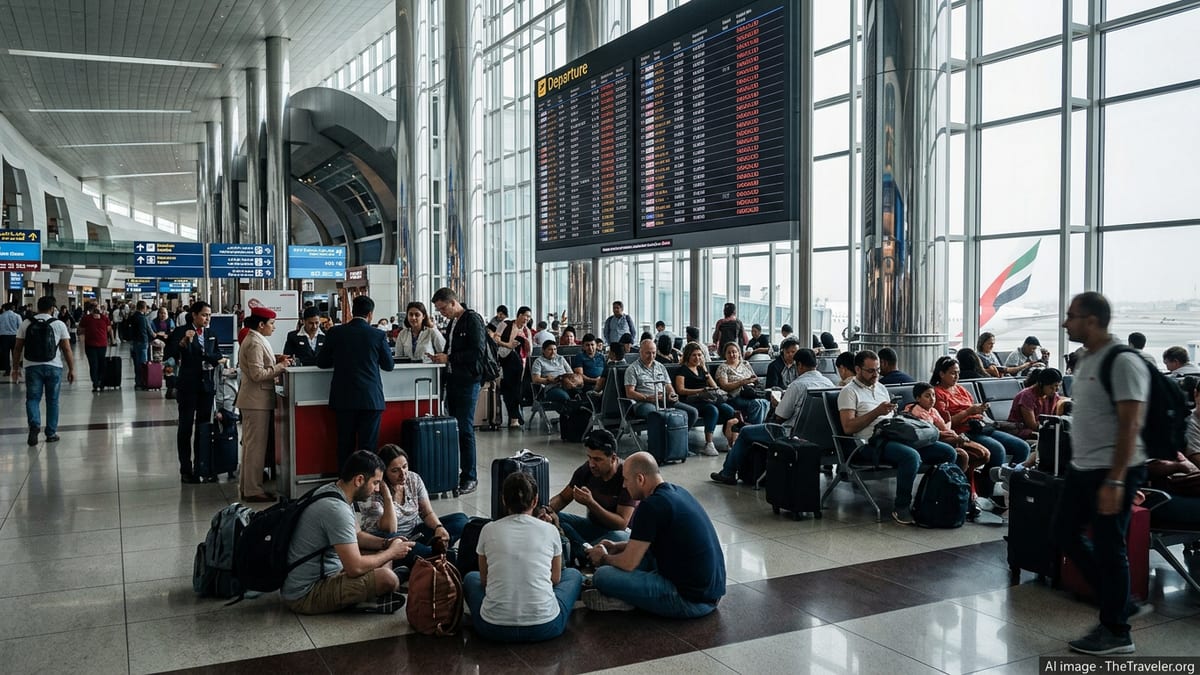
Conflict Fallout Shuts Skies and Strands Thousands
The decision follows days of mounting travel chaos across the Middle East, as Iranian missile and drone strikes and retaliatory military action prompted several Gulf states to partially or fully close their airspace from 28 February 2026. Commercial carriers rerouted or cancelled services through key hubs including Dubai, Abu Dhabi and Sharjah, leaving tens of thousands of passengers unable to depart as planned.
In the UAE, major airlines extended suspension of most scheduled flights through the first week of March, with limited relief services operating for priority passengers. Airports that normally handle some of the world’s busiest long-haul connections saw terminals fill with travelers sleeping in waiting areas or queuing for rebooking desks, many uncertain about when they would be able to leave.
Authorities have confirmed that more than 30,000 stranded passengers have already been processed for onward travel or temporary stay documentation at the country’s major international airports, while thousands more are still seeking alternative routes home as carriers update schedules day by day.
Overstay Fines Suspended From February 28
The Federal Authority for Identity, Citizenship, Customs and Port Security said the waiver applies to all overstay fines incurred on or after 28 February 2026, the date the UAE moved to close its airspace in response to the regional escalation. The measure covers visitors on tourist or visit visas, residents who had cancelled their permits in preparation for departure, and holders of exit permits who were unable to leave before their validity expired.
Ordinarily, foreign nationals who remain in the country after their visa expires face daily penalties that can quickly accumulate into substantial sums. By suspending those fines for the duration of the disruption, officials aim to ensure that travelers are not punished for circumstances beyond their control, and to prevent an unexpected financial shock at the point of departure.
Immigration authorities have stressed that the waiver is automatic for those whose status lapsed because flights were cancelled, rescheduled or rerouted during the airspace closure period. Travelers are being advised to retain documentation of their original itineraries and any airline notifications in case officials request proof when they eventually clear exit formalities.
Relief for Budget-Stretched Visitors and Migrant Workers
The policy shift offers immediate relief to tourists and low-income migrant workers whose budgets were already stretched by unplanned extra nights in hotels, higher airfares on alternative routes and rising everyday costs as they wait out the disruption. For many, overstay penalties of around 50 dirhams per day previously threatened to add hundreds of dollars to the total cost of an already stressful ordeal.
Travelers stranded at Dubai and Abu Dhabi airports have described a mix of relief and uncertainty, expressing gratitude that they will not be hit with additional fines but still anxious about getting home. Some families say they have already burned through their travel funds and are relying on help from relatives, consulates or charity groups to cover meals and accommodation while they wait for seats on outbound flights.
Expat advocacy groups note that the waiver is particularly significant for migrant workers and short-term jobseekers whose visas were expiring as the conflict escalated. Without the exemption, they could have faced long-term financial liabilities or difficulties returning to the UAE in future due to unresolved immigration violations linked solely to the sudden shutdown of regional air routes.
Temporary Visas and Hotel Guidance Ease Immediate Pressure
Alongside the fine waiver, UAE authorities have been issuing temporary entry and short-term stay visas to thousands of passengers diverted to or stranded in the country mid-journey. Officials say this is designed to regularise the status of travelers who unexpectedly found themselves in the Emirates after regional flights were rerouted or forced to land early in the unfolding crisis.
Local tourism and hospitality regulators have separately instructed hotels not to evict guests whose stays have been involuntarily extended because of flight cancellations, urging properties to maintain original rates where possible and to prioritise stranded travelers when managing room availability. The guidance is intended to prevent vulnerable visitors from being pushed into irregular accommodation or onto the streets while they attempt to rebook their journeys.
Airport operators and carriers report that help desks have been reinforced with additional staff, multilingual announcements and clearer signage to direct passengers to visa assistance counters, airline rebooking stations and consular contact points. However, travelers continue to report long queues and frequent last-minute schedule changes as airlines adjust to dynamic security assessments and restricted air corridors.
What the Waiver Means for Future Travel Plans
Officials emphasise that the overstay waiver is a time-limited, exceptional measure tied directly to the current conflict and related airspace restrictions. Visitors whose visas expired before 28 February, or who overstay in unrelated circumstances, remain subject to the standard fines and procedures, and may be required to settle outstanding penalties before renewing visas or exiting the country.
For those whose status is covered by the new policy, authorities say the fine exemption should not affect their ability to return to the UAE in future or to apply for new visas, provided they leave once commercial flights resume and comply with any updated entry rules. Travel advisers are urging passengers to monitor official government announcements and airline channels closely, as resumption timelines and routing options are likely to evolve rapidly with the security situation.
Industry analysts note that the UAE’s decision to lift overstay fines sends a signal of flexibility and support at a moment when confidence in long-haul travel across the region is under strain. While the immediate focus is on getting stranded passengers safely home, the move may also help protect the country’s reputation as a reliable global transit hub once skies begin to reopen and travelers reassess their future routes.