

More news on this day
United Arab Emirates authorities have issued a stringent warning against filming inside Dubai International Airport, aligning with similar measures in Saudi Arabia, Qatar, Bahrain and other Gulf states as regional security threats prompt tighter controls on what can be recorded and shared online.
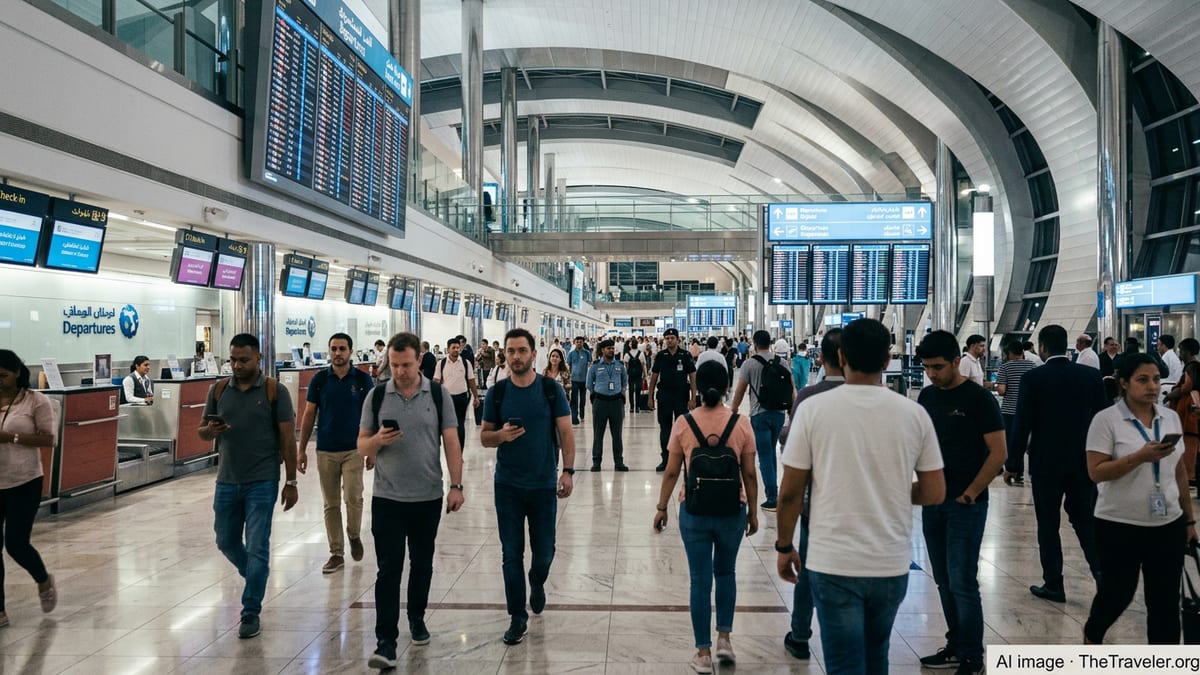
New Security Guidance Targets Airport Filming
The latest advisory, circulated over the weekend by UAE authorities and highlighted in an alert from India’s Embassy in Abu Dhabi, urges passengers not to take photographs or record videos inside airport terminals during arrival or departure. The guidance explicitly covers Dubai International Airport, the world’s busiest hub for international passengers, where heightened airspace tensions have led to closer scrutiny of what travelers capture on their phones.
Officials say the warning applies in particular to footage of incident locations, damaged areas, defensive responses and any activity linked to recent missile and drone interceptions in the region. Recording or sharing such material without permission is described as a violation of national security regulations and could attract serious penalties, including fines, detention or deportation for foreign visitors.
The advisory reinforces existing federal laws in the UAE that prohibit photographing sensitive security sites and critical infrastructure without authorization. While casual travel snapshots inside terminals have long existed in a grey area, the current security climate has pushed authorities to draw a much firmer line, especially when it comes to content that may be rapidly broadcast to millions via social media platforms.
Regional Threats Drive Tougher Controls on Images
The move comes as the UAE and its Gulf neighbors face ongoing aerial threats linked to the wider Middle East conflict, with air defense systems intercepting waves of missiles and drones in recent days. Authorities in the Emirates have stressed that while airports remain operational, they are operating under strengthened security protocols designed to keep both residents and visitors safe.
Officials warn that images taken in the midst of security responses can reveal sensitive details about defensive capabilities, emergency procedures and the layout of critical facilities. Even when such footage is captured innocently by travelers, once posted online it can be copied, edited or repurposed by unknown actors, complicating the work of security agencies and potentially aiding hostile groups.
The UAE’s Attorney General has also cautioned that videos purporting to show attacks or damage may be fabricated or artificially manipulated, further blurring the line between legitimate documentation and disinformation. The spread of unverified clips, authorities say, risks creating unnecessary public alarm and projecting an inaccurate image of conditions on the ground, particularly when airports continue to function under carefully managed contingency plans.
Gulf States Present Unified Front on Filming Restrictions
The UAE’s latest guidance places it squarely in line with other Gulf Cooperation Council members that have moved to restrict filming in and around airports and other sensitive locations since the start of the current regional escalation. In Saudi Arabia, Qatar and Bahrain, authorities have likewise warned residents and travelers that capturing or circulating images of military activity, security operations or incident sites near aviation hubs may constitute a criminal offense.
This emerging consensus reflects a broader regional effort to clamp down on real-time visuals that could expose vulnerabilities or be exploited for propaganda. Officials across the Gulf have emphasized that while freedom of movement remains a priority and airports are striving to maintain regular schedules, the right to record and share content from these spaces is now substantially constrained by security imperatives.
Travel analysts note that the coordinated messaging is aimed at both locals and the millions of expatriate workers and tourists who pass through Gulf airports each month. By signaling that similar rules apply across several major transit hubs, governments hope to reduce confusion among passengers who may be connecting between cities such as Dubai, Doha, Riyadh and Manama during a period of heightened alert.
Foreign Embassies Amplify Warnings to Their Citizens
Foreign missions in the UAE have begun relaying the new restrictions to their nationals, underscoring that violations could bring serious legal consequences irrespective of a traveler’s home country. The Embassy of India in Abu Dhabi has urged Indian citizens living in or visiting the Emirates to refrain from photographing or filming inside airports and to avoid sharing any images of incident sites, debris or suspected projectiles.
Embassy advisories stress that in the event of security alerts, travelers should seek shelter in safe areas and follow instructions from local authorities rather than attempting to document events on their phones. They also encourage passengers to report suspicious objects or damage to the authorities while keeping a distance, instead of approaching scenes to capture close-up footage.
Similar messages have been echoed informally by other diplomatic missions and expatriate community groups, many of which are using social media channels to remind followers that local laws on national security and cybercrime can apply to online behavior even after individuals have left the country. The overarching message is that in the current environment, choosing not to film is a key part of staying on the right side of the law.
What Travelers Transiting Dubai Need to Know
For international travelers passing through Dubai International Airport in the coming days, the practical implications of the new guidance are clear. Authorities are asking passengers to keep phones and cameras away when moving through security checkpoints, immigration halls, boarding gates and baggage areas, and to avoid filming aircraft movements or security procedures from terminal windows.
Travelers are advised to rely on official channels, airport announcements and airline updates for information about any disruptions, rather than turning to or contributing to unverified videos circulating on social platforms. Airport operators and government agencies have reiterated that operations are being conducted under reinforced safety protocols, and that unauthorised filming does nothing to enhance personal security.
Industry observers say that while the restrictions may frustrate some visitors accustomed to documenting every leg of their journey, they are likely to remain in place as long as regional tensions continue. For now, passengers are being told that the safest and most responsible way to travel through Dubai and other Gulf hubs is to keep cameras off, follow instructions from staff and allow security agencies to do their work out of the public eye.