

More news on this day
Unstable spring weather across the United Arab Emirates is bringing heavy rain, thunderstorms and localized flooding to multiple emirates, raising fresh concerns for air travel, road safety and popular desert tourism experiences as residents and visitors head into a busy travel period.
Get the latest news straight to your inbox!
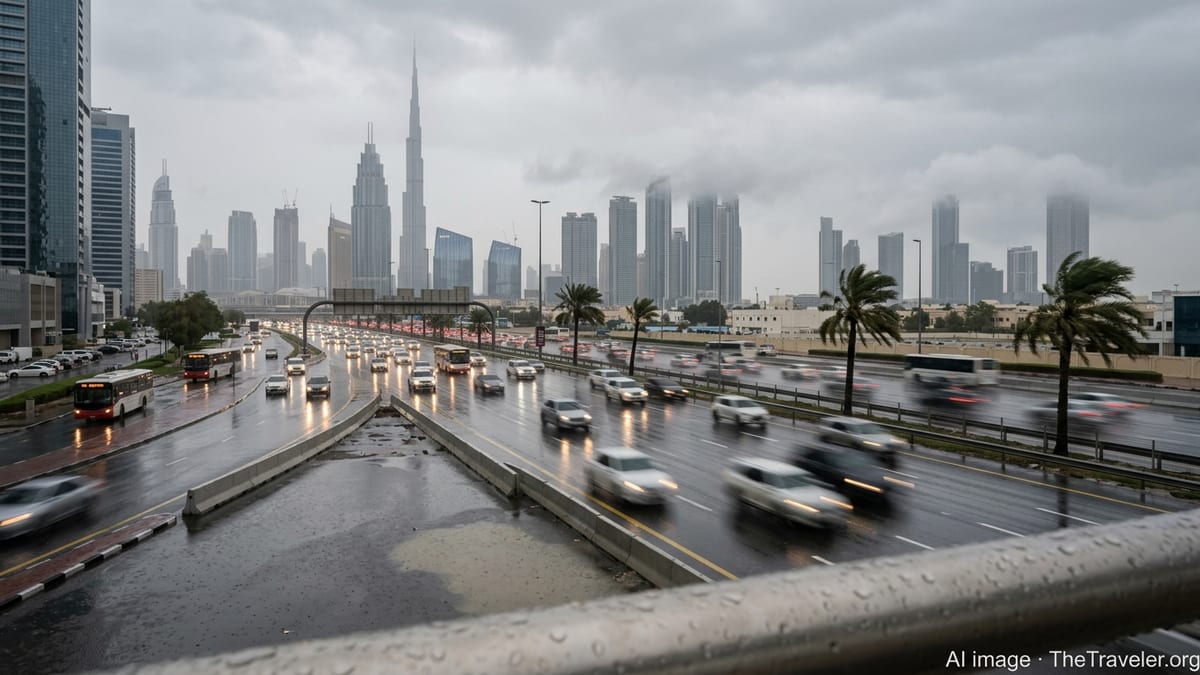
Unseasonal Storms Soak the Emirates
Publicly available weather bulletins and regional coverage point to an extended spell of unsettled conditions affecting much of the UAE and neighboring Oman in late March 2026, with intense downpours, thunderstorms and squally winds. Meteorological updates describe convective cloud systems forming over the Gulf and drifting inland, triggering bursts of heavy rain over coastal cities and interior desert areas that are typically dry at this time of year.
Reports from across the country highlight temporary flooding on major roads, waterlogged underpasses and reduced visibility during the heaviest showers. In some communities, wadis and normally dry channels have rapidly filled, contributing to flash-flood conditions that can catch drivers unaware. Social media images and local media accounts also describe pockets of hail and strong gusts, particularly where storm cells have stalled over urban areas.
The current pattern follows a broader regional system that has already produced severe flooding in parts of Oman, according to international news and weather summaries. While the UAE has so far seen less-extreme impacts, forecasters warn that saturated ground, additional rainfall and intermittent thunderstorms could keep disruption risks elevated for several days.
Flight Schedules Remain Vulnerable to Weather and Wider Disruptions
The unsettled weather arrives on top of an already fragile aviation environment in the Gulf, where airspace restrictions and security-related interruptions have affected major hubs throughout March 2026. Travel advisories, airline updates and industry bulletins describe a patchwork of route cancellations, reroutings and capacity reductions involving Dubai, Abu Dhabi and Sharjah, alongside neighboring states.
According to published airline statements and airport notices, periods of intense rain and thunderstorms over the UAE can further complicate recovery efforts. Low clouds, wind shear and standing water on aprons or taxiways may prompt additional delays as flight operations adjust to safety requirements. In previous storm episodes, temporary suspensions of arrivals and departures have led to missed connections, extended time on the ground and backlogs in baggage handling.
Some carriers operating to and from the UAE have already advised passengers in recent days to monitor their booking status closely, arrive earlier than usual if instructed to travel, and remain prepared for last-minute schedule changes. Industry commentary notes that while the region’s airports are experienced in handling adverse weather, the combination of stormy conditions and wider regional disruption means timetables are more exposed than in a typical spring season.
Driving Conditions and Inter-Emirate Travel
Within the UAE, the most immediate impacts of the heavy rain are being felt on the roads. Local traffic reports and user-generated updates point to water accumulation on sections of key highways linking Dubai, Abu Dhabi and Sharjah, as well as on lower-lying urban streets and roundabouts. Sudden flooding in underpasses and at junctions has already forced some temporary closures and diversions.
The risk is heightened at night and during peak commuting hours, when reduced visibility combines with standing water and slick surfaces. Motorists unfamiliar with desert climates may underestimate how quickly conditions can deteriorate, particularly near wadis or construction zones where drainage is limited. Publicly available guidance from safety campaigns in the region consistently advises drivers to reduce speed, maintain greater distances and avoid attempting to cross flooded sections of road, even if water levels appear shallow.
Public transport services, including inter-emirate buses and airport shuttles, can also experience delays when storms coincide with rush-hour or holiday traffic. While core routes are generally kept open, intermittent closures and congestion mean travelers with tight schedules or onward flights may need to build in additional buffer time when planning journeys between cities.
Desert Tours, Outdoor Attractions and Coastal Trips Affected
The stormy pattern is also reshaping the experience for visitors drawn to the UAE’s outdoor attractions. Tour operators advertising desert safaris, dune bashing and overnight camps have been monitoring the unstable weather closely, with some excursions adjusted or cancelled on days when heavy rain, strong winds or lightning are expected over popular off-road areas.
Travel industry reporting notes that saturated sand, muddy tracks and low visibility can make standard safari routes impractical or unsafe, especially in remote areas where recovery options are limited. Campsites in low-lying desert basins and near wadis are particularly vulnerable to sudden water flows when thunderstorms develop upstream. Travelers already in the country are being encouraged, through booking platforms and operator updates, to stay in close contact with their provider on the morning of any planned excursion.
Along the coast, unsettled seas and gusty winds may lead to adjustments for dhow cruises, fishing charters and island trips, particularly around Dubai Marina, Abu Dhabi’s islands and the northern emirates. Harbor authorities and marine forecasts often signal periods of choppy conditions or reduced visibility, during which operators may shorten itineraries or keep smaller vessels in port.
What Travelers Should Expect Over the Coming Days
Forecasts compiled from the UAE’s official meteorological bulletins and independent weather services suggest that the risk of further showers, thunderstorms and localized flooding is likely to persist in the short term. While rainfall is not expected to be continuous, passing storm cells may bring rapid changes in conditions, with clear skies giving way to heavy downpours within a short window.
For those due to travel, the main implications are continued uncertainty around flight schedules, longer journey times on the roads and a higher likelihood that outdoor or desert-based activities will be rescheduled. Travel analysis from regional commentators recommends that visitors keep itineraries flexible, avoid locking in non-refundable excursions on days with higher storm probabilities, and rely on airline or tour-app notifications for the most current operational updates.
Accommodation providers in key tourist districts are also preparing for potential knock-on effects, such as late arrivals, unexpected extended stays and changes to group bookings. Hotels with large numbers of connecting passengers or cruise guests may see fluctuating occupancy, particularly if further airport delays occur during peak hours of the storms. Overall, while the UAE remains open and functioning, the combination of unseasonal heavy rain and a sensitive regional aviation environment means that travelers should build in extra time, remain alert to changing forecasts and be ready to adjust plans on short notice.