

More news on this day
Tourists and residents across the United Arab Emirates are bracing for a turbulent spell of weather, as forecasts signal several days of heavy rain, thunderstorms and possible flooding that could disrupt flights, road journeys and holiday plans in Dubai, Abu Dhabi, Sharjah and other key destinations.
Get the latest news straight to your inbox!
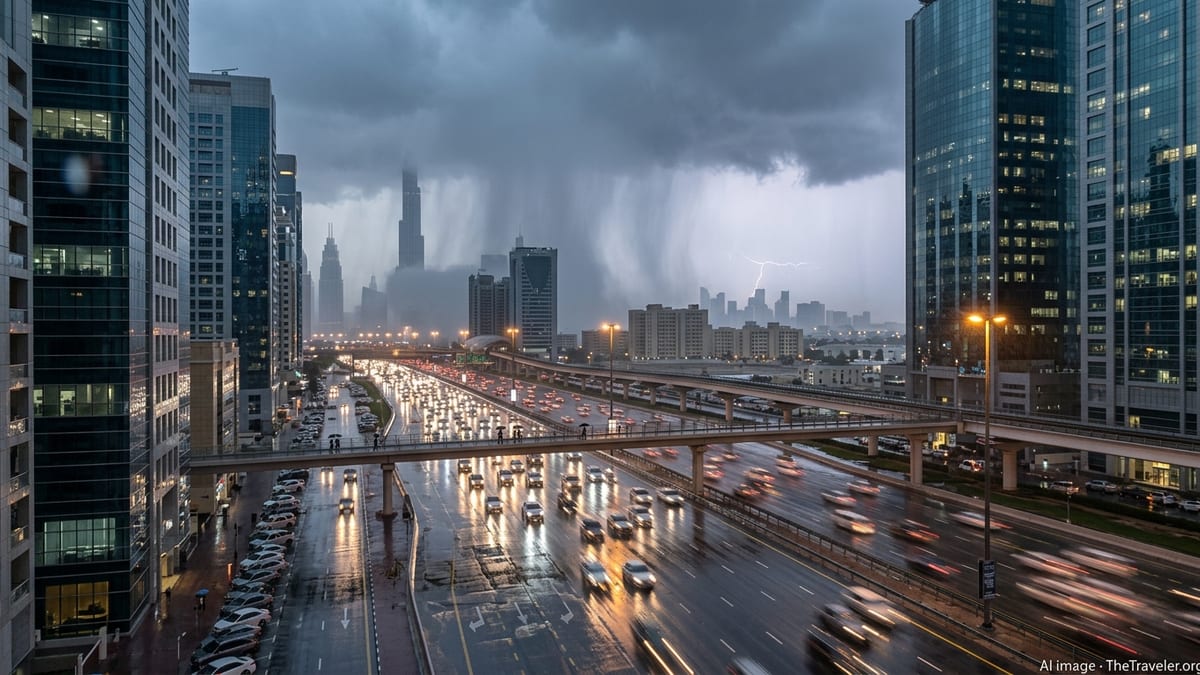
Storm Forecast Puts UAE Visitors on Edge
Weather models monitored by regional forecasters indicate that from the weekend of 22–23 March 2026, the UAE is likely to experience repeated rounds of showers and thunderstorms, with locally intense downpours. Publicly available forecasts point to a focus on the country’s eastern and coastal areas at first, with rain bands expected to sweep over Dubai and Sharjah and extend toward Abu Dhabi as the systems evolve through the week.
The prospect of multiple storm cells in quick succession is drawing particular concern because of the risk of waterlogging on key inter-emirate routes and temporary disruption around major airports. Travellers arriving for spring holidays, business events and stopovers are being urged by airlines, airports and travel advisories to follow updated schedules closely and allow extra time for transfers between Dubai, Sharjah and Abu Dhabi.
Discussion on local forums and social media suggests that many residents remember the severe April 2024 floods, when record-breaking rainfall overwhelmed drainage systems and caused hours of gridlock across Dubai and the northern emirates. While current projections spread expected rainfall over several days rather than a single extreme cloudburst, the volume is still significant enough to raise concerns about flash flooding in low-lying areas.
Forecasts shared in recent days have pointed to cumulative totals in some parts of Dubai that could exceed 150 millimetres over the course of the week, with daily peaks that may coincide with morning and evening rush hours. Even moderate showers can quickly pool on major highways when combined with heavy traffic, making visibility and stopping distances a critical issue for drivers.
Air Travel Sees Delays as Passengers Monitor Conditions
The stormy outlook comes at a time when air travel to and from the UAE is already under close scrutiny due to the broader regional security environment. In recent weeks, travel advisories and port bulletins have described partial airspace restrictions, temporary suspensions, and intermittent delays affecting selected routes in and out of Gulf hubs, including Dubai and Abu Dhabi.
According to publicly available airline and aviation updates, Dubai International Airport has already experienced temporary service suspensions and a phased resumption of flights this month following nearby security-related incidents. Additional weather-related disruptions, even if comparatively short-lived, could compound existing congestion as carriers reroute aircraft, adjust departure slots and prioritise long-haul connections.
Travel risk consultancies tracking the region are currently flagging a high overall risk environment for the wider Middle East, noting that some air corridors remain subject to sudden restriction. For tourists, this means boarding passes and itineraries that appeared firm only days ago may face last-minute adjustments, especially if thunderstorms force temporary ground stops or reduce runway capacity during peak arrival and departure waves.
Industry guidance encourages passengers heading to or transiting through Dubai, Abu Dhabi or Sharjah over the coming week to check flight status repeatedly on the day of travel, build generous layovers into multi-leg journeys where possible, and stay prepared for gate changes and extended time on the tarmac during heavy downpours or lightning activity.
Road Journeys Between Emirates Complicated by Flood Risk
On the ground, the greatest immediate impact is likely to be felt on the UAE’s main intercity corridors, particularly the E311 (Sheikh Mohammed bin Zayed Road) and E611 (Emirates Road), which link Dubai with Sharjah and provide onward access to Abu Dhabi and the northern emirates. Local drivers posting online on 21 March report surface water and patchy waterlogging in places after early rain, with warnings that further showers could quickly worsen conditions.
Motorists are sharing real-time impressions of standing water in underpasses and on outer lanes, noting that while many sections remain passable, fast-moving traffic combined with sudden pools can create hazardous spray and hydroplaning risks. With more rain in the forecast, residents are advising one another to avoid unnecessary long-distance journeys during the most active storm periods, particularly when travelling with families or at night.
For visitors who may be less familiar with local driving customs or drainage patterns, even moderate flooding can feel unsettling. Rental car companies and hotels are stepping up reminders about reduced speeds in heavy rain, maintaining safe following distances, and avoiding attempts to cross visibly deep water at junctions or side streets. Publicly available safety campaigns in past seasons have stressed that it only takes a small depth of fast-moving water to dislodge a vehicle, especially smaller cars.
In Sharjah and the residential districts on the Dubai–Sharjah border, previous storms have shown how quickly congestion can build when traffic is diverted away from saturated underpasses or when minor collisions cause knock-on delays. A similar pattern over the coming week would likely lengthen driving times significantly between central Dubai, Sharjah city and Abu Dhabi, even outside traditional rush hours.
Memories of 2024 Floods Shape Current Precautions
The current spell of unsettled weather is unfolding less than two years after the UAE’s heaviest recorded rainfall in at least seven decades, which struck in mid-April 2024. That event brought widespread flooding to Dubai, Sharjah, Abu Dhabi and several northern emirates, inundated sections of major highways, and caused diversions and delays at airports across the country.
Detailed post-event analysis from meteorologists and climate scientists linked the 2024 deluge to large, slow-moving thunderstorm systems, and placed it within a broader pattern of heavier downpours being associated with a warming climate. Destination guides and risk assessments published since then have routinely highlighted the potential for infrequent but intense winter and spring storms in the UAE, and the knock-on effects these can have on transport and tourism.
While current forecasts for late March 2026 point to a more distributed series of showers and storms, rather than a single extreme deluge, the memory of 2024 is clearly informing the way residents and travellers are responding. Many are stocking up on essentials, planning flexible work-from-home arrangements where possible, and reconsidering optional trips between emirates until conditions are more predictable.
Travel planners now routinely factor in the possibility of short-notice weather warnings in the Gulf, particularly in late winter and spring. For tour operators and hotels, that can mean adjusting check-in times, offering more flexible cancellation or rebooking policies, and providing guests with clear information about what to expect if heavy rain coincides with their stay.
Practical Advice for Tourists on High Alert
For visitors currently in or heading to Dubai, Abu Dhabi, Sharjah and neighbouring emirates, the key message from publicly available advisories and local experience is to stay informed and build flexibility into plans. Travellers are encouraged to monitor reputable weather apps, airport announcements and airline notifications multiple times a day, especially if flying in or out during the forecast storm window.
Those planning road trips between cities should check conditions shortly before departure, stick to major routes where drainage and lighting tend to be better, and avoid attempting to drive through any flooded sections, even if other vehicles appear to be proceeding. Allowing extra travel time reduces pressure to rush in poor visibility or on slippery surfaces.
Within the cities, some outdoor attractions, waterfront promenades and desert excursions may be curtailed or rescheduled if thunderstorms develop, particularly where there is a risk of lightning or sudden runoff in wadis and low-lying desert areas. Indoor activities in malls, museums and hotels are likely to remain largely unaffected, making them a practical alternative while storms pass through.
As the UAE navigates a complex combination of unsettled weather and wider regional uncertainty, tourists can still expect core services in Dubai, Abu Dhabi and Sharjah to remain resilient. However, the coming week looks set to test the flexibility of travel plans, underlining the importance of real-time information, cautious driving and patience at airports as heavy rain and thunderstorms roll across the country.