

More news on this day
India’s regional aviation landscape is entering a new phase as plans under an expanded UDAN 2.0 framework point toward a dense network of new airports, helipads and water aerodromes intended to bring commercial air services within reach of millions more travelers in small cities and remote districts.
Get the latest news straight to your inbox!
A bigger, denser UDAN network takes shape
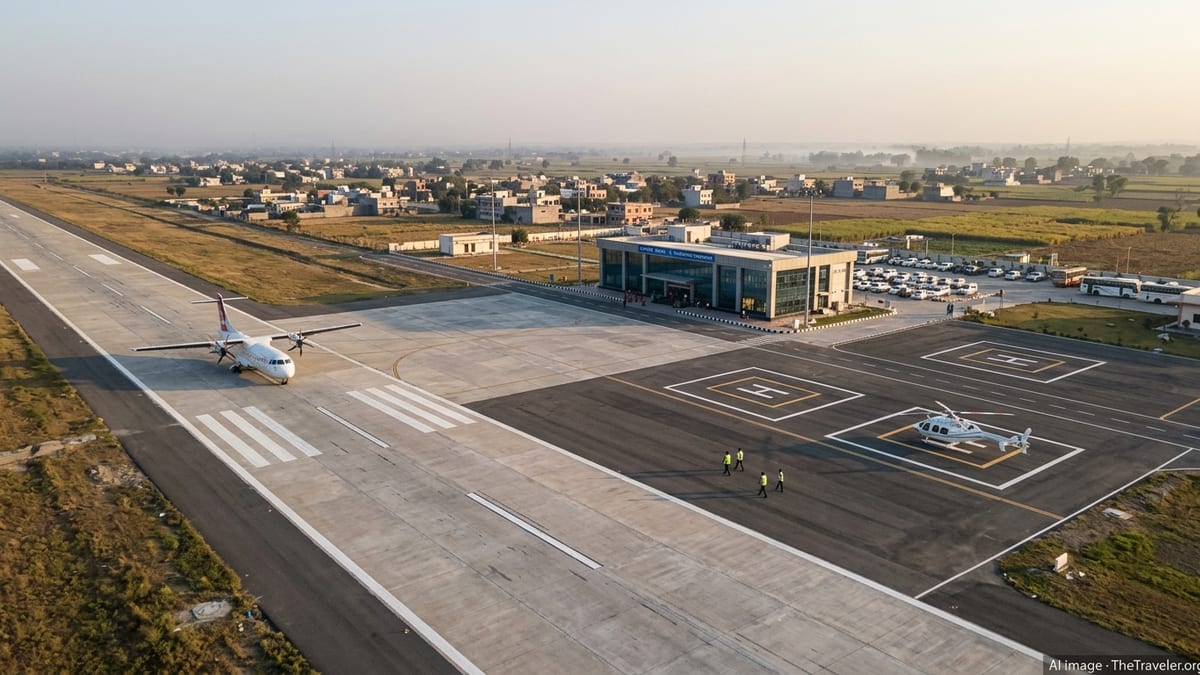
Publicly available policy documents and recent coverage of India’s regional connectivity push indicate that the government is working from a significantly more ambitious canvas than when the UDAN scheme was first launched in 2016. Early phases focused on reviving disused airstrips and linking a limited set of tier 2 and tier 3 cities. The emerging UDAN 2.0 vision is built around a far wider grid, with plans often described in terms of roughly 100 additional airports and as many as 200 helipads over the medium term, complemented by new water aerodromes for seaplane services.
Recent summaries of the scheme’s progress show how far the network has already spread. Reports on the current status of UDAN note that more than 600 routes have been awarded, connecting over 90 airports and heliports, including facilities in the Himalayan states, the North East and coastal tourism zones. Policy briefings and ministerial statements over the past year outline a next stage that emphasizes not just more destinations, but also denser connectivity between existing UDAN airports and nearby economic hubs.
Budget documents and sector analyses suggest that the scale of infrastructure spending is being calibrated with this larger map in mind. Capital expenditure by the Airports Authority of India and state partners has already run into tens of thousands of crore rupees for runway extensions, terminal upgrades and navigation systems. An expanded UDAN 2.0 network featuring around 100 new airports and 200 helipads would imply a multi-year pipeline of construction and modernization that extends well beyond 2027.
Helipads and seaplanes push connectivity into hard-to-reach terrain
A defining feature of the UDAN 2.0 conversation is the prominent role assigned to helicopters and seaplanes. Earlier rounds concentrated on fixed-wing turboprop operations, but official guidelines issued since 2023 for helicopter and seaplane services point to a strategy that leans on smaller, more flexible aircraft to reach districts where building a full-fledged airport would be difficult or uneconomical.
Government reports on the scheme highlight heliports in hilly and border states, while new bidding rounds have reserved slots specifically for helicopter and seaplane routes. States such as Uttarakhand and Himachal Pradesh are cited as examples where heliports linked to pilgrimage circuits and remote valleys are expected to support both local mobility and tourism. Coastal regions and island territories are being positioned for seaplane operations using water aerodromes rather than conventional runways.
A network on the scale of 200 helipads, spread across hill towns, mining belts, island chains and aspirational districts, would mark a decisive shift in how air connectivity is provided outside India’s metro corridors. Aviation analysts point out that such a lattice of short-hop services could alter travel times dramatically for medical evacuations, administrative travel and last-minute business trips, even when passenger numbers are modest compared with scheduled trunk routes.
From dormant airstrips to regional gateways
The UDAN programme has already turned several pre-independence or little-used airstrips into functioning regional airports, and the envisaged UDAN 2.0 build-out would extend this pattern to many more locations. Examples in states including Uttar Pradesh, Madhya Pradesh, Odisha and Bihar demonstrate how modest terminals and upgraded runways can handle 19- to 72-seat aircraft, providing scheduled links to state capitals and metro hubs.
Sector briefings indicate that dozens of additional airstrips are at various stages of survey, planning or early works under the broader regional connectivity umbrella. Some are being positioned as feeders to upcoming greenfield airports, while others are intended to plug gaps in large states where population centres remain hours away from the nearest commercial airfield. The reference to “around 100 new airports” in various planning discussions typically spans new greenfield projects, revived airstrips and upgraded defence or state-owned fields opened to civil operations.
Local economic impacts are already visible in some of the early UDAN success stories, where new flights have supported tourism, perishable cargo and small-scale industry. An expanded grid of 100 additional airports is expected to deepen these effects, although aviation commentators also caution that sustainable traffic will depend on careful route design, competitive fares and coordination with rail and road upgrades.
Challenges, course corrections and financial sustainability
Even as the vision for UDAN 2.0 grows more ambitious, recent reporting has highlighted turbulence in parts of the existing network. Data on operational performance show that several newly activated airports have struggled to maintain regular commercial services once initial subsidies tapered, and a few routes have seen low load factors or airline withdrawals.
Policy reviews and think-tank assessments of UDAN point to a cluster of linked challenges: thin demand on some routes, limited aircraft availability in the regional fleet, and financial stress among smaller carriers. There is also the question of how quickly supporting infrastructure such as air traffic services, ground handling and last-mile road links can keep pace with the rapid addition of new destinations.
Official documents describe a gradual shift in emphasis from simply counting airports and routes to improving viability. Measures include recalibrated viability gap funding, revised route selection criteria and closer alignment with tourism circuits and economic clusters. In this context, the headline figures of 100 new airports and 200 helipads are increasingly framed as medium-term planning markers rather than one-year targets, with timelines stretching over the next decade.
Broader access and what it means for travelers
For travelers, the practical promise of the UDAN 2.0 build-out lies in shorter journeys and more choice on regional corridors that have long been dominated by overnight trains and day-long bus rides. As more small-city airports and heliports switch on, itineraries that once required backtracking through metro hubs may be replaced by direct or one-stop connections within a state or region.
Industry commentary suggests that business travellers, medical passengers and students could be among the earliest beneficiaries of a thicker UDAN network, especially where early-morning and late-evening services are introduced. Tourism boards in several states are also positioning new helipads and water aerodromes as gateways to wildlife reserves, heritage sites and pilgrimage centres, with the potential to reshape domestic travel patterns.
Analysts note that the full impact of a network encompassing 100 new airports and 200 helipads will depend on how well it is integrated with digital ticketing, multimodal hubs and evolving low-cost airline strategies. If the financial and operational lessons of the first UDAN phases are absorbed into route planning and carrier incentives, the next iteration of the scheme could move India closer to its stated ambition of making air travel a realistic option for citizens far beyond the country’s largest cities.