

More news on this day
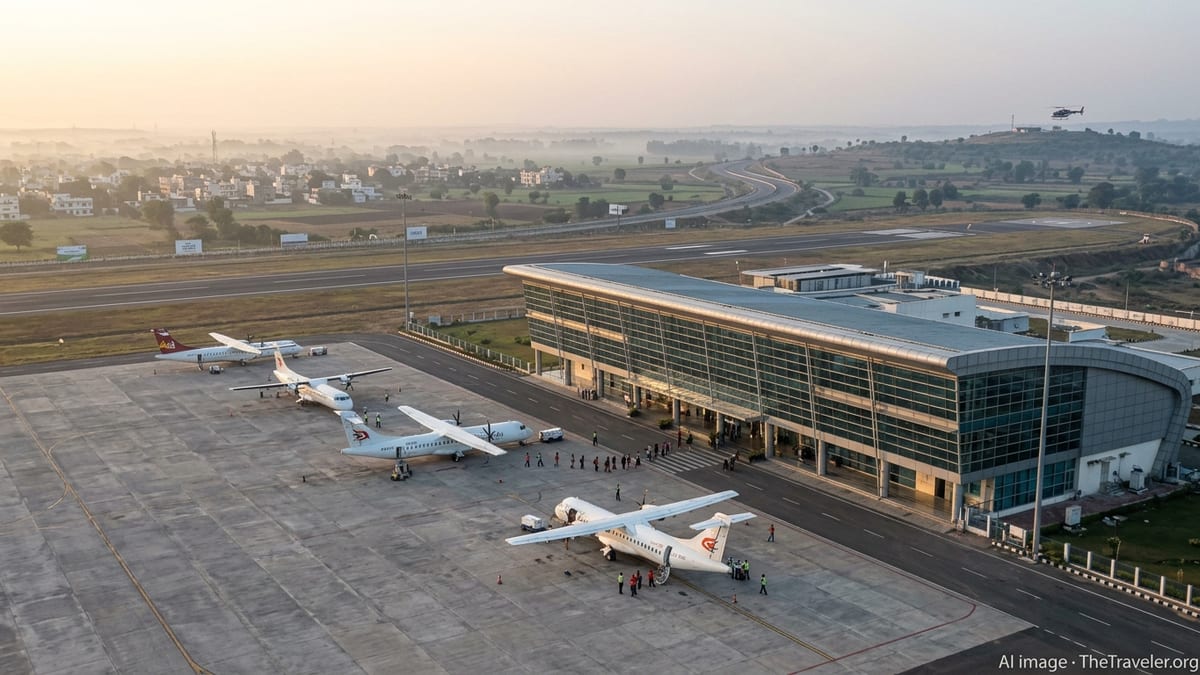
India’s flagship regional air connectivity program is entering a new phase, with an ambitious UDAN 2.0 roadmap that aligns earlier targets for 100 new airports and hundreds of heliports with fresh plans for 120 additional destinations, promising to redraw the country’s aviation and tourism map over the next decade.
Get the latest news straight to your inbox!
From Budget Pledge to Expanded UDAN 2.0 Vision
The push for a dramatically wider aviation network can be traced to a Union Budget commitment in 2020 that called for the development of 100 new airports by financial year 2023–24 to support the UDAN regional connectivity scheme. Public documents and parliamentary reports show that this target was bundled with plans to revive or upgrade unserved and underserved airstrips, heliports and water aerodromes to handle scheduled regional flights.
Subsequent updates to the scheme, often described in policy discussions as UDAN 2.0 and later bidding rounds, broadened the concept beyond fixed-wing aircraft to include helicopters and seaplanes. Official reports indicate that by late 2023, the government was working toward a wider objective of reviving or developing 100 airports, heliports and water aerodromes and operationalizing up to 1,000 regional routes, with hundreds already awarded to airlines.
By early 2025, a modified UDAN framework was announced in the Union Budget, setting a long-term goal of connecting 120 new destinations and carrying around 40 million additional passengers over the next ten years. This newer target sits on top of the earlier build-out, effectively transforming UDAN 2.0 into a rolling program that combines the original 100-airport vision with a broader pipeline of regional destinations and multimodal facilities.
100 New Airports and a Network of 200 Helipads
Parliamentary committee papers and civil aviation budget documents describe a multi-layered infrastructure plan in which conventional airports are only one piece of a much larger regional system. Under this framework, the revival and construction of roughly 100 airports is supplemented by an expanding grid of heliports and helipads intended to serve remote, hilly and island regions where runways are not feasible.
Recent government submissions indicate that, across successive bidding rounds under UDAN and its follow-on phases, around 180 regional aviation facilities have been identified for regional operations, including dozens of heliports and water aerodromes. Within this umbrella, policy notes refer to the development or revival of around 200 helipads and heliports at various stages, supported by central funding for basic infrastructure and state-level incentives for operators.
Several states have introduced their own civil aviation policies to align with this national push. In central India, for example, one state has announced plans for a dense network of concrete helipads every few dozen kilometres and airports spaced roughly 150 kilometres apart, signalling how regional governments are using the UDAN framework to anchor tourism, medical evacuation capability and last-mile connectivity for business travel.
Broader Regional Access for Tier 2 and Tier 3 Cities
Publicly available data from the Airports Authority of India and recent economic surveys illustrate how rapidly India’s aviation footprint has expanded since UDAN was launched. The number of operational airports has risen from about 74 in 2014 to around 160 by 2025, with UDAN-linked routes opening commercial service to dozens of tier 2 and tier 3 cities that previously lacked regular flights.
Across the first two major phases of UDAN, more than 300 routes were initially awarded, connecting scores of unserved or underserved aerodromes to major hubs. Updated tallies now point to more than 600 awarded routes and close to 90 airports, plus water aerodromes and heliports, that have seen regional services notified or launched at some point under the scheme.
For travellers, the practical effect is a growing choice of short-haul flights linking smaller cities directly to state capitals and metropolitan centres, often priced with a fare cap on a portion of seats. Officials and analysts argue in published commentary that this has begun to shift traffic from long road and rail journeys to point-to-point flights, especially for time-sensitive travel related to health care, education and business.
Opportunities for Tourism, Business and Remote Communities
The aviation build-out tied to UDAN 2.0 is closely linked to broader economic and tourism goals. Budget documents and policy statements connect the regional connectivity plan with initiatives to develop themed tourist circuits, spiritual destinations and lesser-known heritage sites, which depend on reliable access from major cities.
New and revived airports in religious and leisure destinations illustrate this strategy. Recent years have seen commercial operations take off at locations such as Deoghar in Jharkhand and other regional gateways, which are promoted as entry points for nearby pilgrimage and nature tourism. Additional greenfield airports, including projects in Bihar and Rajasthan, have been framed in public coverage as anchors for logistics and industrial corridors as well as passenger travel.
Helipads and heliports, meanwhile, are being positioned as crucial for remote and inaccessible regions, including mountainous districts and islands. Reports indicate that helicopter routes under the expanded UDAN framework are meant to support not only tourists but also medical evacuations, emergency response and essential services, adding a layer of social infrastructure to the commercial network.
Implementation Gaps and the Road Ahead
Despite the scale of the ambition, implementation has not been uniform. Audit findings, committee reviews and independent analyses note that many awarded UDAN routes have taken longer than expected to become operational, and some services have struggled with low load factors or were discontinued after trial runs. Case studies from several states point to airports and airstrips that received infrastructure upgrades but see limited or no scheduled traffic.
Industry observers writing in business and policy outlets link these challenges to factors such as thin regional demand, airline fleet constraints, fuel costs and the need for better last-mile ground connectivity to new airports. They argue that making UDAN 2.0 sustainable will require careful route selection, closer alignment with tourism and economic clusters, and continued financial support while routes mature.
Government documents released in 2024 and 2025 indicate that the program is being recalibrated rather than scaled back. The modified UDAN approach, with its focus on 120 new destinations over the next decade, appears designed to consolidate gains from the initial 100-airport and 200-helipad drive while placing greater emphasis on commercially viable corridors. For travellers, this evolving blueprint suggests that regional skies will continue to open, but with a sharper focus on routes and airports that can sustain long-term demand.