

More news on this day
Uganda has appointed renowned aviation executive Ato Girma Wake as interim chief executive officer of Uganda Airlines, a move President Yoweri Museveni says is intended to fix leadership weaknesses at the national carrier and position it as a stronger catalyst for tourism and trade growth.
A High-Stakes Leadership Shift at Uganda’s Flag Carrier
The appointment, announced through a presidential directive dated February 13 and made public on February 16, 2026, follows the decision to ask outgoing chief executive Jenifer Bamuturaki to step aside after a turbulent tenure marked by governance concerns, audit queries and persistent financial losses at the airline. Museveni instructed the Ministry of Works and Transport and the Uganda Airlines board to hand over the running of the carrier to Wake with immediate effect.
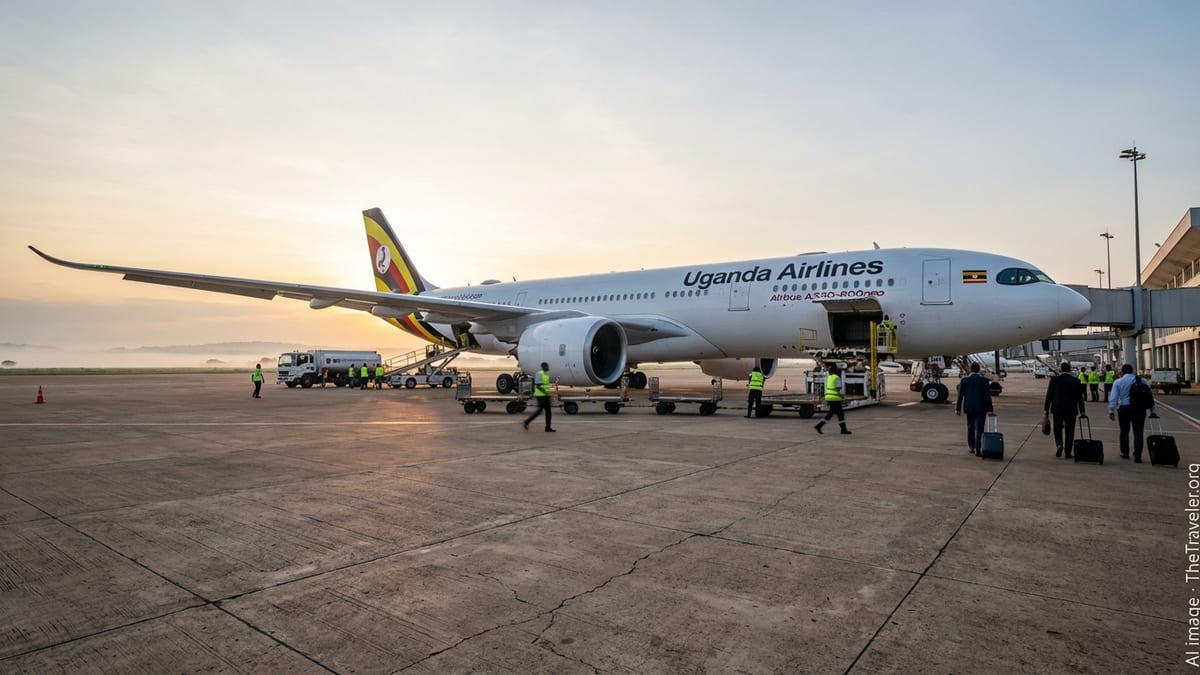
Uganda Airlines, relaunched in 2019 after nearly two decades on the ground, has struggled to shake off questions about management competence, route profitability and fleet utilization. The latest shake-up comes as the airline faces operational disruptions, including the grounding of both Airbus A330-800neo aircraft for unscheduled maintenance, which has led to cancellations on key long-haul services such as the Entebbe–London route.
For government and industry observers, bringing in a heavyweight like Wake is widely seen as an attempt to restore confidence in the carrier’s leadership and reassure tourism, trade and investment partners that Uganda is serious about building a reliable, commercially oriented national airline.
The interim role is time-bound. Museveni’s directive indicates that Wake is expected to steer the airline through a transition period and help oversee the recruitment of a substantive chief executive by July 2026, setting a clear deadline for a more permanent governance structure.
Who Is Ato Girma Wake and Why His Appointment Matters
Born in Addis Ababa in 1943, Girma Wake is one of Africa’s most respected airline strategists, often described in regional aviation circles as a “godfather of the African sky.” He is best known for his transformative tenure as chief executive of Ethiopian Airlines between 2004 and 2011, during which the carrier expanded aggressively, modernized its fleet and cemented Addis Ababa’s position as a continental hub.
After leaving the chief executive role, Wake went on to chair the board of RwandAir and later returned to Ethiopian Airlines as a board member, eventually serving as chairman of the Ethiopian Airlines Group until 2023. He has also worked with global operators including Gulf Air and DHL, giving him a broad perspective that spans network planning, cargo logistics and international partnerships.
In Uganda, aviation stakeholders say Wake’s track record in building successful, state-backed airlines will be critical as the country seeks to turn its young carrier into a sustainable business. His experience guiding Ethiopian’s long-haul expansion and its integration with national tourism and trade strategies is particularly relevant as Uganda eyes similar ambitions from its Entebbe base.
At 82, Wake brings more than six decades of industry experience. His appointment as both consultant and acting chief executive signals that he is not being hired merely as a figurehead, but as a hands-on turnaround specialist with authority to diagnose structural weaknesses and push through reforms.
Mandate: Strengthen Governance, Separate Roles and Rebuild Confidence
In his directive, Museveni framed the leadership change as an explicit response to “management weaknesses” at Uganda Airlines. The president’s instructions charge Wake with cleaning up governance, helping the board assemble a “qualified, competent management team” and supporting a transparent process to recruit a permanent chief executive within five months.
That mandate comes after a period in which the airline’s governance structure and hiring practices were repeatedly questioned by parliament and the public, including scrutiny over procurement, staffing decisions and adherence to competitive recruitment procedures for top positions. Bamuturaki, who was elevated from acting to substantively appointed chief executive in July 2022, had faced sustained criticism over these issues.
The new arrangement gives Wake a dual role as both acting chief executive and consultant or advisor to government. Governance analysts in Kampala have raised questions about potential overlaps between these roles, but officials argue that his consultancy mandate is primarily aimed at ensuring institutional reforms go beyond day-to-day management and align with broader national transport and economic objectives.
For Uganda’s tourism operators, hotel associations and exporters, the top priority is renewed confidence. A stable, professionally run national carrier is seen as essential to attracting long-term aviation partnerships, maintaining reliable schedules to key markets and convincing high-yield visitors and freight customers to choose Uganda’s flag over regional competitors.
Operational Challenges: Fleet Groundings and Route Performance
Wake steps into the role at a particularly delicate time for operations. In recent days, Uganda Airlines has been forced to ground both of its Airbus A330-800neo aircraft for unscheduled maintenance, disrupting long-haul flights and frustrating passengers relying on the Entebbe hub for direct links to Europe and the Middle East.
The airline’s medium-haul and regional network, operated primarily by Bombardier CRJ900 jets, has also faced scrutiny over load factors and route selection. While some regional routes such as Johannesburg, Nairobi and Bujumbura have shown growing demand, others have been criticized for low yields or inconsistent scheduling, undermining confidence among tour operators and regional business travelers.
Industry insiders expect Wake’s early priorities to include a rigorous review of the route network, with an emphasis on routes that best support inbound tourism, cargo flows and connections to major global hubs. Analysts also anticipate a push to strengthen engineering and maintenance planning, after repeated disruptions highlighted the vulnerability that comes with a small, highly specialized long-haul fleet.
Uganda’s government has poured significant capital into the carrier’s revival, and with public scrutiny mounting, there is mounting pressure on the new leadership to improve on-time performance, reduce cancellations and communicate more transparently about disruptions. How effectively Wake can tighten operations in the coming months will shape both customer perceptions and political support for the airline’s next phase.
Leveraging Uganda Airlines to Grow Tourism
Tourism is one of Uganda’s flagship industries, anchored by world-renowned gorilla trekking in Bwindi Impenetrable National Park, wildlife in Queen Elizabeth and Murchison Falls national parks, and an emerging cultural and adventure tourism scene. Before the pandemic, tourism was among the country’s top foreign exchange earners, and policymakers view a strong national airline as a strategic tool for unlocking further growth.
Direct air links are particularly critical for high-value, short-stay visitors from Europe, North America and the Middle East, who are more likely to choose destinations with convenient, reliable connections. Uganda Airlines’ long-haul services were launched with that segment in mind, but operational hiccups and inconsistent schedules have at times undermined the country’s marketing efforts abroad.
Wake’s appointment is expected to accelerate coordination between the airline, the Uganda Tourism Board and private-sector tour operators. Better aligned scheduling, codeshare agreements and joint marketing campaigns could help ensure that flights feed directly into packaged itineraries and that tourists encounter a seamless experience from flight booking to lodge transfers.
Industry voices say that if Uganda Airlines can consistently operate key long-haul routes and build a reputation for reliability, it will not only help fill hotel beds and tour vehicles but also support the development of new products such as meetings, incentives, conferences and exhibitions, further diversifying the country’s tourism profile.
Air Connectivity and Trade: Entebbe as a Regional Gateway
Beyond tourism, the government is placing increasing emphasis on using Uganda Airlines to bolster trade connectivity. Landlocked Uganda relies on efficient air links for time-sensitive exports such as fresh flowers, fish fillets and high-value agricultural products destined for European and Middle Eastern markets.
Improved reliability and expanded cargo capacity on both regional and long-haul routes could significantly boost export competitiveness. Under Wake’s stewardship, analysts expect a renewed focus on cargo strategy, including better utilization of belly-hold capacity in passenger aircraft, optimized schedules for exporters, and deeper collaboration with freight forwarders operating through Entebbe International Airport.
Uganda is also marketing itself as a meeting point between Central Africa, the Great Lakes region and the Horn of Africa. A well-managed national carrier with carefully selected regional routes could position Entebbe as a convenient connecting hub for business travelers moving between secondary cities that are not well served by global carriers.
For investors looking at manufacturing, technology and services, strong air connectivity is often a deciding factor. If Uganda Airlines can resolve its operational issues and deliver predictable, business-friendly schedules, it could enhance the country’s pitch as a regional base for multinationals seeking access to multiple African markets.
Balancing Political Oversight and Commercial Discipline
While the leadership change has been broadly welcomed by aviation professionals, it also highlights enduring tensions between political oversight and commercial autonomy at state-owned enterprises in the region. Uganda Airlines was brought back under strong government patronage, and major strategic decisions, including senior appointments, have frequently been made at State House level.
Wake’s track record suggests he is comfortable operating in politically sensitive environments, but building a commercially disciplined, performance-driven culture will require clear boundaries between shareholder interests and management prerogatives. Observers will be watching closely to see whether the new interim leadership is allowed the space to streamline staffing, adjust routes and renegotiate contracts based on business logic rather than political considerations.
There are also expectations that Wake will support the board in strengthening internal controls, from procurement to financial reporting. Transparent performance metrics, published targets and regular communication with the public could help rebuild trust and demonstrate that the airline is being run with an eye on long-term sustainability rather than short-term optics.
For many Ugandans, the national carrier is both a symbol of sovereignty and a test case for whether large state investments can deliver tangible returns. The new leadership will have to navigate this symbolic weight while keeping its focus firmly on operational efficiency and customer service.
Regional Competition and the Road Ahead
Uganda Airlines operates in one of Africa’s most competitive aviation neighborhoods, flanked by established carriers such as Ethiopian Airlines, Kenya Airways and RwandAir. These airlines already offer extensive networks, frequent schedules and global partnerships, making it challenging for a small, young carrier to carve out a distinct niche.
Wake’s familiarity with these competitors, particularly his deep knowledge of Ethiopian’s growth model, could be an asset as Uganda charts its own path. Instead of trying to mimic larger hub-and-spoke systems, experts suggest the airline may focus on targeted routes where it can offer time savings, better connections to Uganda’s tourism hotspots and tailored services for regional traders and diaspora communities.
Over the coming months, key milestones will include the return to service of the grounded Airbus A330-800neo aircraft, clarity on the recruitment process for a permanent chief executive and any early adjustments to the route map. Each of these developments will send signals to travelers, partners and investors about the seriousness of the airline’s turnaround effort.
For now, the appointment of Ato Girma Wake has injected fresh momentum and cautious optimism into Uganda’s aviation and tourism sectors. Whether this veteran of African skies can turn a struggling young carrier into a reliable engine for tourism and trade will be closely watched not just in Kampala, but in aviation and travel markets across the continent.