

More news on this day
The United Kingdom’s move to fully enforce its Electronic Travel Authorisation system in February 2026, alongside an increase in the application fee, is reshaping how millions of visa-free visitors plan and pay for trips to the country, with ripple effects across airlines, tour operators and wider global tourism flows.
Get the latest news straight to your inbox!
From phased rollout to full enforcement in February 2026
The UK’s Electronic Travel Authorisation, or ETA, has been introduced in stages since 2023, but 2026 marks the point at which it becomes unavoidable for most visa-free visitors. Published guidance indicates that from 25 February 2026, non-visa nationals from around 85 countries, including the United States, Canada, Australia, Japan and most European states, will be required to hold an approved ETA before they can board transport to the UK or legally enter the country.
Travel and immigration advisories note that the scheme covers short stays of up to six months for tourism, family visits and most business trips. The same digital permission sits alongside a broader shift to eVisas and digital status records, meaning that by late February 2026 many travellers will no longer carry physical visa vignettes, but will instead rely on a UKVI online account linked to their passport details.
Industry briefings emphasise that the change is not merely administrative. Airlines, ferry operators and rail carriers are now expected to conduct advance permission checks for non-visa nationals in much the same way as they already do for passengers who need full visas. Reports highlight that carriers face penalties if they transport travellers without the correct digital approval, which is likely to translate into stricter document checks at booking, check in and boarding.
Legal and consumer guidance warns that the compressed timeline to February 2026 leaves limited room for travellers and companies to adapt. Travel planners are being advised not to assume that previous entry experiences apply, particularly for multi-stop itineraries that combine the UK with Schengen Area destinations operating their own new border systems.
ETA fee rise: from low-cost add on to visible line item
When the UK first announced the ETA scheme, the fee was set at 10 pounds per application and marketed as a relatively modest cost for multiple entries over two years. Budget documents released in 2025 outlined a planned increase of 6 pounds, taking the fee to 16 pounds per person. Subsequent industry summaries undertaken in early 2026 describe this higher figure as the reference price used in forecasts of ETA revenue.
Travel trade analyses argue that the nominal increase might appear small next to the overall cost of an international trip, but becomes more visible for families and repeat visitors. A household of four now faces an additional 64 pounds in pre-travel charges, on top of rising airfares, accommodation prices and local tourism taxes in many destinations. For travellers who visit the UK frequently for short breaks, the two year validity mitigates the cost, but only if passport details remain unchanged.
Economic assessments published in consumer media suggest that the UK government expects annual net income from the ETA scheme to reach hundreds of millions of pounds once fully enforced. Critics point out that, as more regions introduce similar systems, the cumulative effect of overlapping fees may influence destination choice at the margins, especially for price sensitive segments and group travel.
Comparisons with other electronic travel authorisation models, such as the planned European ETIAS system and the long running United States ESTA, show a broader global trend towards paid pre screening. Analysts observe that the UK’s decision to raise the ETA fee while the scheme is still bedding in could test traveller sentiment at a time when several competitors are debating whether to moderate or stagger their own fee increases.
Tourism concerns: border friction and regional connectivity
Tourism bodies in the UK and Ireland have repeatedly flagged the potential impact of the ETA on cross border visitor flows, particularly on the island of Ireland where travellers often combine the Republic of Ireland and Northern Ireland in a single trip. Commentaries from regional authorities and industry groups in Northern Ireland argue that requiring an ETA for short visits north of the border introduces new friction into itineraries that previously felt seamless for many long haul tourists.
Concerns highlighted in public statements focus on coach tours, golf tourism and self drive holidays where visitors may be reluctant to navigate additional paperwork and fees for what can amount to a day trip into the UK jurisdiction. Some tourism advocates warn that, without targeted communication and possible mitigations, there is a risk of reverting to older patterns in which more visitors confine their stay to the Republic of Ireland.
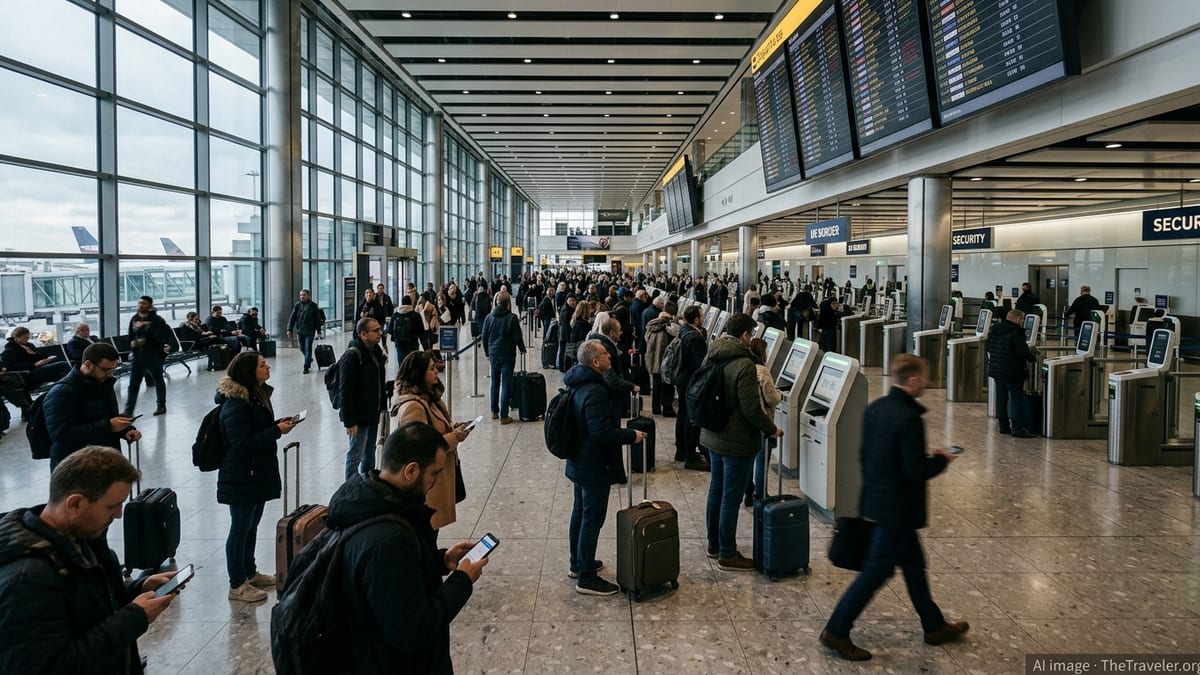
Beyond Ireland, city tourism organisations in major UK gateways are monitoring how the new rules interact with onward travel in Europe. With the European Union’s Entry Exit System scheduled to be fully operational in 2026 and ETIAS expected to come on stream in the same period, international travellers could soon face multiple layers of digital pre clearance and biometric checks within a single holiday. Analysts suggest that any queuing or confusion at airports attributed to overlapping systems may colour perceptions of Europe as a whole, including the UK, even though the regulatory frameworks are distinct.
Travel companies are already adjusting their messaging, with tour operators and cruise lines updating documentation to spell out when an ETA is required and what happens if it is missing. Some commentators predict that destinations with simpler entry regimes in the Americas, Middle East and parts of Asia may benefit competitively among travellers prioritising ease of access.
Practical implications for airlines, agents and travellers
Airlines operating into the UK face operational and financial implications as the ETA becomes a strict prerequisite for boarding. Industry updates indicate that carriers must integrate automated checks into reservation and departure control systems, verifying ETA status in real time through data supplied by the UK authorities. Failure to do so increases the risk of fines, the cost of returning passengers who are refused entry and reputational damage when travellers share negative experiences.
Travel agents and online booking platforms are also being drawn into compliance. Advisory notes from law firms and consultancies recommend that intermediaries update terms and conditions, booking flows and pre departure communications to emphasise that securing an ETA is the traveller’s responsibility. However, many observers expect customers to hold agents partly accountable if they are not clearly warned, which could fuel disputes and calls for compensation.
For individual travellers, the practical message for 2026 is to treat the ETA as an essential part of trip planning rather than a last minute formality. Guidance from consumer outlets stresses applying well in advance of departure, double checking passport numbers and expiry dates, and avoiding unofficial third party websites that charge higher fees or fail to submit valid applications. Reports of scams and copycat sites in 2025 indicate that this risk is likely to persist as the scheme expands.
Frequent travellers, including business visitors and those with family ties to the UK, are being encouraged to map their likely travel over the two year validity period to assess value. While some will absorb the cost as part of regular mobility, others may reconsider the number of discretionary short visits if they perceive a growing stack of border formalities across multiple destinations.
The UK in a crowded field of paid pre travel systems
The UK’s 2026 travel changes are unfolding against a backdrop of similar moves worldwide. The European Union is preparing to launch ETIAS for visa exempt travellers to the Schengen Area in late 2026, with recent discussions around raising the standard fee. In parallel, the United States continues to operate its ESTA system, and countries such as South Korea periodically adjust their own electronic authorisation policies to balance security and tourism promotion.
Analysts note that travellers are increasingly comparing not only headline fees, but also ease of application, processing reliability and clarity of rules. In this context, the UK’s decision to enforce its ETA across all non visa nationals in early 2026 places it among the earlier adopters of a fully digital permission to travel. Whether the higher fee and stricter carrier checks will be seen as proportionate may depend on how smoothly the system runs during the first peak travel seasons after enforcement.
Tourism strategists suggest that the ultimate impact on visitor numbers will be shaped less by the fee in isolation and more by communication, technical performance and wider perceptions of the UK as a welcoming destination. If delays or widespread errors occur, the additional cost may take on symbolic weight for travellers already navigating complex global rules. If, on the other hand, the process proves quick and predictable, the ETA may be regarded as another routine step in an increasingly digitised border landscape.
For now, the 2026 UK travel update underscores how border regulation, technology and tourism economics are converging. The rise in the Electronic Travel Authorisation fee is a relatively small amount on most travel budgets, but it arrives at a moment when visitors are acutely aware of every extra charge and form, and when destinations across the world are competing to appear both secure and accessible.