

More news on this day
Thousands of travelers were left stranded at London Heathrow, Gatwick and Manchester airports on Sunday as a cascade of delays and cancellations rippled across global networks, disrupting British Airways, easyJet and other major carriers on routes to New York, Paris, Dubai and beyond.
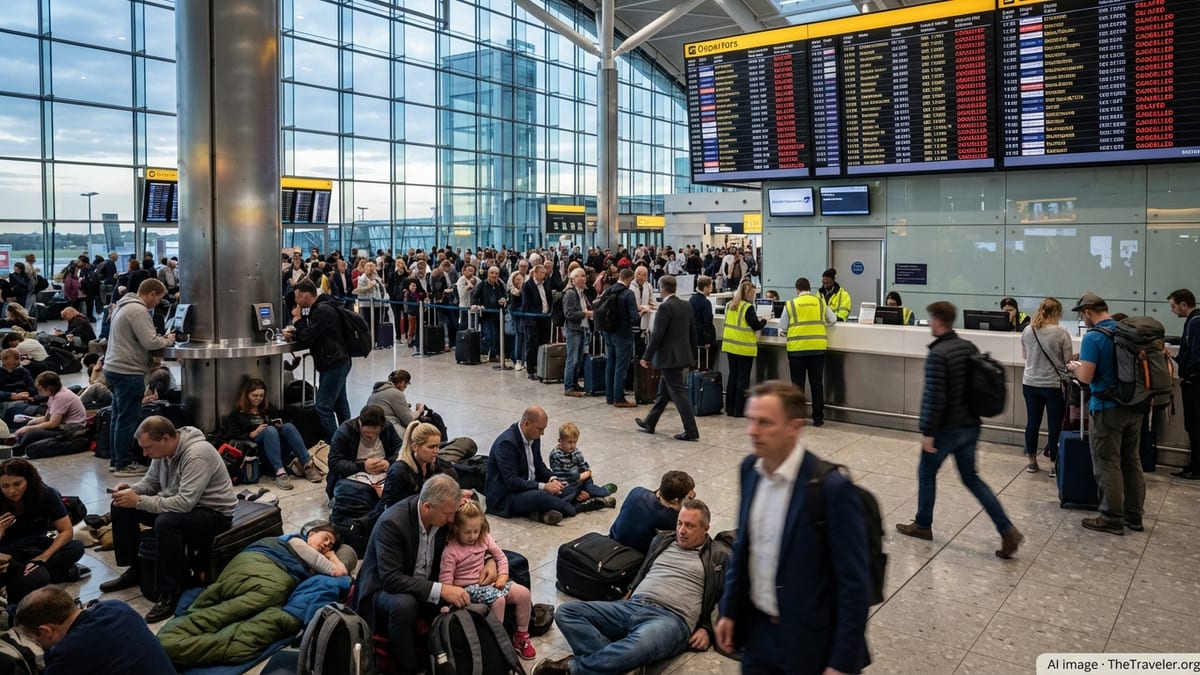
Middle East Crisis Sends Shockwaves Through UK Skies
The disruption comes amid escalating conflict in the Middle East, where joint US and Israeli strikes on Iran have triggered retaliatory missile barrages, forcing key regional hubs, including Dubai and Doha, to close or severely curtail operations. With two of the world’s busiest transit airports effectively offline, long-haul schedules have been thrown into disarray.
Data from flight tracking and aviation analytics firms on Sunday indicated at least 245 UK departures and arrivals delayed and 115 outright canceled, with Heathrow bearing the brunt of long-haul disruption. Nearly half of scheduled Heathrow flights to the Middle East were reported canceled, while services attempting to skirt affected airspace faced extended flight times, crew duty limitations and ongoing operational knock-ons.
While many cancellations involved direct services to Gulf and wider Middle Eastern destinations, the knock-on effects were felt across transatlantic and European routes as aircraft and crews were left out of position. This in turn hit connections for passengers bound for North America and major European capitals, including New York and Paris.
At Gatwick and Manchester, boards showed clusters of cancellations and rolling delays, particularly on services operated by airlines that rely heavily on Middle Eastern hubs for onward connectivity. Airport officials warned that disruption may persist into the working week even if regional airspace gradually reopens.
Airlines Scramble as Key Routes to New York, Paris and Dubai Stall
British Airways cancelled multiple flights to Dubai, Doha, Bahrain and Tel Aviv through at least 3 March, with additional delays and equipment changes affecting some services to New York’s JFK as aircraft and crews were redeployed. The airline said it was focusing on “keeping as many long-haul services operating as possible” while acknowledging that schedule reliability would remain challenged.
Low-cost carrier easyJet, which does not fly into the Gulf but depends on smooth operations at Gatwick and Manchester, reported growing knock-on delays across its European network, including services to Paris and other continental hubs used by passengers to connect onto long-haul partners. Extended turnarounds and slot constraints at congested UK airports added further pressure.
Other European and Gulf carriers, including Emirates and Qatar Airways, have also been forced to trim or suspend UK services as their home hubs contend with ground stops, rerouting and evolving airspace restrictions. Passengers booked on multi-leg itineraries via Dubai or Doha reported being stranded mid-journey, unsure when they would be able to continue on to final destinations such as New York and Sydney.
With airline call centres overwhelmed, travelers described spending hours in queues only to discover that rebooking options were limited, particularly for long-haul routes in the coming days. Some turned to social media to complain of “abandoned” departure halls, with little clear information on when flights might resume.
Scenes of Frustration and Fatigue Inside UK Terminals
Inside Heathrow’s Terminals 3 and 5, long lines formed at customer service desks from early morning as passengers on overnight flights from Asia and Africa discovered their onward connections had vanished from departure boards. Airport staff set out extra water and basic refreshments, while families camped on the floor near power sockets to keep phones charged.
At Gatwick’s North Terminal, some passengers reported receiving text messages about cancellations only after clearing security, prompting a rush back to crowded landside check-in zones. Screens cycled through rolling updates as gate changes and revised departure times were announced, then quietly replaced by the word “cancelled.”
Manchester Airport, a major gateway for northern England, saw similar scenes of confusion as morning departures to Dubai and other Middle Eastern destinations were scrubbed. Queues snaked through terminal concourses as travelers tried to reach airline agents, while others huddled around information screens refreshing every few minutes.
Airport managers urged passengers to arrive only if they had verified their flight was still operating, stressing that terminals were already at capacity with stranded travelers. They warned that hotel availability near major airports was tightening rapidly as airlines sought accommodation for those unable to depart the same day.
What Stranded Travelers Can Expect in Terms of Support
Under UK air passenger protections, airlines have a broad duty of care to customers facing significant delays or cancellations, including providing meals, refreshments, and, where necessary, overnight accommodation and transport between airports and hotels. That obligation applies regardless of the cause of disruption.
However, compensation in the form of cash payments is only due when delays and cancellations are deemed within an airline’s control, such as technical faults or crew shortages. Events considered “extraordinary circumstances,” including war, security incidents and widespread airspace closures, generally fall outside compensation rules, leaving many of Sunday’s stranded passengers ineligible for additional payouts.
Consumer advocates urged travelers to keep all receipts for out-of-pocket expenses, such as meals and local transport, and to request written confirmation from airlines outlining the reason for disruption. Travel insurers advised customers to check policy wording carefully, as cover for conflict-related disruption and airspace closures can vary widely.
For those with connecting itineraries, airlines must either rebook passengers on the next available service, including where possible placing them on rival carriers, or offer a refund if onward travel is no longer practical. Transfer passengers whose journeys have been interrupted also have the right to be flown back to their original point of departure if they decide to abandon travel altogether.
Uncertain Outlook as Airlines Watch Regional Airspace
Aviation analysts warned that even a brief closure of major Middle Eastern hubs can take days to unwind, especially when combined with missile activity that forces airlines to avoid large swathes of regional airspace. Rerouted flights may require technical stops, extra crew and revised schedules, all of which ripple through networks far from the conflict zone.
Carriers are monitoring updates from governments and air traffic control authorities in real time, adjusting flight plans and timetables as new advisories are issued. While some services to unaffected parts of the Middle East, such as Egypt or Turkey, have continued to operate, analysts expect persistent last-minute changes as operators balance safety, crew duty limits and passenger demand.
For now, travelers booked in the coming days on routes touching the region, or on itineraries relying on Middle Eastern hubs for onward connections, are being urged to check flight status repeatedly before leaving home. With key aircraft and crew still out of position after Sunday’s mass disruption, UK airports are braced for further queues, cancellations and missed connections as the aviation system struggles to regain equilibrium.