

More news on this day
UK air travel is entering a record-breaking phase, with passenger numbers surpassing pre-pandemic levels and airports across the country bracing for another packed travel season. For holidaymakers and business travellers alike, the boom is reshaping what it takes to secure a smooth, affordable journey through increasingly crowded terminals.
Get the latest news straight to your inbox!
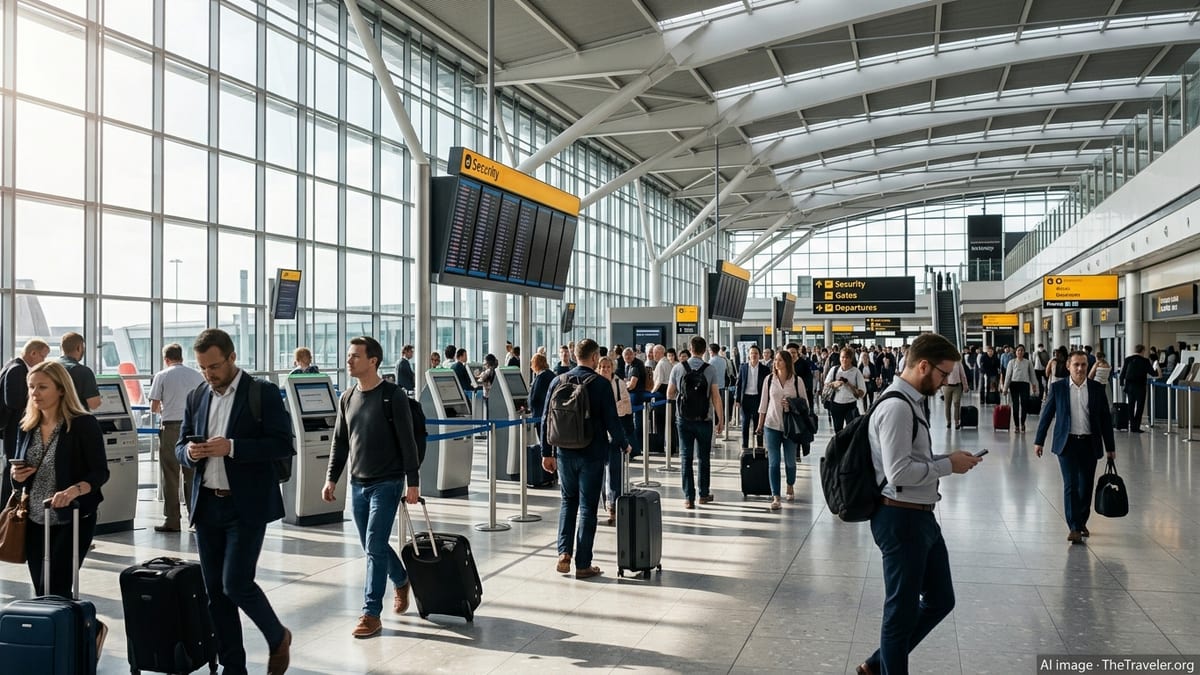
Record Passenger Numbers Are Redefining the UK Travel Experience
Latest figures from the UK Civil Aviation Authority and industry data show that 2025 is on track to be the busiest year on record for the country’s airports. Reports indicate that UK airports handled more than 300 million passengers in 2025, edging past the previous peak before the pandemic and underlining the strength of pent-up demand for international trips.
London Heathrow remains the bellwether. Publicly available data for 2024 and 2025 shows the hub handling more than 80 million passengers a year and nudging past its 2019 record, while Gatwick, Manchester, Birmingham and a string of regional airports have also reported sharp year-on-year gains. In parallel, government transport statistics indicate that international air passenger movements in 2024 slightly exceeded 2019 levels, even as international rail and sea travel lagged behind.
This surge is being fuelled by several factors: the return of business travel, strong leisure demand to Mediterranean and long-haul destinations, and growing connectivity from regional airports to hubs in Europe and the Middle East. Airlines have responded by deploying larger aircraft and denser seating layouts, allowing them to carry more passengers per flight and helping airports clock up record quarterly capacity.
For travellers, the headline numbers translate into fuller flights, busier departure halls and more pressure on airport infrastructure. Security checkpoints, baggage systems and border control are particularly sensitive to spikes in volume, and even short-lived technical problems can ripple quickly through a network operating so close to capacity.
Delays, Disruptions and System Glitches Remain a Real Risk
Alongside the rebound in demand, the UK’s aviation system has faced a series of high-profile disruptions. In recent seasons, technical issues at the national air traffic control provider have briefly grounded or limited flights, while a separate radar problem forced restrictions on movements in the London area. In 2025, a cyber incident affecting a major check-in and boarding systems provider created manual processing bottlenecks at several large European airports, including Heathrow, underscoring the vulnerabilities of increasingly digital operations.
Although these events were relatively short-lived, the consequences for passengers were significant. Cancellations, missed connections and overnight delays tend to be amplified when airports are already close to peak capacity and aircraft and crews have little slack in their schedules. Publicly available coverage of recent disruptions shows that, even when systems are restored quickly, it can take many hours for airlines to reposition aircraft and staff and for queues to clear.
Punctuality statistics from the UK regulator highlight the knock-on effect. As passenger volumes have climbed back to and beyond pre-pandemic levels, on-time performance has struggled to keep pace, particularly during school holidays and long weekends. High loads mean that rebooking options are more limited than in the past, and an incident that once might have meant a short delay can now trigger a lengthy wait for the next available seat.
Travellers planning trips in 2026 are therefore being advised by consumer bodies and travel industry analysts to build more margin into itineraries. That can mean avoiding extremely tight connections, allowing extra time to clear security and border checks, and factoring in the possibility of longer queues, particularly at major hubs during early morning and late afternoon peaks.
How to Beat the Crowds at Busy UK Airports
With major airports reporting record or near-record traffic, the timing and tactics of your trip can make a noticeable difference. Industry data shows that early morning departures between roughly 6 a.m. and 8 a.m. and late afternoon banked departures are the most congested, when large numbers of short-haul flights are scheduled close together. Choosing a late-morning or early afternoon departure, where possible, can help travellers avoid the worst of the crowds.
Security upgrades are another important factor. Several large UK airports have been rolling out new-generation security scanners and reconfigured lanes, which are designed to improve throughput and eventually relax the strictest liquid and electronics rules. During installation phases, however, construction and temporary layouts have led to longer security queues at some terminals. Checking the latest advice from your departure airport before you travel, and arriving earlier than pre-pandemic habits might suggest, can substantially reduce the risk of missing a flight.
Check-in and baggage behaviour also matter more in a crowded system. Airlines and airports have increasingly encouraged passengers to use online check-in and bag-drop machines to keep queues manageable. In practice, this means that those who check in as early as their airline allows, download boarding passes in advance, and travel with hand luggage only where feasible, tend to move more quickly through the airport and have more flexibility if schedules change at short notice.
Analysts also highlight the role of airport choice. While Heathrow and Gatwick capture much of the attention, regional airports such as Birmingham, Liverpool, Bristol and Newcastle have reported strong growth and in some cases record annual passenger numbers, but they may still feel less congested than the largest hubs at peak times. For travellers with flexibility on departure point, comparing schedules and typical crowding patterns across multiple airports can offer a more relaxed start or end to a journey.
Managing Hidden Costs as Airlines Lean on Ancillary Revenue
The boom in demand has coincided with an intensifying focus on ancillary revenue, the industry term for charges beyond the basic air fare. Low-cost and full-service airlines alike have increasingly unbundled services such as checked bags, advanced seat selection, early boarding and in-flight catering. Regulatory guidance and consumer watchdog reports highlight that these add-ons can materially increase the final price paid, particularly for families or groups.
UK and European rules set out clear protections on issues such as denied boarding, long delays and lost baggage, but they do not prevent airlines from charging for optional services. As a result, travellers are being encouraged by consumer organisations and comparison tools to scrutinise the full cost of a trip, including fees for baggage, seat choices and payment methods, before committing to a booking.
Dynamic pricing has also become more pronounced. With aircraft flying fuller, carriers are able to adjust fares and extras more aggressively in line with demand. According to recent industry analyses, prices for popular leisure routes can rise steeply in the weeks before departure, while the cost of selecting adjacent seats or extra legroom can fluctuate based on how many seats remain unsold.
For passengers trying to control costs, experts recommend booking well in advance for peak dates, opting for light cabin baggage where practical, and being flexible on travel days. Tuesday and Wednesday departures, for example, often attract lower fares and lower surcharge levels than Friday or Sunday peak flows. Reading fare rules carefully and watching for automatic add-ons during the booking process can also help avoid surprise charges.
Practical Strategies for a Smoother UK Flight in 2026
With UK air travel set for another busy year, practical preparation is emerging as the best defence against crowding and disruption. Published guidance from airlines, airports and consumer groups consistently stresses the basics: verify passport validity and entry requirements early, double-check names and dates on bookings, and ensure that contact details are up to date so that any schedule changes can be communicated quickly.
On the day of travel, up-to-the-minute information is critical. Keeping a close eye on airline apps and airport departure boards helps passengers react quickly to gate changes or rolling delays. In the event of serious disruption, understanding your rights under UK and European passenger compensation rules, and keeping receipts for any reasonable expenses, can smooth the process of securing refunds or support later.
Travel insurance has also taken on renewed importance. As passenger numbers grow and disruption risks remain, comprehensive policies that cover missed connections, schedule changes and lost baggage can provide a useful financial buffer. Analysts note that policies vary widely, making it important for travellers to read exclusions carefully and confirm how cover applies to air traffic control incidents or technology failures.
For many travellers, the overriding message is to adjust expectations. UK airports and airlines are carrying more people than ever, and occasional bottlenecks, queues and delays are an inevitable by-product of that success. Those who plan ahead, allow extra time, and factor in the true cost of their journey are likely to be best placed to benefit from the breadth of routes and competitive fares that the current air travel boom still offers.