

More news on this day
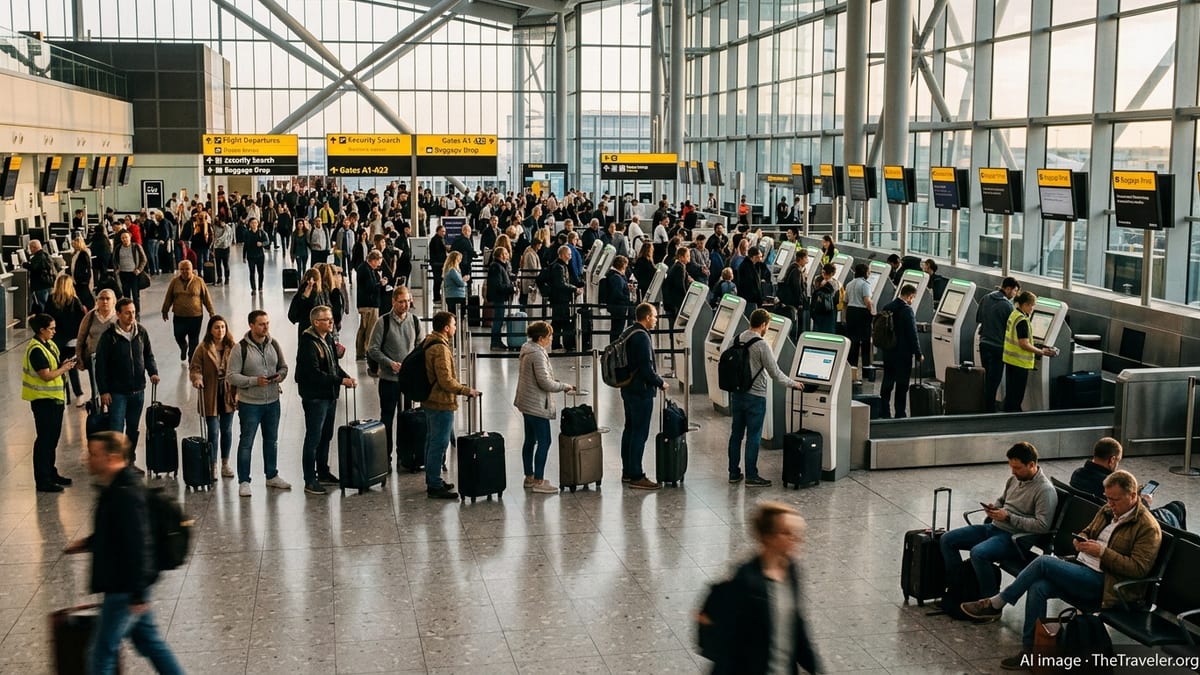
UK airports are entering 2026 with record passenger volumes, fuller planes and busier terminals than before the pandemic, creating both fresh opportunities for travellers and new pressure points around queues, delays and rising add-on costs.
Get the latest news straight to your inbox!
Record Passenger Numbers Signal a New Phase for UK Aviation
Official data and industry reports indicate that UK air travel is not just recovering but expanding beyond pre‑pandemic levels. Civil Aviation Authority figures show UK airports handled more than 300 million passengers in 2024, with forecasts pointing to further growth through 2025 and into 2026 as demand for both leisure and business trips continues to rise.
Heathrow, the country’s busiest hub, reported a record 83.9 million passengers in 2024 and is forecasting more than 84 million this year, underlining the intensity of demand through London’s primary gateway. Similar patterns are visible across the wider network, with Liverpool, Edinburgh and Newcastle among the airports reporting some of the strongest year‑on‑year percentage growth.
Government transport statistics for 2024 show that international air passenger volumes have broadly caught up with, and in some cases edged above, 2019 levels. The rebound is being driven by pent‑up leisure demand, the return of corporate travel on key routes and the growth of outbound tourism from the UK to Mediterranean and long‑haul sun destinations.
Regional airport operators are also reporting double‑digit increases in traffic, assisted by fresh investment and new airline partnerships. Additional low‑cost capacity from carriers such as Ryanair and easyJet at airports including Exeter, Norwich and Southend has opened more direct options outside London, spreading growth beyond the capital while keeping pressure on terminal infrastructure nationwide.
Capacity Growth, New Routes and a Shift in How Britons Travel
Published schedules for summer 2025 and early 2026 show airlines adding seats from UK airports on both European and longer‑haul routes. Low‑cost carriers in particular are leaning into strong leisure demand, expanding operations from bases such as Manchester, Bristol and Luton to popular holiday destinations in Spain, Greece and Turkey, as well as to secondary cities across Europe.
Publicly available investor reports from major airports indicate that billions of pounds are being channelled into terminal upgrades, security screening areas and piers to handle the surge. Projects at airports such as Leeds Bradford and others include expanded departure lounges, additional security lanes and redesigned check‑in halls aimed at smoothing passenger flows during peak hours.
At the same time, travellers are changing how they fly. Survey work cited by the CAA suggests nearly two‑thirds of UK residents have flown in the past year, and a sizeable share plan to travel more by air in the coming 12 months. Shorter, more frequent leisure trips and long weekend breaks are becoming more common, creating concentrated peaks on Thursday evenings, Friday mornings and Sunday returns.
This combination of sustained demand, denser scheduling and more point‑to‑point routes means that even when overall on‑time performance improves on paper, many passengers still experience crowded terminals and busy departure gates. The result is a travel environment where planning, timing and airport choice increasingly shape the quality of the journey.
Delays, Disruption and Where Crowds Are Likely to Build
Europe‑wide statistics from organisations such as EUROCONTROL and Airports Council International show that average delays per flight have remained broadly stable even as flight volumes climbed again in 2024. Yet punctuality varies significantly by airport and route, and passengers at some UK hubs are more likely to encounter long waits at peak times.
Consumer‑facing analyses of delay data for 2025 place Manchester among the European airports with the highest combined risk of flights running more than an hour late, while separate coverage has highlighted Gatwick’s performance on departure punctuality in 2024. These findings reflect the strain of busy single‑runway operations and tight scheduling at popular holiday gateways.
Recent disruption linked to wider geopolitical tensions, airspace restrictions and weather patterns has also affected UK airports alongside their European counterparts. Flight‑tracking services reported hundreds of cancellations and delays across major hubs including London during several disruption spikes in late 2025 and early 2026, underlining how quickly the system can be thrown off balance.
Beyond runway operations, passenger bottlenecks are also emerging at security, check‑in and border control. New entry‑exit systems for non‑EU nationals at some European airports, post‑Brexit checks and rising numbers of travellers requiring special assistance are all contributing to longer average processing times, especially during school holidays and bank holiday weekends.
Practical Ways to Beat the Crowds and Cut Your Risk of Delays
For travellers planning UK departures in 2025 and 2026, route and timing choices can make a significant difference. Industry data suggest that early‑morning departures are typically more punctual than late‑day flights, which are more exposed to knock‑on delays. Selecting flights that leave before mid‑morning and avoiding the final services of the day on busy routes can reduce the risk of severe disruption.
Airport choice matters too. While the largest hubs offer the widest range of destinations and onward connections, regional airports with growing but still moderate traffic can provide a calmer experience. Published statistics showing robust but manageable growth at airports such as Liverpool, Newcastle and several regional gateways point to alternatives where queues may be shorter outside peak holiday weekends.
Passengers are also being encouraged by consumer groups and travel advisers to check historical on‑time performance for specific flights and carriers when booking. Publicly accessible tools that analyse past delay and cancellation rates can highlight services that have been more reliable over the preceding months, giving travellers an evidence‑based way to prioritise certain departures.
At the airport itself, newer security screening technology and expanded pre‑departure areas at some UK terminals are beginning to ease congestion, but their benefits are most noticeable to those who arrive early and move promptly through check‑in and bag drop. Travellers are advised to monitor airport guidance on recommended arrival times, which may extend to three hours or more for popular short‑haul holiday flights at peak periods.
How to Avoid Hidden Costs as Airlines Push Up Ancillary Revenues
The boom in UK air travel is also being accompanied by a steady rise in ancillary fees. Financial results and fare breakdowns from major airlines show a growing share of revenue coming from extras such as seat selection, checked baggage, early boarding and payment surcharges. For travellers, this means that headline fares can mask a much higher total trip cost.
Price comparison sites and consumer watchdogs advise passengers to pay close attention to what is included in the base fare when comparing options. On many short‑haul routes, a slightly higher ticket that bundles a checked bag and seat selection can work out cheaper than a lower fare that requires multiple add‑ons at the airport or later in the booking process.
Dynamic pricing for extras is also becoming more common, with charges for hold luggage or preferred seats increasing closer to departure on busy flights. Booking these elements at the same time as the ticket, and double‑checking baggage allowances across connecting flights on separate tickets, can help avoid last‑minute charges at the check‑in desk.
Travellers flying from UK airports are further reminded to account for airport‑side costs, from premium security lanes to fast‑track border services and high on‑site parking fees. Many airports offer discounted advance parking and rail links that can undercut drive‑up tariffs, meaning that planning surface transport to and from the terminal is now an important part of keeping the overall cost of a trip in check.