

More news on this day
Thousands of travellers have been left stranded across the UK after a fresh wave of disruption hit British Airways, easyJet and Ryanair, with at least 630 delays and 76 cancellations reported on Monday across London, Heathrow, Manchester and Birmingham airports.
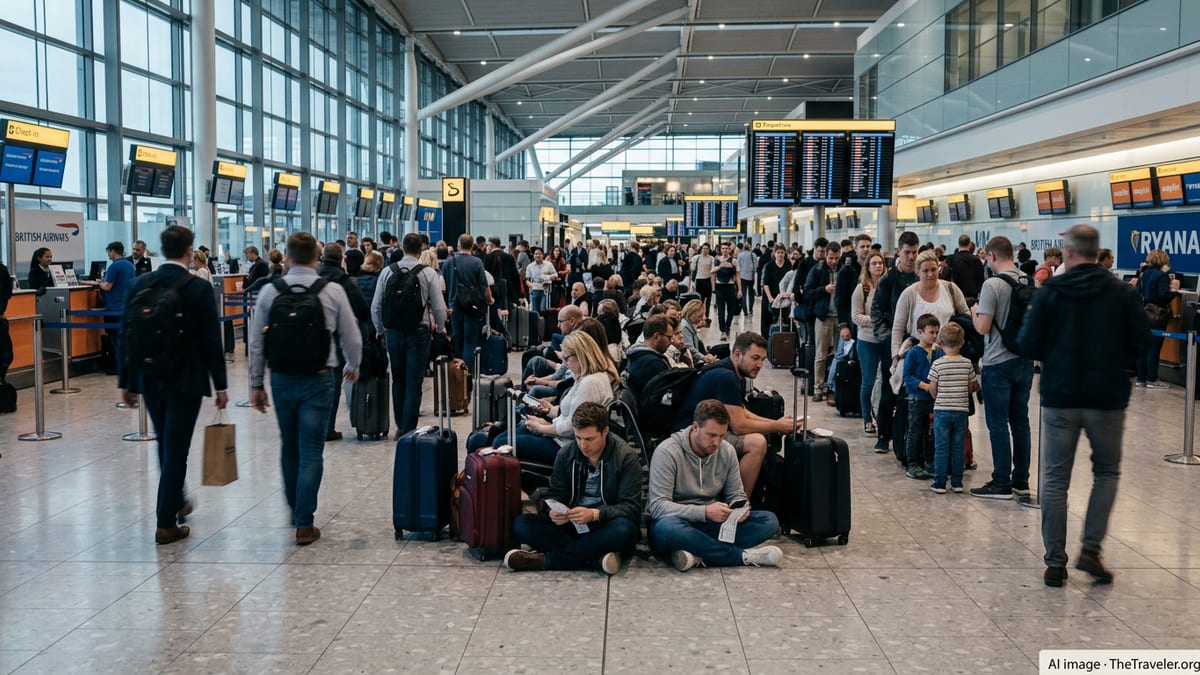
Major UK Hubs Buckle Under Mounting Disruption
The latest data from flight tracking and industry analytics firms on 9 March shows a sharp spike in operational problems at key UK gateways, compounding days of turbulence for airlines already battling weather, staffing constraints and wider international disruption. Analysts estimate that British Airways, easyJet and Ryanair together account for more than half of the 630 delayed flights and a substantial share of the 76 cancellations affecting the UK market today, with London and major English regional hubs bearing the brunt.
London Heathrow is again the most heavily affected UK airport, with dozens of outbound and inbound services running significantly behind schedule as carriers work through knock-on delays from congested European airspace and rerouted long haul rotations. Manchester and Birmingham have also logged an elevated number of delayed departures to European city break destinations and Mediterranean leisure routes, straining terminal facilities as departure boards fill with amber and red alerts.
The disruption follows a wider pattern seen across Europe in recent days, with airports in France, Germany, the Netherlands, Italy and Turkey all reporting hundreds of delays and scores of cancellations. For UK travellers, the result on Monday has been long queues at check in and security, packed gate areas and mounting frustration as estimated departure times repeatedly slip back.
British Airways, easyJet and Ryanair Struggle to Maintain Schedules
Flag carrier British Airways is among the worst hit on Monday, with dozens of short haul services from Heathrow and London area airports operating late after aircraft and crews arrived out of position from earlier rotations. Flights to key business and leisure markets across Europe have been affected, forcing the airline to consolidate some departures, rebook passengers on later services and, in a minority of cases, cancel flights entirely.
Low cost giants easyJet and Ryanair are facing similar pressures. Both airlines operate dense schedules using high aircraft utilisation, which leaves little room to recover when delays build early in the day. On Monday, a combination of weather-related slot restrictions at some continental hubs, ongoing airspace constraints linked to the Middle East conflict and residual staffing shortages at certain UK and European airports all contributed to widening knock-on delays across their networks.
The three carriers together dominate short haul capacity from the UK, meaning disruption at any scale quickly cascades through London, Manchester and Birmingham. Aviation analysts note that when more than 600 flights involving just a handful of large operators are delayed in a single day, spare seats on alternative services evaporate quickly, making it much harder to re-accommodate stranded travellers within a reasonable timeframe.
Passengers Face Long Queues, Missed Connections and Overnight Stays
On Monday afternoon, scenes of crowded terminals played out across multiple UK airports as passengers scrambled to rearrange plans. At Heathrow, travellers reported queues snaking through departure halls as people waited to speak with airline agents about missed connections and cancelled flights. Those with onward long haul journeys were particularly exposed, with some seeing complex itineraries to Asia, Africa and the Americas unravel after missing a single short haul feeder leg into London.
At Manchester and Birmingham, families returning from school holiday breaks and weekend city trips faced extended waits on the ground as aircraft turned around late from previous flights. With many services departing more than two hours behind schedule, baggage belts became congested and airport seating proved insufficient for crowds waiting through rolling delays and rebookings.
For some, the disruption translated into unexpected overnight stays. Industry data and passenger accounts suggest that a segment of travellers had to be accommodated in hotels near Heathrow, Manchester and Birmingham after late evening cancellations left them without same day alternatives. Others chose to abandon trips altogether, seeking refunds or vouchers instead of accepting next day departures.
Knock-on Effects from Wider European and Middle East Turmoil
While Monday’s figures reflect a particularly severe day for UK travellers, aviation experts stress that the problems are part of a wider web of disruption stretching well beyond Britain. European airports have spent much of the past week juggling weather systems, capacity constraints and rolling air traffic control restrictions, while carriers attempt to rethread aircraft and crew through crowded skies.
The continued instability in Middle East airspace has further complicated schedules, with Europe-bound aircraft forced onto longer routings and connection banks in major hubs repeatedly reshuffled. That in turn has reduced punctuality at onward gateways, including London and Manchester, as late-arriving long haul flights disrupt carefully timed short haul departures.
Operational resilience remains a concern across the industry. UK airports and airlines have improved staffing since the post-pandemic crunch, but the combination of constrained airspace, volatile geopolitics and strong travel demand has left little slack in the system. When multiple regions experience disruption on the same day, UK hubs can quickly feel the impact in the form of mounting delays and clusters of cancellations.
What Stranded Travellers Are Being Told to Do
As delays built through Monday, airlines urged passengers not to travel to the airport unless their flight showed as confirmed and operating. British Airways, easyJet and Ryanair have been contacting affected customers by app notifications, email and text message to advise of schedule changes, alternative options or entitlement to refunds where services have been cancelled outright.
At airport level, public address announcements and display boards have repeatedly directed travellers to stay in close contact with their airline, rather than airport staff, for rebooking and compensation queries. Under UK and EU passenger rights rules, carriers must provide care such as meals, refreshments and hotel accommodation when long delays or overnight disruptions occur, regardless of whether the issues stem from wider airspace problems or operational challenges.
Consumer groups are reminding passengers to keep receipts for any reasonable out-of-pocket expenses and to document the length and cause of delays, as this information can be critical when seeking reimbursement or statutory compensation later. With another busy travel week ahead and wider European skies still unsettled, airlines and airports are bracing for further turbulence, and travellers setting out from London, Heathrow, Manchester and Birmingham are being advised to check their flight status frequently and build extra flexibility into their plans.