

More news on this day
Flight cancellations have started to ripple through the United Kingdom as the month-long war involving Iran pushes up jet fuel costs, squeezes supplies into Europe and forces airlines to reassess their schedules.
Get the latest news straight to your inbox!
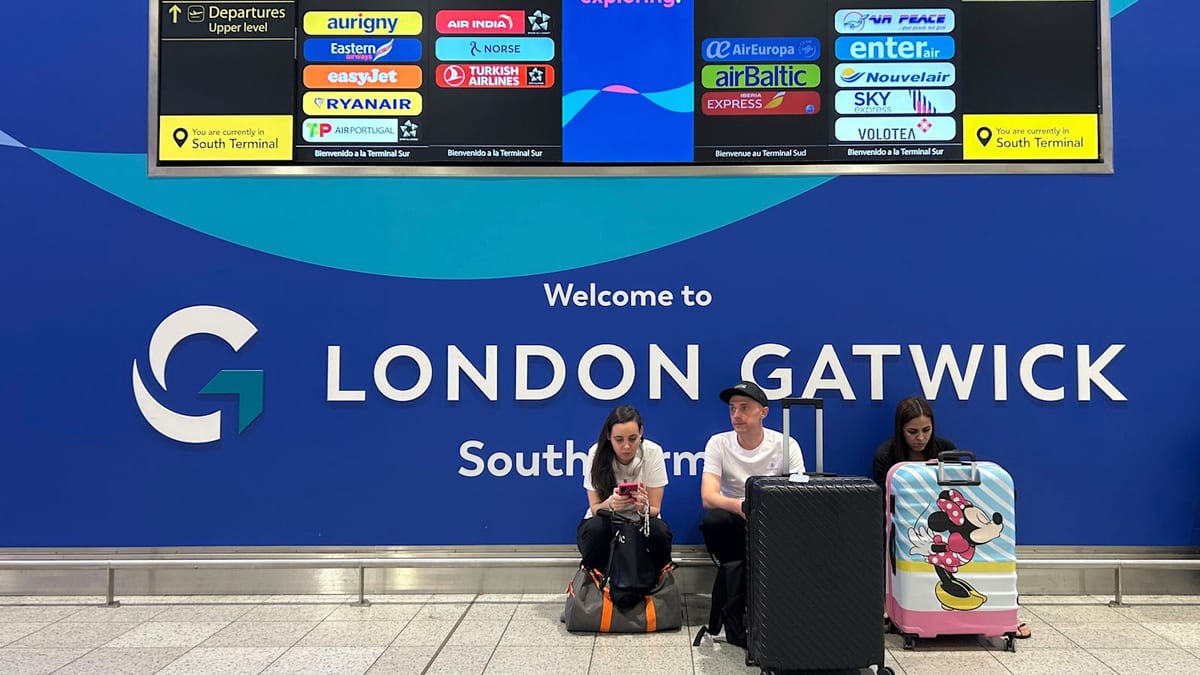
Image by ITVX
First Cancellations Hit UK Regional Networks
Regional and niche carriers are emerging as the first to trim schedules in response to the conflict’s impact on fuel and operating costs. According to published coverage on Thursday 2 April, Channel Islands airline Aurigny plans to cancel a series of services from mid April to early June, citing the pressures created by the Iran war and wider global instability.
ITV News reports that Skybus, which links Cornwall Airport Newquay with London Gatwick, abruptly halted flights from 2 April, describing the move as a response to circumstances beyond its control. The step removes a key regional connection between the far southwest of England and the UK’s second busiest airport at a time when domestic rail and road capacity is already under strain.
These cuts mark one of the first clear signs that the conflict, initially felt most acutely on long haul routes through the Gulf, is now filtering into short haul and domestic travel patterns in the UK. Industry analysts note that smaller carriers, which typically have less hedged fuel exposure and limited ability to reassign aircraft, are especially vulnerable to rapid swings in jet fuel prices.
Travelers booked on affected services are being offered rebooking options or refunds, but reduced frequencies mean alternatives are not always available on the same day, particularly for journeys linking island communities and regional airports.
Jet Fuel Shock Spreads From Strait of Hormuz to Europe
The cancellations in the UK are closely tied to upheaval in global fuel markets triggered by the Iran war. The conflict has disrupted tanker movements through the Strait of Hormuz, a critical artery for crude and refined products, pushing oil and jet fuel prices sharply higher and raising the risk of outright shortages.
Public comments highlighted in recent business coverage show European airlines warning that sustained disruption could place a significant share of their jet fuel supply at risk from late spring. Executives at low cost giant Ryanair have indicated that as much as a quarter of the airline’s fuel needs for May and June could be affected if flows through the region do not normalize, though the carrier has not yet begun cancelling services.
Industry monitoring by travel and aviation outlets indicates that global airlines are already trimming schedules in other regions in response to the same pressures. Air New Zealand has cut more than 1,100 flights through early May, while Scandinavian Airlines is preparing to cancel around 1,000 services next month. These steps underline how the conflict’s economic shock is radiating far beyond the Middle East itself.
For UK operators, the combination of higher spot fuel prices, volatile hedging costs and uncertainty about future deliveries creates an incentive to pare back marginal routes and protect core networks. Analysts suggest that if the war extends into the summer, further cuts across Europe’s short haul market are increasingly likely.
Middle East Airspace Closures Disrupt UK Long Haul Links
The war’s direct effect on airspace and airports in the Gulf and wider region has also spilled into UK flight planning. Airspace over parts of Iran, Iraq and neighboring states has been heavily restricted since late February, while Dubai, Abu Dhabi and Doha have all experienced temporary shutdowns or capacity reductions following missile and drone strikes.
British and European airlines have responded by suspending some services to affected hubs and rerouting others. British Airways has halted flights to and from Dubai until at least the end of May after damage and repeated airspace closures, while other major carriers across Europe have cut or diverted services to the United Arab Emirates, Qatar and nearby markets.
These changes lengthen journeys between the UK and destinations in Asia, Australasia and East Africa, as flights are forced to take more northerly paths that avoid conflict zones. Aviation data cited in recent reports shows that some Europe to Central Asia routes have grown by several hundred kilometers, adding 30 to 40 minutes of flying time and increasing fuel burn.
For passengers, this means a higher risk of missed connections, longer layovers and more complex itineraries. Travel advisories from insurers and risk consultants emphasize that itineraries routing through multiple hubs may be particularly vulnerable to cascading delays when a single airport faces renewed restrictions.
Global Context: Thousands of Flights Cut Worldwide
The early wave of UK cancellations forms part of a wider pattern of disruption as airlines recalibrate capacity in response to the Iran war. Aviation trackers and travel industry reports suggest that thousands of flights have already been cancelled globally since late February, with particularly heavy cuts in North America and the Asia Pacific region.
In the Middle East, strikes on aviation infrastructure and the closure of airspace in Bahrain, Qatar, the United Arab Emirates and other states have forced major carriers to ground or divert services. Coverage by international news agencies indicates that Middle Eastern hubs, which normally act as key bridges between Europe, Africa and Asia, have seen extensive cancellations and prolonged disruption.
Beyond the region, airlines including Air India, Lufthansa and others have suspended or rerouted flights that would typically pass through or near Iranian and Gulf airspace. This has reshaped traditional corridors between Europe and Asia, increasingly funneling traffic over Central Asia and other alternative routes, with associated operational and cost challenges.
Observers in the travel sector warn that the combination of higher fares, longer journeys and growing uncertainty may weigh on international tourism demand if the conflict persists. Business travel planners are already reviewing routings and, in some cases, postponing trips that rely on multiple intercontinental connections.
What UK Travelers Should Expect in the Coming Weeks
For travelers in and from the UK, the immediate impact is most visible in specific regional and Middle East linked routes rather than across the entire network. Industry commentary suggests that the larger UK based airlines currently aim to preserve the bulk of their schedules to North America and core European destinations, while continuously assessing routes exposed to high fuel costs or airspace disruption.
However, with warnings from airline executives and energy agencies about worsening fuel supply pressures in April and May, analysts caution that more extensive schedule adjustments remain possible. Seasonal planning for the busy summer period is under review at many carriers, and discretionary capacity such as secondary leisure routes could be at risk if costs continue to rise.
Passengers are being advised by travel agents and consumer groups to monitor bookings closely, allow extra connection time where feasible and remain flexible about routings, especially when itineraries involve the Middle East or long haul links to Asia and Oceania. Some guidance also points to the importance of checking insurance coverage for war related disruption, as policy terms vary widely.
For now, the first wave of UK cancellations is limited in scope, but the underlying drivers are global and unresolved. As the conflict around Iran continues to reshape fuel markets and flight paths, both airlines and passengers in the UK are likely to face an extended period of uncertainty in the skies.