

More news on this day
Hundreds of air passengers were left stranded on Saturday as disruption rippled through three of the United Kingdom’s busiest hubs, with 357 delays and 13 cancellations reported across London Heathrow, London Gatwick and Manchester airports, affecting major carriers and high-demand routes to New York, Paris, Dubai and other global destinations.
Get the latest news straight to your inbox!
Major UK Hubs Grapple With Knock-On Disruption
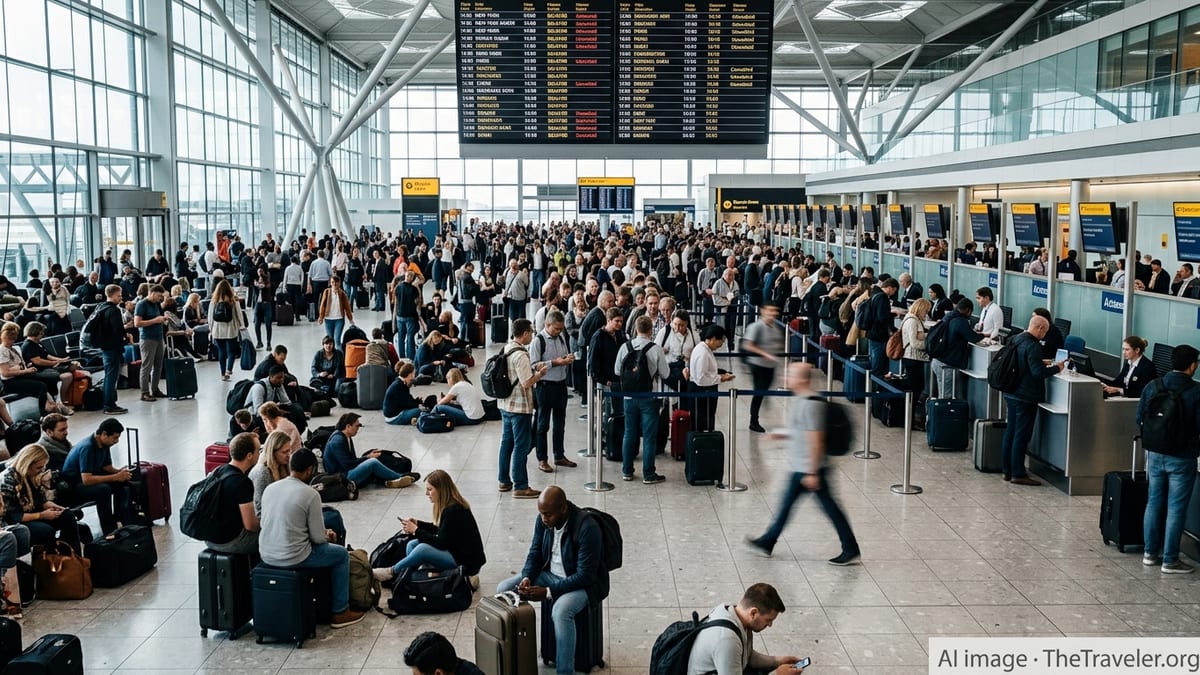
According to early tallies from airport tracking data and media coverage, operations at Heathrow, Gatwick and Manchester were heavily strained as the day progressed, with late departures and rolling cancellations building into visible backlogs in departure halls. The scale of disruption left passengers queueing at service desks, crowding around information screens and searching for scarce rebooking options.
Heathrow, the country’s primary long-haul gateway and Europe’s busiest international airport, appeared to experience the greatest pressure, reflecting its tight scheduling and limited spare runway capacity. Gatwick, the UK’s main single-runway airport serving a mix of leisure and short-haul European traffic, and Manchester, the principal hub for northern England, also reported extensive delays as aircraft, crews and slots fell out of position.
Observers noted that while the total of 13 cancellations was modest compared with previous large-scale shutdowns, the pattern of 357 delayed flights concentrated at three major airports quickly translated into significant passenger disruption. With aircraft arriving late from earlier rotations, departure times slid further through the afternoon and evening, compounding the challenge for airlines trying to restore normal schedules.
Publicly available information indicated that crowding was most visible in main terminals handling international departures, where travellers faced uncertainty over departure times and connecting flights. As ground handling teams and airport staff attempted to process backlogged departures, announcements frequently flagged rolling delays rather than definitive new schedules.
Flag Carriers and Low-Cost Giants Among Affected Airlines
Published reports and live flight-status boards showed that a broad mix of airlines were hit, from full-service carriers such as British Airways and Emirates to low-cost operators including easyJet and Ryanair. The disruption cut across traditional business routes, holiday services and visiting-friends-and-relatives traffic, illustrating the interconnected nature of operations at the three hubs.
British Airways, the dominant airline at Heathrow, appeared to experience a series of knock-on delays as inbound aircraft arrived late from earlier sectors, squeezing already narrow turnaround windows. This, in turn, had implications for afternoon and evening long-haul departures, particularly transatlantic and Middle East services operating to tight curfews and slot restrictions at destination airports.
At Gatwick, easyJet and other European-focused carriers faced issues on short-haul rotations, where even minor delays can cascade quickly across multiple flights in a single day. Ryanair, which maintains a significant presence at both London and regional UK airports, also appeared in delay statistics, with later departures on popular weekend routes adding to queues at boarding gates and customer service counters.
Emirates and other Gulf and Asian carriers were not immune to the disruption, particularly on services requiring precise timing to feed large hub-and-spoke networks. Even a relatively small schedule shift at a departure airport such as Heathrow or Manchester can lead to missed connections at onward hubs, forcing rebookings and overnight stays for affected travellers.
Key International Routes to New York, Paris and Dubai Impacted
Among the most visible consequences for travellers were delays and cancellations on high-profile international routes connecting the UK to major global centres. Flight trackers and airport boards showed timetable disruption on services linking London and Manchester to New York, with late departures from the UK threatening to erode connection times on arrival in the United States.
Short-haul European routes, including frequent services between London and Paris, also featured prominently in the disruption pattern. Although such routes are typically well served by multiple daily frequencies, even a brief interruption during peak periods can create bottlenecks, with passengers facing long waits for the next available seat or being re-routed via alternative hubs.
Reports further highlighted impacts on departures to Dubai and other Gulf destinations, key links for business travellers, tourists and long-haul connectors heading onward to Asia, Africa and Australasia. Slight schedule shifts on these long sectors can snowball into missed onward flights at hub airports, straining hotel capacity and customer service resources as airlines work to reaccommodate passengers.
Some domestic and regional services from Manchester and Gatwick were also affected, complicating the travel plans of those relying on same-day connections between the north of England, London and onward international flights. For many, the delays meant unexpected overnight stays, rearranged itineraries and additional out-of-pocket costs for food, transport and accommodation.
Passenger Experience Marked by Long Queues and Uncertainty
Social media posts and media reports painted a picture of crowded concourses and lengthy queues at information and check-in desks across the three airports. Screens displaying clusters of delayed flights added to a sense of uncertainty, with many passengers unsure whether to remain at departure gates, seek rebooking or attempt to reroute via alternative airports.
Families beginning school holiday trips, business travellers on tight schedules and visitors returning home all appeared to be caught up in the disruption. With limited spare capacity on later services, some travellers faced rebookings onto flights departing much later in the day or even on subsequent days, particularly on popular transatlantic and Middle Eastern routes.
Published accounts indicated that airport staff and airline ground teams were working to manage queues, distribute basic information and prioritise passengers with immediate onward connections. However, as is often the case during widespread disruption, the high volume of affected travellers strained call centres, help desks and digital channels, leaving some passengers reporting difficulty in obtaining timely updates.
Travel rights and compensation rules became a focal point for many stranded passengers seeking to understand their entitlements to meals, accommodation or refunds. Consumer advocacy groups and travel commentators reiterated the importance of documenting delays, keeping receipts and checking both airline policies and UK and European passenger protection frameworks.
Broader Context of Strain on UK Air Travel
While Saturday’s disruption was limited in scale compared with historic shutdowns triggered by air traffic control failures, severe weather or infrastructure incidents, it underscored the vulnerability of the UK’s tightly scheduled aviation system. Heathrow in particular is widely reported to operate near full runway capacity, leaving limited margin to absorb operational shocks before delays accumulate.
Recent years have seen a series of events highlighting how quickly localised problems can ripple through Europe’s congested airspace, from air traffic system outages to power failures affecting airport operations. Analysts note that high passenger volumes, staffing constraints and tight slot regimes at major hubs combine to reduce flexibility when irregular operations arise.
Industry observers also point to the ongoing challenge of balancing ambitious growth in passenger numbers with investment in infrastructure, technology and resilience measures. While airlines and airports have introduced new tools to improve real-time communication with travellers, episodes such as Saturday’s disruption demonstrate the continued potential for sudden, large-scale inconvenience.
For passengers planning travel in the coming weeks, travel experts commonly advise building in additional connection time where possible, monitoring flight status closely on the day of departure and considering flexible ticket options that allow easier rebooking in the event of disruption. As UK airports move into busier spring and summer schedules, the performance of key hubs like Heathrow, Gatwick and Manchester will remain under close scrutiny from both the industry and the travelling public.