

More news on this day
Travellers heading to major UK airports in 2026 are facing sharply higher terminal drop-off charges at Heathrow, Gatwick and Manchester, intensifying a debate over whether Britain is out of step with European rivals that continue to offer free passenger set-down at the terminal door.
Get the latest news straight to your inbox!
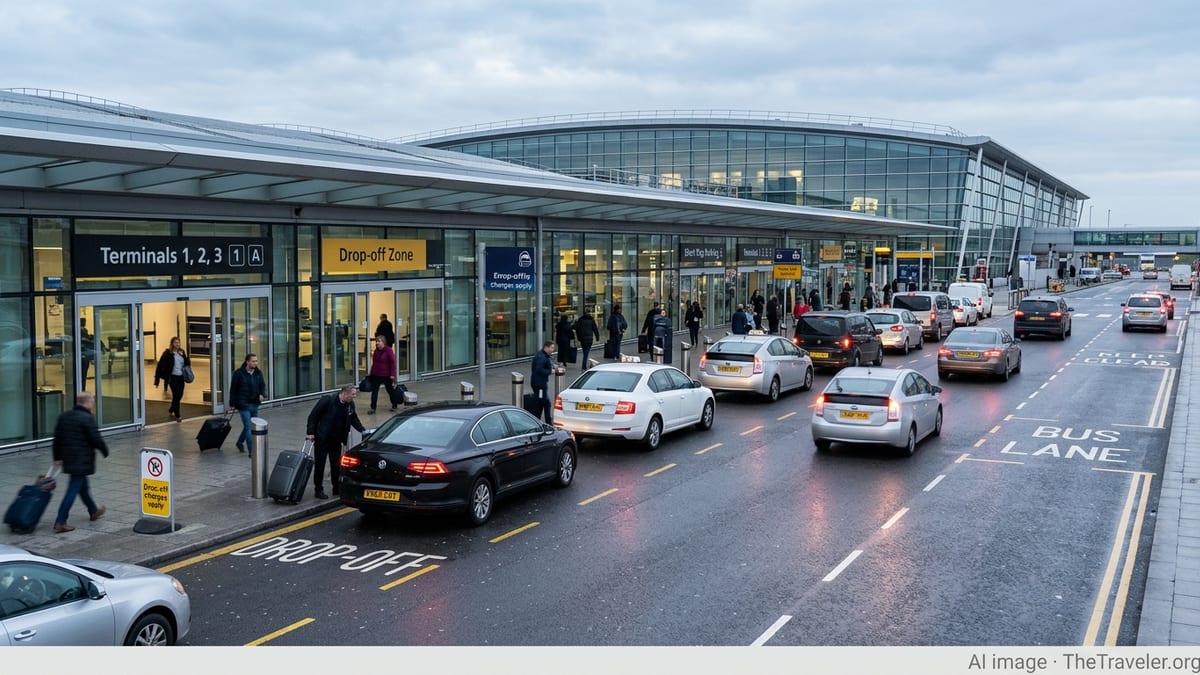
New Year, New Costs at Heathrow and Gatwick
Publicly available information shows that from January 2026 drivers using Heathrow’s terminal forecourts now pay £7 per vehicle to drop passengers at any terminal, up from £6 in 2025. The increase, introduced on 1 January 2026, applies across all drop-off zones, with automatic number plate recognition logging vehicles and charges enforced through post-visit online payment and penalty notices for missed deadlines.
At London Gatwick, reports indicate an even steeper rise. From 6 January 2026 the airport has raised its forecourt drop-off fee to £10 for up to 10 minutes, with an additional £1 per extra minute up to a daily cap. Coverage in UK transport and consumer outlets notes that the charge has climbed steadily since being introduced in 2021, more than doubling in five years as the south London hub recovered traffic and invested in terminal and access upgrades.
Both airports continue to offer workarounds for cost-conscious travellers. Drivers can still use long-stay car parks for free short stays, typically up to two hours, and connect to the terminals by shuttle bus. However, this adds journey time and often involves moving luggage through car parks and onto buses, which many families and business travellers see as an unwelcome trade-off for avoiding the forecourt fee.
Industry-focused reports suggest the new charges form part of wider surface-access strategies that seek both to raise revenue and to push more passengers toward rail, coach and bus services. Heathrow and Gatwick each frame their pricing structures in the context of congestion management and environmental targets, even as motorists complain that higher drop-off fees feel like another incremental cost layered onto already expensive air travel.
Manchester Tightens the Screw on Drivers
In northern England, Manchester Airport has also emerged as a focus of passenger frustration. Travel and consumer coverage for early 2026 places the main forecourt drop-off at £5 for five minutes, rising to around £6.40 for 10 minutes and £25 for 30 minutes, making it one of the most expensive short-stay options relative to dwell time among UK airports. A barrierless system built around automatic number plate recognition requires drivers to pay online after leaving the zone, with penalty charges issued for non-payment.
Manchester’s approach is evolving further in 2026. Airport notices describe a broader roll-out of barrierless technology across parking facilities from late March, extending the camera-based model that already governs drop-off and pick-up areas. The stated aim is to ease traffic flows at pinch points, but local media and social channels highlight a string of cases in which motorists forgot to pay or misunderstood the online system and then received significant penalty demands.
Alongside the main paid forecourts, Manchester maintains a free drop-off area further from the terminals, typically allowing up to an hour without charge and connecting to departures by shuttle bus. Yet public commentary suggests that this option is not always well signposted for infrequent visitors and can feel impractical for those travelling with young children, bulky luggage or passengers with limited mobility.
The combination of rising tariffs, complex time bands and strict enforcement has fuelled debate in Greater Manchester and beyond about whether forecourt access is becoming a profit centre in its own right. Critics argue that the model risks deterring visitors and reinforcing a perception that UK regional hubs are less welcoming and less straightforward to use than airports elsewhere in Europe.
UK Fees Diverge From Practice at Many European Hubs
While charges escalate at leading UK airports, a contrasting picture emerges across much of continental Europe. Published comparisons of surface-access policies at major hubs highlight that many airports serving key city-break and holiday destinations still permit free short-term drop-off directly outside terminals, at least for a limited number of minutes.
Large airports in countries such as Spain, Germany and the Netherlands are frequently cited in this context, with forecourt access bundled into broader aeronautical and commercial revenue streams rather than priced as a standalone charge. In some cases, airports cap dwell time with clear signage and rely on security staff and traffic management rather than per-visit billing to keep vehicles moving.
Industry analysts note that this divergence reflects different approaches to funding airport infrastructure. In the UK, where private operators bear a significant share of investment in roads, car parks and forecourts, drop-off and parking income has become a dependable revenue line. By contrast, many continental airports operate under mixed public and private ownership models in which state or regional authorities play a larger role in financing ground access provisions.
For passengers comparing options for city breaks or connecting flights, these structural differences show up most clearly in the final minutes before departure. A traveller who can be dropped off free of charge outside a terminal in Madrid, Amsterdam or Berlin may confront an immediate bill for the same convenience at Heathrow, Gatwick or Manchester, even before factoring in parking or other airport costs.
Travellers React as Forecourt Charges Become a Cost to Plan For
The escalation of forecourt fees in 2026 is prompting many UK travellers to rethink how they budget and plan for airport journeys. Consumer travel guides now routinely list drop-off tariffs alongside baggage and seat fees when advising on the total cost of flying from British hubs, warning that failure to pay correctly can result in penalty notices far exceeding the original charge.
Reports from motoring and travel forums indicate that confusion over payment windows and online portals remains common, particularly for those who use airports only occasionally. Some drivers only discover the rules after receiving automated penalty notifications weeks later, fuelling perceptions that the systems are unforgiving and tilted against infrequent users who are unfamiliar with the arrangements.
At the same time, there is growing emphasis on alternatives. Travel commentators highlight dedicated airport coach services, rail links and shared-ride options as ways to avoid forecourt charges altogether. For those who still rely on being dropped off by friends or family, the availability of free long-stay or remote drop-off zones is becoming an important factor when choosing between regional airports serving similar destinations.
With more UK airports reviewing their pricing in the wake of Gatwick’s headline £10 fee, passenger groups and local representatives are intensifying calls for clearer national guidance on what constitutes fair and transparent charging for brief terminal access. As 2026 progresses, the gap between the British model and the free drop-off approach still prevalent at many European competitors is likely to remain a prominent point of comparison for travellers weighing where, and how, they fly.