

More news on this day
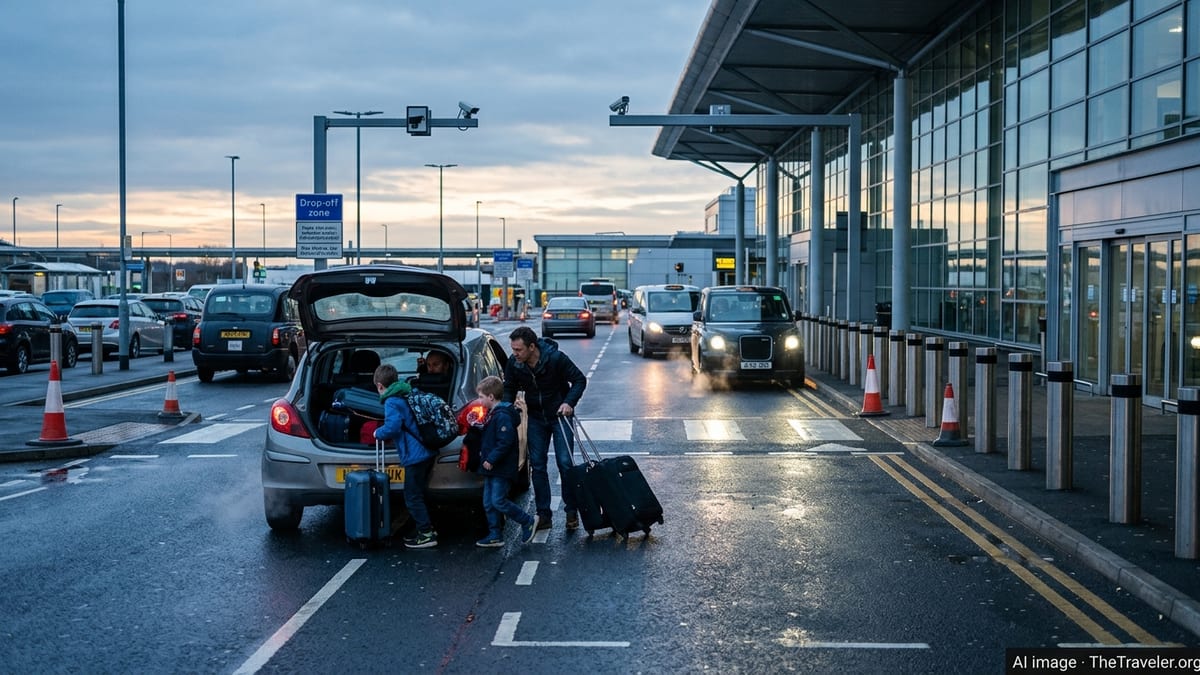
Escalating terminal drop-off fees at major UK airports are prompting a wave of anger from travelers, taxi drivers and motoring groups, as many European hubs continue to offer free curbside access for goodbyes and quick drop-offs.
Get the latest news straight to your inbox!
Rising Charges at Heathrow, Gatwick and Across the UK
Published information shows that UK airports are steadily increasing what are often described as “forecourt” or “kiss-and-fly” charges, turning the simple act of dropping a passenger at departures into a significant extra cost. At London Heathrow, one of the world’s busiest international hubs, terminal forecourt access carries a per-visit fee that is rising again from early 2026. The charge, which was introduced after the pandemic, is scheduled to increase to around £7 per visit at the start of the year, according to airport and industry updates.
Gatwick, the country’s second-busiest airport, has gone further. Reports indicate that the charge for using its terminal drop-off zones will climb to £10 for a 10-minute stay from January 2026, after a series of rises since the fees were first introduced in 2021. Guidance from Gatwick sets out that drivers entering the signed drop-off lanes at either terminal incur the minimum fee and face automatic number plate recognition enforcement if payment is not made by midnight the following day.
Similar structures are now common at other UK airports. Manchester, Birmingham and Belfast International have each introduced or increased entry-level forecourt charges, with headline rates typically in the £5 to £7 range for just a few minutes’ access. Some hubs offer a limited free period or alternative remote drop-off car parks with shuttle buses, but drivers using the most convenient terminal-front areas are now routinely paying a premium.
The cumulative effect is a national landscape in which frictionless goodbyes at the terminal door are becoming expensive, time-limited and tightly monitored, with cameras, online payment portals and substantial civil penalties for non-payment.
Travelers React to a Growing “Pay-to-Drop” Culture
The sharp increase in charges has triggered vocal criticism from frequent flyers, local residents and professional drivers. Online forums and social media posts highlight frustration at what many describe as a creeping “pay-to-drop” culture, with some users comparing the cost of a few minutes at the forecourt to the price of a short-haul flight or budget hotel room.
Taxi and private hire drivers in particular report that the fees are eroding already tight margins. Many operators have started itemizing airport drop-off surcharges within their fares, passing additional costs directly to passengers. Some regional taxi associations have warned through public statements that rising airport access charges risk making door-to-door airport transfers less viable for lower-income travelers.
Motoring and consumer groups also raise concerns about the complexity and enforcement mechanisms associated with the new systems. Drivers must often pay online or via automated phone lines rather than using on-site machines. Failure to settle the fee promptly can lead to parking charge notices running to £80 or more, though often discounted for early payment. Online accounts describe confusion over short grace periods, one-way road layouts that funnel vehicles into fee-paying lanes and the difficulty of reversing course if a driver enters the wrong area by mistake.
For families dropping off older relatives, people with reduced mobility or children with large amounts of luggage, critics say the combination of time pressure and financial penalties adds stress to what is already a tense part of the travel journey.
European Hubs Maintain Free Curbside Access
In contrast to the tightening regime in the UK, many major airports across continental Europe continue to provide free or broadly accessible curbside drop-off areas. Large hubs in countries such as Germany, Spain and the Netherlands commonly allow private vehicles to pull up outside the terminal for a limited period at no cost, relying on time restrictions, patrols and conventional parking rules rather than per-entry fees.
For example, published guidance from several European airports indicates that drivers can use signed “Kiss & Fly” or “Set-down” areas without paying a separate forecourt toll, provided they remain with their vehicle and depart quickly. At some airports, a modest fee may begin after a defined grace period, but there is no mandatory per-entry charge comparable to those now common in the UK.
Travelers who frequently fly between the UK and mainland Europe note the difference in their out-of-pocket costs. While British passengers dropping off at home airports increasingly budget several extra pounds for each forecourt visit, many arriving in European cities find that friends or relatives can pull up outside the terminal, unload luggage and move on without any direct payment to the airport.
The divergence is becoming more striking as UK forecourt prices push higher. Commentators in European travel media have begun to highlight British airports as among the most expensive in Europe for quick drop-offs, reinforcing a perception that UK air travel comes with an especially dense cluster of ancillary fees.
Airports Cite Congestion, Costs and Environmental Goals
Airports and industry bodies defend drop-off fees as part of a broader strategy to manage terminal congestion, recover post-pandemic losses and encourage shifts toward public transport. Public documents from Heathrow and Gatwick link the charges to objectives such as reducing vehicle movements on crowded forecourts, supporting investment in sustainable transport options and helping to fund infrastructure upgrades.
Operators also point to rising operating costs, including sharply higher business rates for some airport estates, as a factor behind recent increases. In Gatwick’s case, official statements referenced higher taxation and general cost inflation when outlining the jump from earlier fee levels to the £10 minimum scheduled for 2026. Similar arguments appear in regulatory filings and tariff notices at other UK hubs, where drop-off charges are now embedded alongside landing fees and passenger charges in the airport finance mix.
Environmental framing plays a growing role in the policy debate. By making the most convenient access option more expensive, airports argue that travelers may be nudged toward rail, coach and bus services or toward car sharing, potentially reducing local emissions around the terminals. Critics counter that such measures function effectively as another levy on those without reliable public transport alternatives, particularly in regions where early-morning flights depart before first trains or buses.
Analysts suggest that, from the airport perspective, forecourt fees have an additional advantage: they are relatively straightforward to implement using automatic number plate recognition and digital payment systems, and they generate a direct revenue stream from local road access that was previously free.
Calls for Greater Transparency and Fairness
As the gap widens between UK and many European practices, campaigners and consumer advocates are pressing for clearer rules and better transparency around airport road charges. Some are urging the UK government and aviation regulators to review how far forecourt fees can rise and whether airports should be required to provide more generous free alternatives close to the terminals.
Policy commentators note that the issue intersects with broader debates about the cost of flying from the UK, where passengers already pay comparatively high air passenger duty and face a range of add-on charges for services such as checked baggage, seat selection and fast-track security. In this context, terminal drop-off fees are increasingly seen as another friction point that can sour the travel experience before a passenger even enters the building.
There are also questions around equity. Urban airports with strong rail and coach links may argue that travelers have credible alternatives to arriving by private car, while more remote airports serving rural catchments rely heavily on car access. Critics say a uniform “pay-to-drop” model risks penalizing those living farthest from the main transport corridors.
With more UK airports reviewing their tariffs for 2026 and beyond, travelers, drivers and local communities are watching closely to see whether rising charges will slow, stabilize or continue to climb, and whether the country will remain an outlier in Europe when it comes to paying simply to say goodbye at the curb.