

More news on this day
Passengers across the United Kingdom are facing another day of disruption as fresh cancellations and delays at London Heathrow, Manchester, Birmingham, Edinburgh, Glasgow and other airports leave travelers stranded, with at least 42 flights cancelled and 146 delayed on Tuesday as British Airways, Air France, Emirates, EasyJet and other carriers struggle to cope with ripples from the Middle East airspace crisis and unstable weather patterns over Europe.
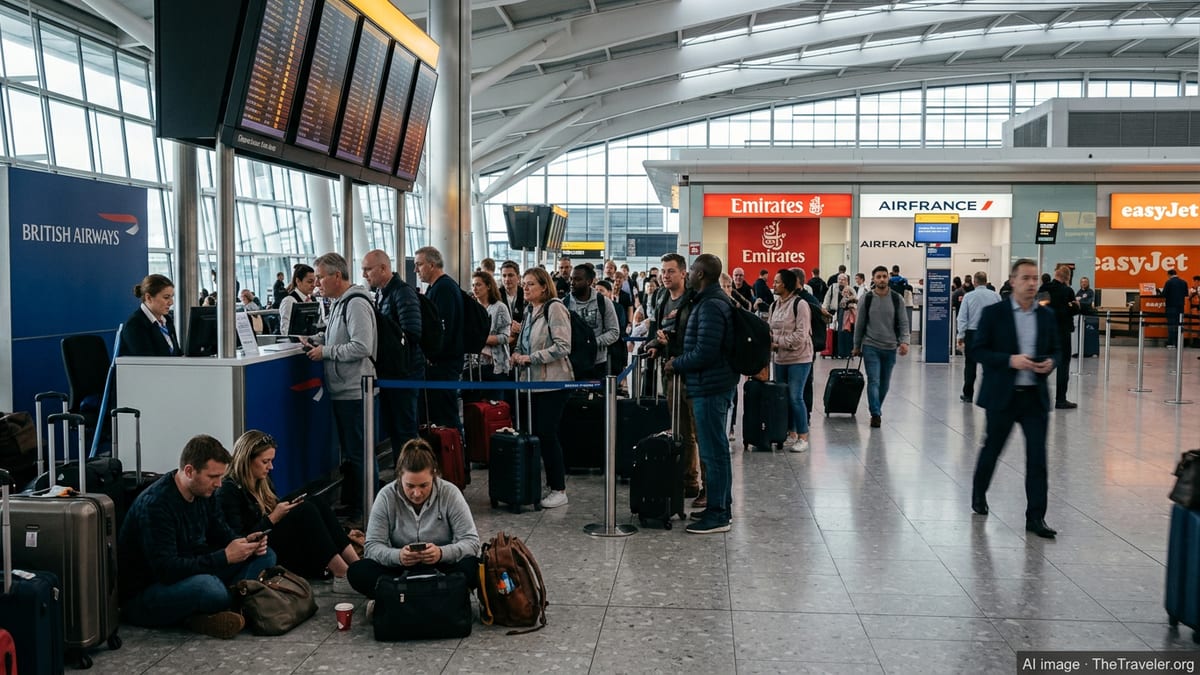
Disruption Spreads Across Major UK Hubs
Flight data and airport departure boards on Tuesday pointed to a broad pattern of disruption at the UK’s busiest hubs. London Heathrow reported dozens of cancellations and an elevated level of delays through the morning and early afternoon, while Manchester, Birmingham, Edinburgh and Glasgow also saw schedules trimmed or pushed back, affecting both short haul and long haul services. Although figures fluctuated throughout the day, airline and tracking data indicated at least 42 flight cancellations involving UK airports and around 146 services operating behind schedule.
British Airways bore a significant share of the disruption at Heathrow and other bases, cutting a series of departures to Europe and the Middle East while warning of further “short notice operational changes” as it reworks its schedules. Low cost carrier EasyJet, which has a substantial presence at airports such as Manchester, Edinburgh and Glasgow, also cancelled and delayed services, particularly on routes into mainland Europe where air traffic control restrictions and adverse weather have compounded the knock-on effects of the Middle East crisis.
Services operated or code-shared by Air France and other European partners have likewise been affected, with delays building on routes linking UK cities to Paris and beyond as airlines avoid certain airspace and accept longer routings. Emirates, which connects several UK airports with Dubai, has remained under particular pressure as its Gulf hub operates far below normal capacity, forcing the carrier to pare back frequencies and consolidate flights where possible.
Airline analysts say the scale of the disruption seen across Europe over recent days has left crews and aircraft out of position, meaning that even airports not directly linked to the Middle East are feeling the strain. With operations finely balanced after a busy winter schedule and several named storms earlier in the season, there is little slack left in the system when fresh disruption hits.
Middle East Airspace Crisis Fuels UK Knock-on Effects
The renewed wave of cancellations comes against the backdrop of an unprecedented shutdown of key Middle Eastern air corridors following hostilities involving Iran, Israel and the United States. Major Gulf hubs in Dubai, Doha and Abu Dhabi reduced operations sharply at the end of February and in early March, prompting Emirates, Etihad, Qatar Airways and other carriers to suspend or severely curtail services. Tens of thousands of passengers have been stranded or forced into last minute re-routings as airlines seek alternative paths between Europe, Asia and Africa.
British Airways has responded by cancelling all flights to and from Abu Dhabi and halting services to several other destinations in the region, including Amman, Bahrain, Doha, Dubai and Tel Aviv, at least until later in March while it assesses airspace safety and demand. The carrier has been operating a small number of repatriation flights from Muscat to London Heathrow but has warned that remaining seats are limited and priority is being given to passengers whose journeys were previously disrupted.
Emirates, meanwhile, has been running only a skeleton schedule of repatriation and cargo flights from Dubai, with UK links reduced to selected services to London Heathrow, Manchester, Birmingham, Edinburgh and Glasgow on specific days. Even where flights do operate, departure and arrival times have shifted as the airline threads aircraft through narrower corridors and avoids conflict zones, extending flight times and increasing the risk of missed connections.
Air France and other European network airlines have continued to route around closed or restricted airspace over Iran, Iraq and parts of the eastern Mediterranean. While these detours allow flights to operate, they add up to two hours to some long haul journeys, eating into crew duty limits and aircraft rotation times. The resulting delays then ripple through departure banks in Paris, Amsterdam and other hubs, feeding further disruption into UK arrivals and departures.
Scenes of Frustration at Heathrow, Manchester and Birmingham
At Heathrow’s Terminals 3 and 5, the impact of Tuesday’s disruption was visible in long queues at airline service desks and crowded seating areas as passengers waited for information on rebooking options. Families bound for school holiday breaks in the Middle East and Asia found themselves diverted onto alternative routings via European hubs or rebooked onto flights several days later, while some business travelers abandoned journeys entirely after multiple delays and gate changes.
Manchester Airport reported a similar picture, with disrupted Emirates, EasyJet and British Airways services contributing to bottlenecks in security and departures. Travelers heading to destinations such as Dubai, Doha and beyond faced uncertainty over onward connections, particularly where partner flights from the Gulf had already been cancelled. Airport staff advised passengers not to travel to the terminal without confirmation from their airline that flights were operating as scheduled.
In Birmingham, two Emirates flights linking the West Midlands to Dubai were cancelled on Tuesday, a move the airline attributed to continuing operational constraints at its hub and a reassessment of demand following updated Foreign Office travel advice for the United Arab Emirates. Passengers booked on those rotations were offered rebooking options via other UK airports or later dates, but some reported difficulty securing seats due to limited capacity on remaining services.
Edinburgh and Glasgow, which both rely heavily on Middle Eastern and European connections for long haul travel, also experienced pockets of disruption. While overall numbers of cancellations were lower than at Heathrow, the loss of a handful of key departures left passengers with fewer alternatives, particularly on routes linking Scotland to Asia and Australasia via the Gulf.
Passenger Rights and What Stranded Travelers Can Do
Consumer advocates and legal experts have been quick to remind travelers caught up in the latest wave of cancellations that they are protected under UK and European air passenger rights rules. For flights departing from UK or EU airports, or operated by UK and EU carriers, airlines must offer passengers the choice of a refund, re-routing at the earliest opportunity, or re-routing at a later date that suits the traveler, even where disruption is caused by airspace closures or security incidents.
In addition, passengers facing long delays at the airport are entitled to care and assistance once waiting times pass specific thresholds, typically from two hours for short haul flights and extending to four hours or more for longer journeys. This can include meal vouchers, refreshments, access to communication and, where an overnight stay is required, hotel accommodation and transport between the airport and hotel. These obligations generally apply regardless of whether passengers are ultimately eligible for cash compensation.
However, eligibility for compensation payments is more limited when disruption stems from what regulators define as “extraordinary circumstances,” such as airspace closures due to armed conflict or decisions by air traffic control. In such cases, airlines are still expected to look after passengers and to rebook them as soon as possible, but may not be required to pay additional financial compensation on top of providing an alternative journey or a refund.
Travelers are being advised to keep all receipts for meals, accommodation and alternative transport purchased during the disruption, as well as written confirmation of cancellations or delays from airlines. This documentation can be crucial in supporting claims for reimbursement where carriers fall short of their obligations or where disputes arise over what costs should reasonably be covered.
Outlook for the Days Ahead
Airlines and airports across the UK are warning that disruption is likely to persist in the coming days as the industry grapples with the continuing Middle East crisis and the lingering effects of recent storms and air traffic control constraints over Europe. Schedules are being adjusted on a rolling basis, and carriers are seeking to consolidate lightly booked flights to free up aircraft and crews for repatriation missions and essential services.
British Airways, EasyJet, Air France and Emirates have all urged passengers to check their flight status repeatedly in the 24 hours before departure, using official airline apps and channels rather than relying solely on airport information screens. Some carriers are also allowing free date or destination changes for customers booked to travel through the affected period, in a bid to reduce pressure on oversubscribed services and give travelers greater flexibility.
Industry observers say a return to stable operations will depend on both the evolution of the security situation in the Middle East and the ability of airlines to reposition aircraft and crews over the coming week. Even if more airspace reopens, it may take several days for schedules to normalize, particularly at constrained hubs like Heathrow where capacity is already stretched at peak times.
For now, passengers planning to travel from or via the UK are being encouraged to build in extra time, consider routing options that avoid the most congested hubs where possible, and be prepared for last minute changes. With cancellations and delays still mounting, the experience of traveling through some of Britain’s busiest airports remains unpredictable, leaving many would-be holidaymakers and business travelers watching departure boards anxiously for signs that their journeys will go ahead.