

More news on this day
A rapidly escalating conflict around the Strait of Hormuz and wider Middle East shipping lanes is driving a new energy price shock that is rippling through the United Kingdom, the United States, Germany, Canada, France, Mexico, Italy, Spain and other major economies, raising the prospect of a simultaneous, energy driven slowdown across much of the developed world.
Get the latest news straight to your inbox!
From Fragile Ceasefire to Renewed Strikes and Maritime Blockages
The latest turmoil follows the breakdown of a fragile ceasefire arrangement in the 2026 Iran war and renewed Iranian military action across the Gulf. Publicly available information shows that Iran has effectively closed or severely restricted traffic through the Strait of Hormuz in response to earlier US and Israeli strikes, transforming one of the world’s most important energy arteries into a conflict zone. About one fifth of global oil and significant volumes of liquefied natural gas normally pass through this chokepoint, leaving global markets highly exposed to any disruption.
Reports indicate that at the same time, Iran linked groups and regional actors have intensified attacks on energy infrastructure and shipping targets from Saudi Arabia and the United Arab Emirates to Qatar and Iraq. Strikes on refineries, gas fields and export terminals are forcing major producers to curtail output or reroute limited volumes via alternative pipelines and ports on the Red Sea and Gulf of Oman, adding cost and complexity to every barrel that reaches world markets.
The crisis is compounded by renewed threats and activity around the Red Sea and Bab el Mandeb Strait, where Houthi forces based in Yemen have previously disrupted traffic to the Suez Canal. Published coverage shows that shipowners are once again suspending or diverting sailings through these waters, eliminating the main alternative corridor linking Gulf energy production to Europe and North America. Together, the effective closure of Hormuz and heightened risk in the Red Sea are squeezing both crude oil and LNG flows just as demand for power and transport fuels remains robust.
In response, the United States has launched a new aerial and naval campaign targeting Iranian military assets in and around Hormuz, with the stated aim of reopening the waterway. However, early indications are that shipping firms remain cautious, premiums on war risk insurance are soaring, and only a handful of vessels are attempting passage, suggesting that the conflict is exerting a more sustained structural impact than previous short lived Gulf crises.
Energy Price Shock Hits the UK and Europe
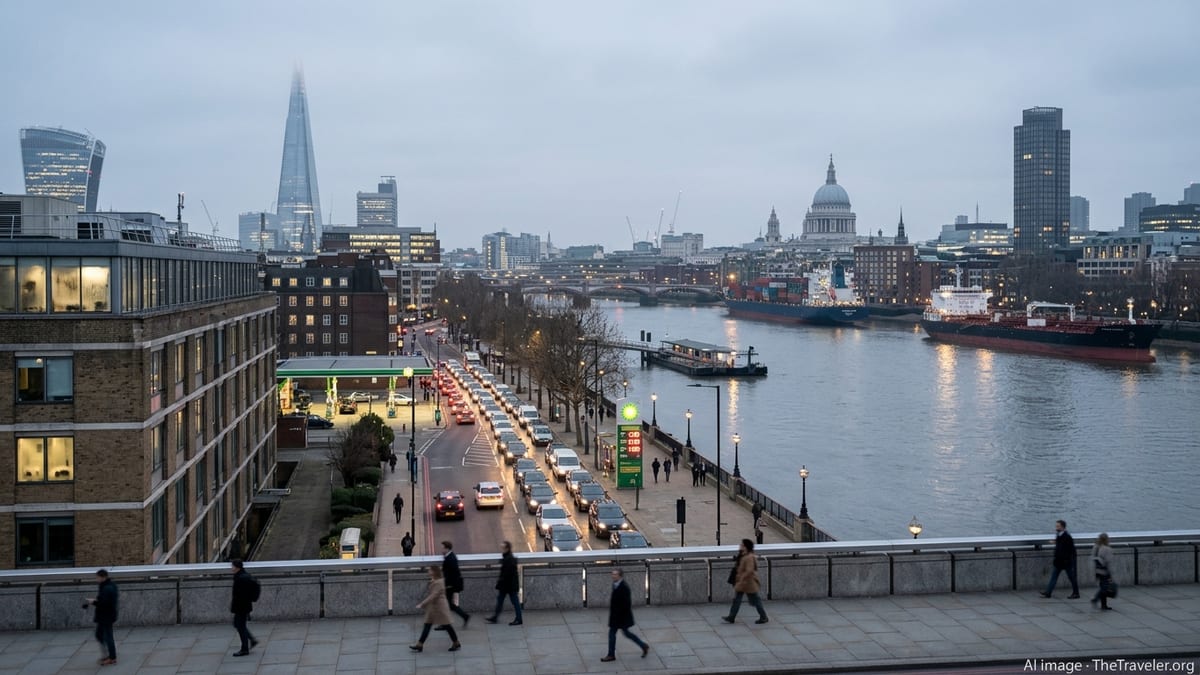
The United Kingdom, already grappling with years of elevated energy costs, is now facing another wave of price pressure. While the country imports a smaller share of its gas directly from the Gulf than some Asian economies, British wholesale prices are closely linked to global benchmarks. Recent analysis of UK markets indicates that heating oil costs have more than doubled since late February and forward contracts for gas and electricity have turned sharply higher, even as the domestic price cap is set for a modest reduction in April.
European Union members including Germany, Italy, Spain and France are experiencing similar pressure. Since the closure of much Russian pipeline supply in recent years, Europe has turned heavily toward LNG imports from Qatar and other Gulf exporters. Publicly available data show that force majeure declarations on LNG cargos and reduced shipping capacity through Hormuz are tightening supply just as European storage operators prepare for the next winter refill season, lifting hub prices and reviving concerns about industrial competitiveness.
Germany’s energy intensive manufacturing sector is particularly exposed. Chemical producers, automakers and heavy industry had only begun to recover from previous gas price spikes when the current crisis pushed fuel and power costs higher again. Forecasts from European research groups now point to weaker growth and renewed pressure on government budgets as Berlin and other capitals consider whether additional subsidy schemes or emergency support for households and small businesses will be needed.
Southern European economies, including Italy and Spain, are simultaneously facing higher fuel import bills and the risk of reduced tourism spending if airfares and general inflation climb. Analysts note that governments across the continent now have less fiscal space than during earlier energy shocks, which could limit the scale of protective measures and leave consumers more directly exposed to rising costs.
North American Economies Confront Diverging Pressures
In the United States and Canada, the energy shock presents a complex picture. Both countries are significant oil and gas producers, and higher global prices can boost export revenues, employment and investment in domestic energy sectors. At the same time, motorists, airlines, logistics companies and energy intensive manufacturers face sharply higher fuel costs that can undercut consumer confidence and drive broader inflation.
Data from recent market reports indicate that benchmark crude prices have surged well beyond 100 dollars per barrel since the Hormuz disruptions intensified, with US gasoline and diesel prices rising in parallel. Airlines have reported steep increases in jet fuel costs, which typically account for around a quarter of their operating expenses, and are beginning to adjust ticket prices and capacity plans accordingly. For travelers, especially during peak vacation periods, this is likely to translate into fewer discounted fares and higher overall trip costs.
Canada’s economy, closely integrated with US supply chains, is feeling similar effects. Refiners and petrochemical plants tied to global pricing benchmarks are benefiting from improved margins, but households are confronting higher heating and transport bills. Provincial and federal authorities are also weighing how the price spike interacts with existing carbon pricing schemes and fuel taxes, and whether temporary adjustments are needed to relieve pressure on lower income consumers.
Mexico, which relies heavily on imported fuels even as it produces crude oil, faces a more precarious balance. Rising international prices increase the cost of imported gasoline and diesel, challenging efforts to contain inflation. Publicly available commentary suggests that the government may have to weigh fuel tax adjustments or targeted subsidies against already tight fiscal conditions, particularly if the crisis extends into the second half of 2026.
Travel, Aviation and Tourism Disrupted Across Continents
The energy driven shock is rapidly feeding into the travel and tourism sector, which depends on affordable jet fuel and predictable shipping costs. Reports from airline and aviation industry briefings show that carriers in Europe and North America are being forced to reassess long haul routes that pass near the Gulf region and Red Sea, sometimes adding hours of flight time to avoid conflict zones. These diversions increase fuel burn and crew costs, and in many cases reduce the commercial viability of marginal routes.
As a result, travelers are beginning to see schedule changes, longer connection times and higher fares on routes linking Europe and North America with South Asia, Southeast Asia and Australia. Some Gulf hubs that typically serve as major transit points are experiencing reduced traffic as airlines reroute via alternative airports, while local carriers face a near total suspension of operations on certain corridors because of airspace closures and security concerns.
For the UK and other European countries that depend heavily on tourism, both inbound and outbound, the combined effect of higher airfares and general cost of living pressures risks dampening demand. Households facing larger energy bills may scale back holiday plans or trade long haul trips for domestic or short haul alternatives. Travel companies and tour operators are beginning to revise forecasts for the summer and autumn seasons, with particular uncertainty around long haul leisure and corporate travel.
Cruise operators and maritime tourism ventures are also contending with increased fuel costs and route restrictions. Ships that would normally transit the Suez Canal and Red Sea to reposition between Mediterranean and Asian itineraries are being forced to sail around the Cape of Good Hope, adding days to voyages and complicating scheduling. These changes are likely to feed through into higher package prices and a narrower range of itineraries on offer in 2026 and 2027.
Policy Responses and What Travelers Should Watch Next
Governments in the UK, US, Canada, Germany, France, Italy, Spain, Mexico and other affected countries are moving to cushion the impact, but policy options are constrained. According to published coverage of international energy meetings, members of the International Energy Agency have announced the coordinated release of hundreds of millions of barrels from emergency oil reserves, seeking to smooth supply disruptions and dampen price spikes. Financial authorities are simultaneously monitoring whether higher energy costs will entrench inflation and force renewed interest rate increases.
At the national level, governments are examining temporary tax adjustments, one off rebates or targeted support for vulnerable households, alongside measures to protect critical industries such as public transport, food production and healthcare from severe fuel shortages. However, with many countries already carrying elevated public debt after years of pandemic and cost of living support, there is broad recognition that this crisis cannot be addressed solely through fiscal transfers.
For travelers and the wider tourism industry, the key variables to watch in the coming weeks include the security situation in the Strait of Hormuz, any expansion of attacks toward the Bab el Mandeb and Red Sea, and the pace at which shipping firms feel comfortable resuming more normal operations. Changes in global oil benchmarks will filter into airline fuel surcharges and ticket prices with a lag, meaning that decisions made now about routes and capacity will shape the travel landscape well into the peak summer season.
In the longer term, analysts argue that this latest crisis is likely to accelerate investment in energy diversification, including renewables, electrified transport and alternative shipping routes that bypass the most vulnerable chokepoints. For countries such as the UK and its partners across Europe and North America, the events of early 2026 serve as a stark reminder that energy security and the freedom to travel remain closely bound to the stability of distant maritime corridors and the fragile geopolitics of the Gulf.