

More news on this day
European travel and energy markets are bracing for weeks of turbulence as the prolonged disruption of oil flows through the Strait of Hormuz tightens jet fuel supplies, raising fears that the United Kingdom and key EU economies could be pushed closer to recession if the crisis is not eased soon.
Get the latest news straight to your inbox!
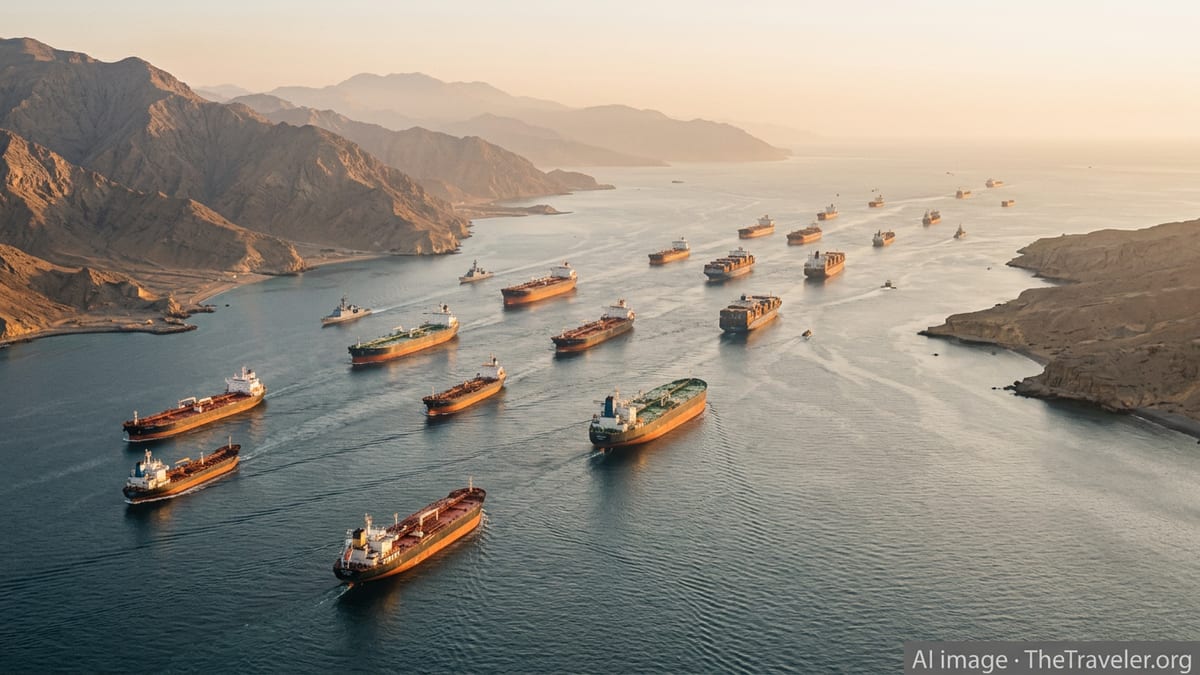
Jet Fuel Warning Puts a Timeline on Europe’s Energy Shock
Airports and airlines across Europe are confronting what industry groups describe as a looming “systemic shortage” of jet fuel if the Strait of Hormuz is not substantially reopened within the next three weeks. A letter from Airports Council International Europe, reported by several European outlets, warns that Gulf supplies account for a large share of the continent’s aviation fuel imports, leaving the region exposed to continued shipping paralysis around the chokepoint.
Publicly available analyses from aviation bodies and energy consultancies indicate that roughly one quarter to one third of Europe’s jet fuel normally originates in, or passes through, the Gulf. With tankers idled or rerouted since late February, storage tanks in parts of Europe are being drawn down faster than they can be replenished. Industry data cited in recent coverage suggest that 25 to 30 percent of European jet fuel demand is linked to Persian Gulf flows, underscoring how quickly disruption at Hormuz can feed through to airport fuel depots.
The warning comes on top of broader energy market stress triggered by the 2026 Iran war and subsequent closure of the strait to most commercial traffic. Oil and refined products that would typically reach Europe within a matter of weeks are now delayed indefinitely, while alternative routes via pipelines or longer shipping paths cannot fully replace the lost capacity in the short term.
Although a conditional ceasefire between the United States and Iran has been announced, recent economic commentary notes that tanker owners and insurers have not yet restored large scale traffic through Hormuz. That leaves jet fuel markets in a precarious position as the critical three week window flagged by airport operators coincides with the run up to Europe’s busy summer travel season.
United Kingdom Feels the Strain Through Energy and Aviation Channels
The United Kingdom is not a member of the European Union, but it is tightly bound into the same aviation and energy networks that depend on Gulf supplies. Reporting on the UK’s fuel situation points to heightened volatility in wholesale energy markets since the Hormuz crisis began, with analysts warning that the country’s reliance on imported fuels leaves it vulnerable to prolonged disruption.
In aviation, the impact is already visible. Recent coverage of the Strait of Hormuz crisis notes that some UK linked carriers and regional airlines have begun cancelling or consolidating services into late spring to manage fuel exposure and higher operating costs. These early cuts serve as a warning of what could unfold more broadly if jet fuel supply tightens further and prices remain elevated.
Economic assessments from think tanks and financial institutions suggest that higher fuel and transport costs are likely to filter quickly into UK consumer prices. Airfares and freight charges are being adjusted upward as airlines and logistics firms attempt to pass on part of the fuel shock. For an economy that has struggled with sluggish growth and persistent inflation in recent years, another external energy shock raises the risk of a fresh downturn.
However, while the pressure is acute, current economic commentary does not point to an imminent systemic collapse of the UK economy within a three week horizon. Instead, most analyses frame the situation as a serious but gradual squeeze that could tip the country toward recession if the crisis around Hormuz drags on and if financial markets lose confidence in the government’s response.
Germany, France, Spain and Italy Exposed by Energy Dependence
Across the European Union, Germany, France, Spain and Italy each face distinct but interlocking vulnerabilities. Research from European climate and energy institutes highlights that Italy, in particular, has historically relied heavily on Gulf sourced energy, including liquefied natural gas and oil products, making it sensitive to disruptions around Hormuz. At the same time, Germany’s industrial base and export driven economy are highly exposed to any sustained rise in energy and transport costs.
Reports from European policy think tanks describe how the Hormuz shutdown has already driven sharp increases in benchmark European gas and power prices compared with pre crisis levels. Jet fuel is part of that broader picture. As refineries struggle to secure crude and intermediate products, they must choose between competing outputs such as diesel, gasoline and aviation fuel, potentially constraining jet supplies further if margins are more attractive elsewhere.
France and Spain, with their large tourism sectors and busy hub airports, are watching the jet fuel situation closely. Publicly available information from aviation and tourism analysts suggests that a sustained shortage would disrupt connectivity across the continent, depress visitor numbers and hit services employment. That, in turn, would feed back into domestic demand just as governments are trying to keep their post pandemic recoveries on track.
Despite these risks, current forecasts from banks and multilateral institutions still frame the threat in terms of slower growth and higher recession probabilities rather than an outright economic collapse. Much depends on how quickly alternative supplies can be arranged, how severe any actual rationing of jet fuel becomes, and whether fiscal measures are deployed to cushion households and firms from the latest energy price spike.
Strait of Hormuz Blockage and Oil Prices Drive Global Repercussions
The core of the crisis remains the effective closure of the Strait of Hormuz, where around a fifth of global oil trade normally transits. Since the outbreak of hostilities at the end of February, a combination of security threats, attacks on energy infrastructure and soaring insurance premiums has kept many tankers out of the waterway. Analysts routinely describe the situation as one of the largest disruptions to seaborne oil and products trade in decades.
Market data compiled by energy reporters show that Brent crude prices climbed above 100 dollars a barrel in early March and have since remained elevated, with frequent double digit percentage swings on geopolitical headlines. The effect on refined products has been even more pronounced, as tight supplies of specific fuels such as jet fuel and diesel drive crack spreads sharply higher relative to crude.
Industry commentary stresses that even with a ceasefire announcement, structural obstacles remain to a rapid normalization of flows. Tanker operators are seeking clearer guarantees on safe passage, while some Gulf producers have trimmed output or shifted exports to alternative ports outside Hormuz that lack the capacity to fully compensate for the lost route. The result is a prolonged period of scarcity that is reverberating through fuel dependent sectors from aviation to trucking.
For Europe, the geographic distance from alternative refining hubs in Asia and the Americas complicates efforts to diversify supply. Freight rates for long haul fuel cargoes have surged, and logistical bottlenecks at ports and storage facilities limit how quickly new trade patterns can be established. That reality underpins warnings that even if the strait partially reopens, the jet fuel market could remain tight for months.
Recession Risks Rise, but Collapse Is Not a Foregone Conclusion
Economic modeling referenced in recent policy briefings suggests that a sustained period of high energy prices and logistical disruption could shave meaningful points off growth in major European economies in 2026 and 2027. Higher travel and freight costs would weigh on consumer spending and industrial output, while governments might be forced to allocate additional funds to energy support schemes and infrastructure resilience.
Travel focused analysts at airlines and tourism associations warn that reduced flight capacity, higher ticket prices and potential fuel rationing could dampen Europe’s peak season, affecting hotels, restaurants and cultural attractions across destinations in Spain, Italy and beyond. For Germany and France, weaker external demand and more expensive transport for exports could add another drag to already fragile manufacturing sectors.
Nonetheless, most publicly available forecasts stop short of predicting an outright economic collapse in the next three weeks. Instead, they highlight a spectrum of scenarios ranging from a managed slowdown, if Hormuz traffic gradually resumes, to a deeper recession if the blockade persists or intensifies. Policymakers in Brussels, London and national capitals are being urged by energy and climate think tanks to use the crisis as a catalyst for accelerating diversification away from imported fossil fuels and for strengthening strategic fuel reserves.
For travelers and businesses, the immediate outlook is one of uncertainty: higher prices for flights, potential schedule disruptions and continued volatility at the fuel pump. The direction the crisis takes in the coming weeks will depend not only on developments in the Strait of Hormuz, but also on how swiftly European governments translate warnings about jet fuel shortages into concrete contingency plans.