

More news on this day
Goa is preparing for a fresh influx of international visitors from the United Kingdom, Russia, the United Arab Emirates and Poland as new charter links, full-service airline capacity and an expanding calendar of concerts and festivals combine to create a concert-driven tourism boom.
Get the latest news straight to your inbox!
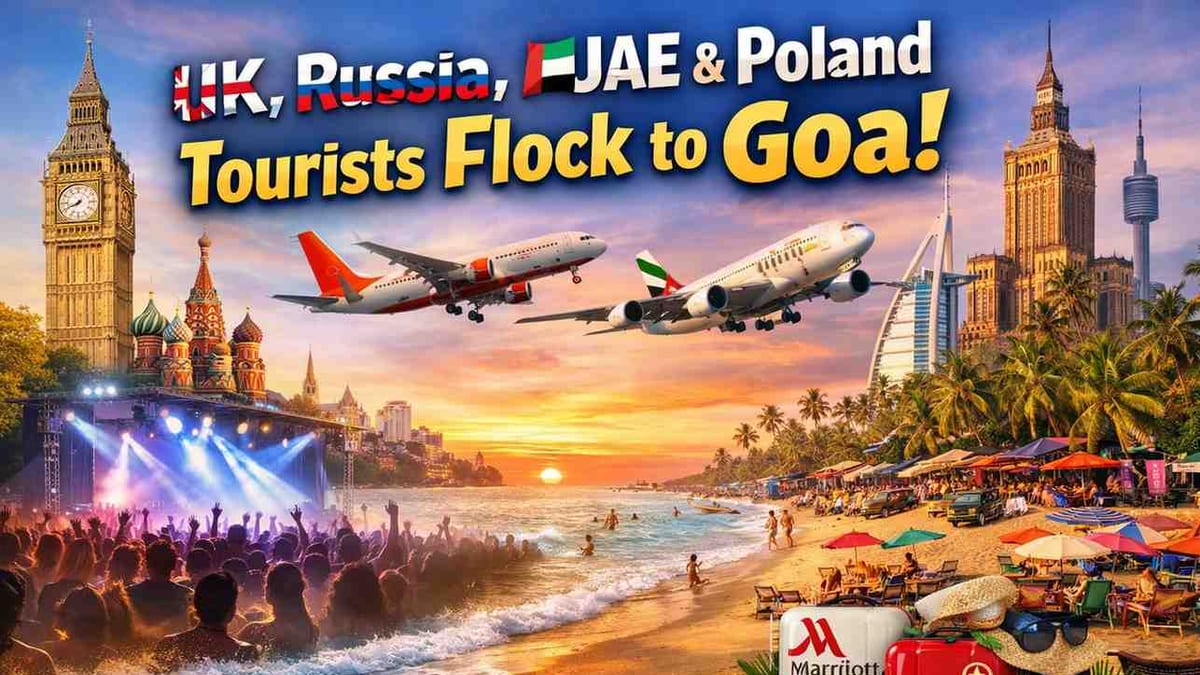
Image by Travel And Tour World
Charter Flights Signal Strong Demand From UK, Russia and Poland
Recent tourism newsletters and state documents indicate that Goa is entering the 2025–26 high season with its strongest slate of international charter operations in years, led by Russia and the United Kingdom and supplemented by growing interest from markets such as Poland. Charter programs operated by European leisure specialists are reported to be running multiple weekly rotations into Goa, with UK-based TUI Airways highlighted as operating dozens of flights across the winter schedule, underscoring the continuing importance of British and Russian sunseekers to the coastal state’s visitor mix.
Tourism-focused coverage notes that Russia remains one of Goa’s most resilient international source markets, with the state tourism department planning roadshows in Russian cities and participation in major trade fairs in Moscow to sustain charter arrivals. At the same time, promotional material from Goa’s tourism authorities emphasizes that charter capacity from other European markets, including Poland, is being cultivated through cultural exchanges and festival tie-ups that showcase Goa as a stage for global music and folk performances.
Travel industry reports suggest that these efforts are already reflected in booking patterns, with international tour operators packaging Goa not only as a beach destination but also as a gateway to marquee events throughout the 2025–26 season. This is encouraging signals from airlines and hotel groups that see scope for higher-yield, event-linked travel compared with traditional charter traffic focused solely on low-cost winter sun.
Legacy Carriers Tap Into Concert and Festival Calendars
The charter build-up is being reinforced by scheduled capacity from full-service airlines, with Air India, Emirates and British Airways all positioned to benefit from rising demand on key long-haul and regional routes feeding into Goa. Public schedules and booking interfaces show Air India operating a mix of direct and one-stop services connecting Goa with London and Gulf hubs, while Emirates continues to funnel European, Middle Eastern and North American travelers through Dubai onto India-bound itineraries that feature Goa as a key leisure stop.
Meanwhile, British Airways’ India network remains an important bridge for UK-based travelers and connecting passengers from continental Europe and North America heading to Goa via major Indian gateways. Industry commentary highlights that concert and festival weekends in late 2025 are emerging as peak booking periods across these airlines’ India services, with fare-search data indicating sharp spikes in demand around large-scale cultural events and New Year celebrations.
Travel analysts point out that this dynamic marks a shift from the pre-pandemic pattern, when Goa’s international arrivals were heavily concentrated around Christmas and New Year with relatively less differentiation across the season. Now, as the state’s event calendar becomes more diversified and globally marketed, airlines are increasingly aligning capacity, promotional fares and stopover offers with specific festivals and concert series to capture higher spending visitors from the UK, UAE, Russia and Central and Eastern Europe.
Marriott and Taj Lead Hotel Sector’s Event-Linked Expansion
On the ground, global and domestic hospitality brands are preparing for what hotel industry commentary describes as a strong, event-led cycle in Goa. Marriott International, which operates multiple beachfront and urban properties in the state under its premium and lifestyle brands, is spotlighting Goa in regional marketing as a prime destination for music, culture and wellness retreats. Its portfolio in North Goa, in particular, is expected to benefit from proximity to concert venues, nightlife districts and festival sites.
Indian hotel major Taj Hotels is also closely tied to Goa’s tourism evolution, with long-established luxury resorts and newer upscale properties positioned along both North and South Goa coastlines. Publicly available information on room availability and promotional packages suggests that Taj is calibrating rates and minimum-stay requirements around major festivals and concert weekends, an approach that hospitality analysts say reflects confidence in sustained demand from long-haul markets.
Sector reports indicate that both Marriott- and Taj-branded properties are bracing for compressed booking windows as younger travelers from the UK, UAE and other markets increasingly plan trips around specific headliners or festival lineups announced only months in advance. Revenue managers are responding with dynamic pricing strategies and bundled offerings that combine accommodation with experiences such as beach club access, curated culinary events and wellness add-ons tailored to festival-goers.
Concerts, Festivals and Cultural Events Reshape Goa’s Appeal
Goa’s tourism authorities and private stakeholders are leaning heavily on a broad spectrum of cultural programming to anchor this emerging concert tourism wave. State festival calendars and travel guides for 2025 and 2026 highlight a dense lineup that ranges from the Goa Carnival and Shigmo spring celebrations to the International Film Festival of India in November and a series of food, folk and spiritual festivals spread across the year.
Music remains a central draw. Electronic dance events, beachside New Year parties and smaller curated concerts continue to attract international acts and audiences, even as some legacy mega-festivals relocate or scale back. Industry coverage of India’s music festival scene notes that Goa retains a strong brand association with beachside nightlife and electronic music, which travel marketers are repackaging to emphasize premium experiences, safety standards and integration with luxury hospitality.
Cultural collaborations with countries such as Poland, highlighted through folk festivals and artistic exchanges hosted in Goa, are also contributing to the narrative that the state is becoming a broader cultural crossroads rather than solely a party hub. This expansion of programming opens the door for more diverse visitor segments from Europe and the Gulf, including families and older travelers who may be drawn as much by film, food and heritage experiences as by late-night concerts.
Economic Tailwinds and Capacity Challenges Ahead of Peak Season
The convergence of increased air connectivity, strong airline bookings and a heavier events calendar is expected to generate significant economic tailwinds for Goa in the 2025–26 season. Travel and tourism publications tracking regional performance point to solid hotel occupancy trends over the 2025 New Year period, with some reports estimating several hundred thousand visitors in the state across the final week of the year, many of them attending concerts and large-scale beach events.
Local business associations and hospitality commentators anticipate that sustained arrivals from Russia, the UK, the UAE and newer markets such as Poland will support not only resort revenues but also ancillary spending in restaurants, nightlife, transport and experience-based tourism. Tour operators are promoting extended stays that combine concert tickets or festival access with backwater cruises, heritage walks and wellness retreats, seeking to lengthen the average trip beyond traditional long-weekend breaks.
At the same time, analysts caution that infrastructure and regulatory bottlenecks could test Goa’s ability to fully capitalize on this moment. Discussions in industry forums highlight pressure on airport capacity during peak charter waves, congestion on coastal roads and ongoing debates over crowd management and environmental protections on popular beaches. How authorities and private stakeholders respond to these challenges over the next two seasons is likely to determine whether the current surge in concert-driven tourism becomes a durable growth pillar or settles into a more modest niche within Goa’s wider visitor economy.