

More news on this day
Thousands of passengers flying with British Airways, easyJet and Ryanair are facing hours-long delays and more than a hundred cancellations, as disruption at major UK hubs ripples across transatlantic routes and into key US cities.
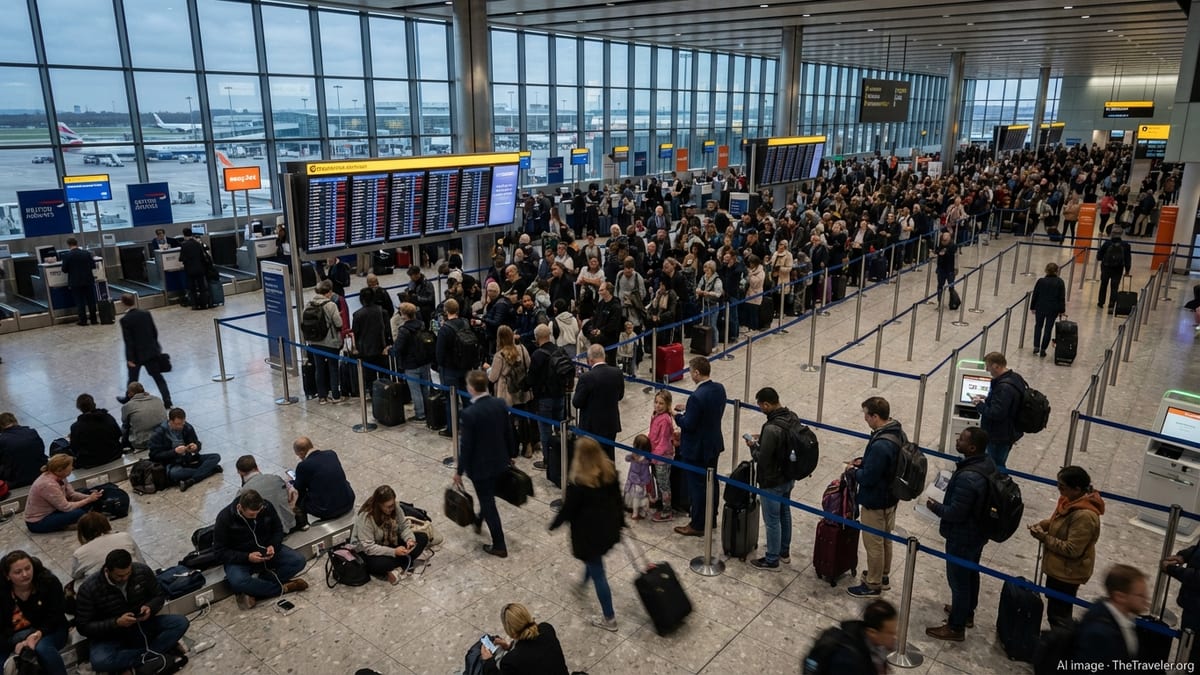
Widespread Disruption From UK Hubs to US Gateways
Major airports including London Heathrow, Gatwick, Manchester, Edinburgh, Birmingham and Glasgow reported heavy knock-on disruption on March 2, with long queues at check-in and security as passengers scrambled to rebook. Operational pressures, compounded by airspace closures over parts of the Middle East, have forced airlines to thin out schedules and consolidate services on both short- and long-haul routes.
According to airport and airline operations data reviewed on Sunday, British Airways, easyJet and Ryanair together registered well over 180 significant delays and more than 100 cancellations across their networks, with UK bases shouldering the brunt. A substantial share of the scrapped flights were services linking London and regional UK airports to US gateways, prompting missed connections and last-minute overnight stays for transatlantic travelers.
Heathrow and Gatwick remained the most heavily affected UK hubs, particularly on long-haul departures to and from North America and the Gulf. Travelers bound for US cities such as New York, Boston, Chicago and Orlando reported rolling delays, aircraft swaps and abrupt gate changes, as airlines worked to reroute aircraft and crews around bottlenecks.
In Scotland and northern England, passengers at Edinburgh, Glasgow and Manchester also faced late departures on key business and leisure routes to London, Dublin and major European hubs, further complicating onward travel to the United States. Airport authorities urged departing passengers to arrive earlier than usual and to monitor airline apps closely for schedule changes.
British Airways, easyJet and Ryanair Trim Schedules
British Airways has been forced to cut and consolidate flights within Europe and on some transatlantic sectors, after earlier reducing frequencies to several Middle East destinations for safety reasons. The carrier’s own travel updates confirmed ongoing cancellations on routes from London Heathrow to Gulf hubs, a shift that has displaced aircraft and crews and tightened capacity across the wider network.
Short-haul operations at Heathrow and Gatwick were particularly fragile, with multiple rotations between London and major European and UK cities operating with extended delays. Passengers connecting from these flights to US-bound services reported arriving at long-haul gates after boarding had closed, despite being inside the terminal. Ground staff, already stretched by rebooking and baggage backlogs, struggled to find seats on alternative departures on the same day.
At easyJet, which has large bases at Gatwick, Luton, Manchester and other UK airports, delays on intra-European routes quickly cascaded into later departures on evening services, including those feeding into US partner and codeshare flights. Ryanair, operating from Stansted, Manchester, Edinburgh and regional airports, also experienced a series of late-running departures and last-minute cancellations, affecting city-break travelers and migrant workers alike.
While the headline figures of 186 significantly delayed flights and roughly 108 outright cancellations paint a stark picture, aviation analysts noted that secondary impacts, such as missed connections and stranded baggage, mean the true number of disrupted journeys is far higher. For many passengers, that translated into unexpected hotel nights, extra meal costs and lost days of work or holiday.
Transatlantic Travelers Face Long Waits and Tight Connections
The disruption has been felt most acutely by passengers traveling between the UK and the United States, who often rely on finely timed connections through London or Manchester. On Sunday, long-haul departures from Heathrow to New York, Washington and other East Coast destinations were subject to rolling delays as crews and aircraft arrived late from earlier legs, or awaited new slots on congested routes skirting closed airspace.
At major US gateways including New York JFK, Newark, Boston and Chicago O’Hare, arriving passengers from delayed UK flights were held for extended periods on aircraft awaiting stands, or faced long waits at immigration as multiple late-running flights converged at once. Some return services to the UK departed significantly behind schedule, further compounding the disruption overnight.
In Orlando and other popular leisure destinations, families at the end of half-term or winter-break holidays reported receiving cancellation notices only hours before departure, with limited rebooking options over the next 24 to 48 hours. With aircraft and crew time tightly regulated, airlines were sometimes forced to prioritize certain long-haul rotations, cancelling others outright to avoid further network instability.
Travel agents in both the UK and US said they had been inundated with calls from stranded passengers seeking alternative routings, often via continental European hubs or on indirect itineraries involving domestic US connections. In some cases, travelers accepted rerouting that added 10 to 12 hours to their journeys simply to guarantee a seat.
Passenger Rights, Compensation and What Travelers Can Do
Under UK and EU regulations, passengers whose flights are severely delayed or cancelled from UK or European airports may be entitled to rerouting, refunds and, in some circumstances, financial compensation. However, entitlement depends on the cause of the disruption; if airlines can demonstrate that cancellations stem from extraordinary circumstances such as airspace closures for security reasons, compensation may be limited to refunds and care rather than cash payouts.
Consumer advocates urged travelers affected by Flight 186 delays and the wider pattern of cancellations to keep detailed records, including boarding passes, booking confirmations and receipts for meals, hotels and local transport. These documents will form the basis of any claim against the airline, travel insurer or, in some cases, credit card provider.
Passengers currently booked to travel over the coming days are being advised to check their flight status repeatedly rather than relying on information from the time of booking. Airline apps and text alerts remain the most immediate tools for real-time updates, though some customers have reported lag times between operational decisions and digital notifications.
For travelers already at the airport, airline desks and self-service rebooking kiosks can sometimes offer quicker solutions than call centers, which have been inundated during previous waves of disruption. Several carriers have also loosened change-fee policies temporarily, allowing passengers to push back non-essential trips or reroute via less congested hubs where seats are available.
Outlook for the Coming Days
Operational planners at British Airways, easyJet and Ryanair are working on the assumption that airspace restrictions over parts of the Middle East will continue to affect long-haul scheduling for at least several more days, even if the situation stabilizes. The need to maintain longer routings, hold additional fuel and rotate aircraft more carefully around constrained corridors is likely to keep pressure on punctuality across the network.
Airports in London, Manchester, Edinburgh, Birmingham and Glasgow have signaled that they expect further day-to-day variation in schedules as airlines adjust. While no blanket groundings are anticipated, smaller waves of cancellations and extended delays are considered probable as carriers seek to reset operations and reposition aircraft.
In the United States, airport authorities at major East Coast and Midwest hubs are preparing for continued irregular arrival and departure patterns on UK-bound flights. Terminal managers have warned of intermittent crowding at peak times when multiple delayed transatlantic services arrive simultaneously, and have urged passengers with onward domestic connections to allow generous buffers between flights.
For now, travelers on both sides of the Atlantic are being urged to build extra flexibility into their plans, anticipate longer journeys and be prepared for late-notice changes. While airlines insist they are doing everything possible to restore stable operations, the latest wave of delays and cancellations is a reminder of how quickly global air travel can be thrown off course by regional crises and tightly stretched schedules.