

More news on this day
Greece, the United Kingdom and the United States have all tightened travel advisories for parts of the Middle East in recent days, warning their citizens of a sharply elevated risk of unrest and potential conflict as tensions between Iran, Israel and the US deepen.
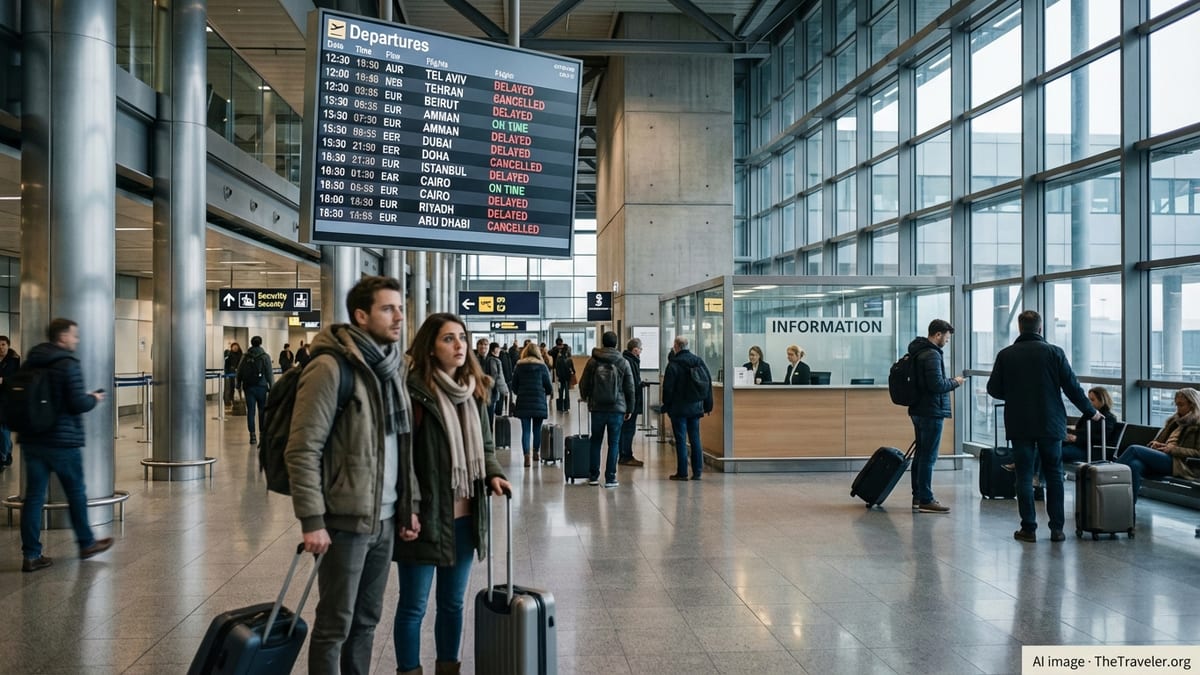
Greece Moves First With New Middle East Advisory
Greece has led the latest round of warnings, issuing updated guidance on February 27 that urges Greek nationals to avoid non-essential travel to Iran, Israel and the Palestinian territories. The Hellenic Ministry of Foreign Affairs cited what it called a developing situation in the Middle East and a rapidly evolving security environment across the wider region.
The announcement, released in Athens and echoed across Greek media, advises travelers to visit these destinations only when absolutely necessary. Officials highlight the risk that a sudden deterioration in security could disrupt commercial flights, close land borders and make consular assistance more difficult, leaving tourists and business travelers with limited options to leave.
Greek authorities are also asking citizens already in the affected areas to register with local embassies or consulates, monitor official updates and be prepared to adjust travel plans at short notice. The move underscores Athens’ concern that even destinations long familiar to Greek tourists could become hard to reach or depart if a regional confrontation erupts.
Although Greece has not reported specific threats against its nationals, officials stress that any escalation involving Iran, Israel and US forces could have unpredictable spillover effects across the Eastern Mediterranean, including on air routes and shipping corridors used heavily by Greek carriers.
UK Issues Tougher Guidance on Israel, Palestine and Iran
In London, the UK government has reinforced its own Middle East travel advice, warning British nationals to avoid all but essential travel to Israel and the Palestinian territories as the crisis deepens. Updated Foreign Office guidance on February 27 maintains existing bans on travel to the most volatile areas and stresses that security conditions could deteriorate quickly and without warning.
British media report that the UK has temporarily closed its embassy in Tehran amid mounting concern over the safety of diplomats and the possibility of unrest targeting foreign missions. Some diplomatic staff have been relocated within Israel, with officials acknowledging that border closures or airspace restrictions could take effect at short notice if tensions spike.
The UK has for months advised against all travel to Iran, warning that it cannot guarantee consular support in the event of serious disorder or a rapid security breakdown. The renewed emphasis in late February reflects the government’s assessment that the risk of miscalculation or sudden confrontation in and around Iran has risen.
Britons still choosing to travel to the region are being urged to keep a low profile, avoid political gatherings and demonstrations, and ensure they have contingency plans in case commercial flights are disrupted. Travel insurers are also warning that policies may not cover trips taken against official government advice.
US Travel Warnings Highlight Broader Regional Risk
The United States has not issued a single new blanket alert for the Middle East, but its detailed country-by-country advisories underline how serious officials judge the current environment to be. The State Department’s global travel advisory map shows Iran, Iraq, Lebanon, Syria, Yemen and Gaza all at Level 4, its highest “do not travel” category, largely because of conflict, terrorism and the risk of missile or drone attacks.
Israel and the West Bank are currently classified at Level 3, meaning Americans are urged to reconsider travel due to terrorism, civil unrest and limited consular access in some areas. US media and travel outlets note that the combination of Level 3 and Level 4 warnings across much of the region effectively amounts to a strong signal for leisure travelers to postpone non-essential trips.
US officials have also authorized the departure of some diplomatic staff and family members from posts seen as most exposed to potential escalation. While embassies remain open in key capitals, the State Department is advising US citizens to enroll in its traveler registration program so they can receive rapid security alerts and evacuation guidance if needed.
Analysts point out that the 2026 advisory landscape builds on a pattern of steadily tightening warnings that began after the short but intense Israel Iran conflict in 2025 and continued as nuclear talks stalled. The result is a patchwork of overlapping national advisories that collectively paint a picture of a region on edge.
What the Warnings Mean for Travelers Right Now
For travelers from Greece, the UK, the US and other countries now revising their guidance, the immediate impact is a more complicated decision-making process. Airlines have not yet announced large-scale suspensions of routes, but carriers are closely watching security assessments and could reroute or cancel flights if airspace risks rise, particularly over parts of Iran, Iraq and the Eastern Mediterranean.
Tour operators offering pilgrimages, cultural tours and city breaks to destinations such as Jerusalem, Tel Aviv and parts of Jordan report a surge in inquiries from nervous clients asking whether they should postpone. Many are offering fee waivers or flexible rebooking options, although some packages may become nonviable if insurance coverage is withdrawn for key segments of the itinerary.
Travel security specialists say the new wave of advisories should not be read as a prediction of inevitable war, but rather as an acknowledgment that the margin for error is narrowing. Even a limited confrontation, they note, could trigger airspace closures, cyberattacks affecting airports, or localized unrest that traps visitors far from home.
For now, the consistent message from Athens, London and Washington is that travelers should scrutinize plans to the Middle East more carefully than in previous years, stay informed through official channels, and be ready to delay or redirect trips if the regional picture darkens further.
How to Navigate a Rapidly Changing Security Map
Specialists in international risk management recommend that anyone considering travel to the Middle East in the coming weeks take a layered approach to safety planning. That starts with reading the full text of national travel advisories for each destination on an itinerary, not just the headline level, since risk can vary sharply between different regions of the same country.
They also advise travelers to watch for secondary impacts that might not be obvious at first glance, such as shipping disruptions in the Red Sea affecting cruise itineraries, or heightened security checks at European hubs that add delays to connecting flights bound for the region.
Practical steps include ensuring passports and visas are in order, keeping digital and paper copies of key documents, maintaining access to funds in more than one form, and confirming that travel insurance explicitly covers political unrest and conflict-related disruptions where possible. Travelers should share itineraries with family or friends at home, and agree on how to communicate if mobile networks or messaging apps are interrupted.
While many destinations in the broader Middle East remain calm and open to visitors, the latest warnings from Greece, the UK and the US signal that the balance of risk has shifted. For travelers, that means staying flexible, informed and prepared to change course quickly should the region’s fragile security situation take a turn for the worse.