

More news on this day
Planned holidays to New Zealand from key long-haul markets in the United Kingdom and United States are coming under strain as capacity cuts by Emirates and Air New Zealand ripple through flight schedules, prompting hotel cancellations and raising fresh concerns about how vulnerable the country’s tourism-driven GDP is to aviation shocks.
Get the latest news straight to your inbox!
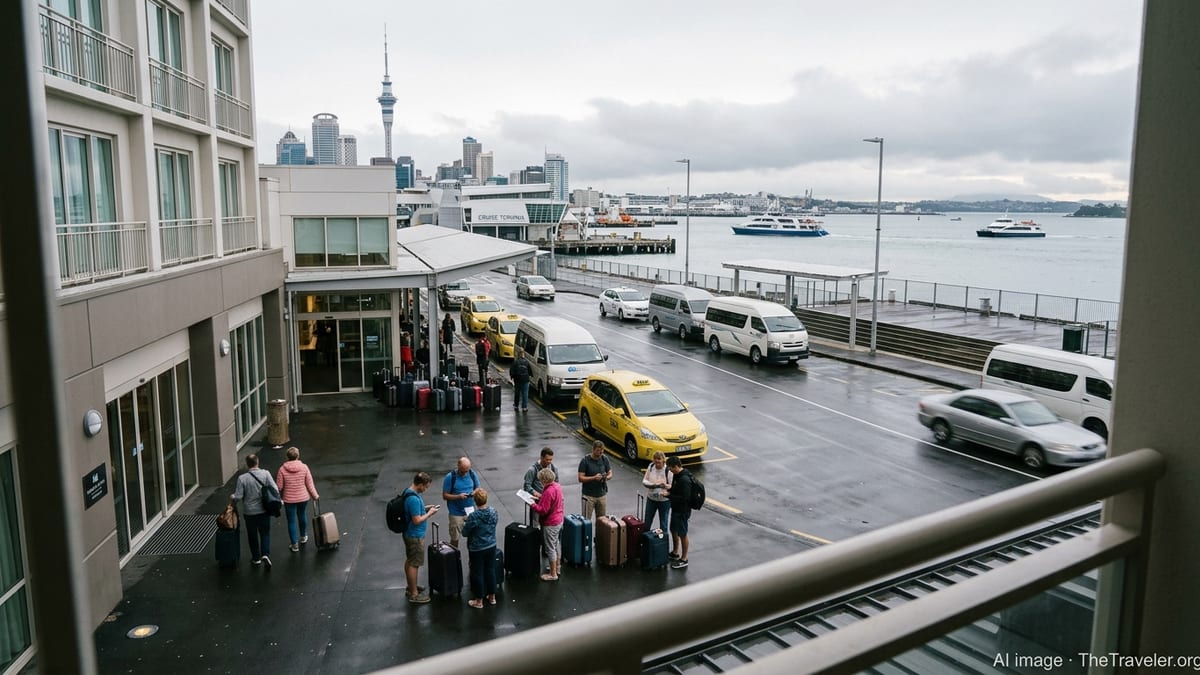
Flight disruptions unsettle long-haul demand
Emirates has been adjusting services across parts of its global network in March 2026 amid operational constraints linked to the Middle East, while Air New Zealand is preparing to cancel around 1,100 flights through early May, affecting an estimated 44,000 passengers. Publicly available broadcast and local media coverage indicate that the New Zealand flag carrier’s latest cuts are tied to fuel supply and operational pressures, adding to earlier disruptions from maintenance challenges on long-haul aircraft.
Although not all of the cancelled Air New Zealand services are on intercontinental routes, the timing coincides with the shoulder season for Northern Hemisphere travellers planning long-haul trips to the Southern Hemisphere winter. For UK and US visitors, limited non-stop and one-stop options mean each removed frequency can materially narrow choice and increase perceived risk, prompting some to defer or rebook to alternative destinations.
Reports across traveller forums and regional news outlets in March describe a wave of re-accommodation requests, extended layovers and rolling schedule changes on itineraries that route via major hubs such as Dubai, Los Angeles and Houston. While many passengers are being rebooked, the uncertainty appears to be feeding a wider sense that New Zealand is temporarily harder to access, especially for those planning complex multi-stop holidays.
For tourism operators, these flight cuts arrive just as New Zealand’s international arrivals had climbed back to around the mid-80 percent range of pre-pandemic levels, with long-haul markets playing a growing role in high-spend segments. Any sustained disruption to air links risks reversing part of that recovery.
Hotel cancellations signal nervousness in premium segment
The aviation turbulence is already being felt on the ground. New Zealand accommodation providers report a noticeable uptick in cancellations and date changes from UK and US guests whose inbound flights have been altered or removed. While hard nationwide data is still emerging, regional tourism organisations and hotel managers in gateway centres such as Auckland and Queenstown describe an early autumn booking pattern that is patchier than expected for 2026.
Industry commentary suggests that higher-spending, longer-stay visitors are particularly exposed. These travellers tend to lock in itineraries several months in advance, combining premium hotels or lodges with domestic flights, rental cars and pre-paid activities. When a long-haul flight segment is cancelled or heavily delayed, the knock-on effect can unravel entire itineraries, leading to multiple cancellations across the value chain rather than a simple date shift.
Some operators are responding with more flexible cancellation policies and holding back inventory to accommodate last-minute reshuffles. However, smaller lodges and adventure outfitters in regional areas have less capacity to absorb abrupt gaps in high-value bookings. If flight-related cancellations continue into New Zealand’s 2026 winter and 2026–27 peak season booking window, analysts caution that the revenue hit could extend well beyond the immediate disruption window.
The perception risk is also significant. For first-time visitors from the UK and US, news of repeated schedule changes can reinforce an image of New Zealand as a destination that is expensive and logistically fragile, even if on-the-ground tourism infrastructure remains robust.
Why UK and US markets matter so much for New Zealand
New Zealand’s latest official tourism accounts show total tourism expenditure of around NZ$46.6 billion in the year to March 2025, with tourism contributing close to 8 percent of national GDP and ranking as the country’s second-largest export sector. Long-haul visitors, while fewer in number than those from nearby Australia, typically spend more per day and stay longer, magnifying their economic importance.
Data from economic consultancies and tourism agencies indicate that the United States has cemented its position as New Zealand’s second-largest international tourism market behind Australia, accounting for just over one in ten visitors in 2024 and showing strong growth as air capacity returned. Estimates compiled from recent tourism market reports suggest that UK visitors spent more than NZ$1 billion in New Zealand in 2023, placing the United Kingdom among the country’s highest-value long-haul markets.
These travellers are also crucial for regional dispersion. UK and US visitors are more likely to include multiple regions beyond the main cities, supporting smaller communities where tourism can account for a large share of local GDP. In districts such as Kaikōura, for example, pre-existing statistics show tourism contributing close to 40 percent of economic output, underlining the vulnerability of regional economies to any downturn in international arrivals.
Because of this profile, even modest declines in UK and US arrivals can disproportionately affect overall tourism receipts and associated tax revenues such as goods and services tax. When driven by air capacity constraints rather than softening demand, such declines can be harder for tourism marketers to counter through promotion alone.
Tourism GDP exposed to aviation bottlenecks
New Zealand’s broader economic data highlight how tightly tourism performance is linked to national output. Prior to the pandemic, tourism directly contributed close to 6 percent of GDP and indirectly added more than 4 percent through spillover effects into construction, retail and other services. More recent government releases for the year ending March 2025 indicate that tourism is again tracking near the upper single digits of GDP, even as the sector remains shy of 2019 visitor volumes.
In that context, disruptions affecting long-haul aviation can quickly translate into growth headwinds. If extended beyond several months, reduced seat capacity from carriers such as Emirates and Air New Zealand risks capping the number of high-value visitors who can reach the country, regardless of how attractive the destination or favourable the exchange rate might be.
Economists who monitor the sector note that a sustained period of lower-than-planned long-haul arrivals would likely show up first in regional GDP figures for tourism-dependent areas and in national services export data. Lower occupancy rates could dampen hotel investment and delay planned tourism infrastructure upgrades, while labour markets in hospitality and adventure tourism might soften after a period of acute worker shortages.
At the same time, persistent unpredictability in flight schedules may discourage corporate travel and high-end incentive groups from choosing New Zealand for major events, a segment that typically delivers substantial per-visitor spending. That in turn could limit the sector’s contribution to New Zealand’s wider economic diversification goals.
Industry weighs adaptation as peak seasons approach
Tourism businesses and analysts are now focused on how quickly air capacity can stabilise before key booking windows for the 2026–27 Southern Hemisphere summer. Publicly available schedules and commentary suggest that some airlines are still fine-tuning fleets and routings in response to global fuel markets, supply chain issues and geopolitical tensions, leaving longer-haul leisure routes particularly exposed to short-notice changes.
New Zealand’s tourism agencies have been emphasising diversification across markets, with renewed efforts aimed at Australia and Asia alongside core long-haul sources such as the UK, US and Germany. While this strategy can spread risk, industry observers note that no combination of short- and medium-haul visitors fully replaces the yield and regional reach of traditional UK and US holidaymakers.
In the near term, travel trade partners are encouraging prospective visitors to build more flexibility into itineraries, including longer connection windows and robust travel insurance coverage. Some tour operators are experimenting with dynamic packaging, allowing customers to swap excursions or shift dates if flights move, in an effort to keep bookings on the books even when air schedules change.
How effectively New Zealand can navigate this latest bout of aviation turbulence will help determine whether tourism’s contribution to GDP continues its upward trajectory or stalls just shy of full recovery. For many UK and US travellers now reassessing New Zealand plans, the decision may hinge less on the destination’s appeal and more on the reliability of the journey required to get there.