

More news on this day
Airlines and travel agents across Australia, Canada, the United States and Ireland are scrambling to contain rising passenger panic as a sudden tightening of UK border controls, set to take effect within days, threatens to disrupt flights and derail long-planned trips to Britain.
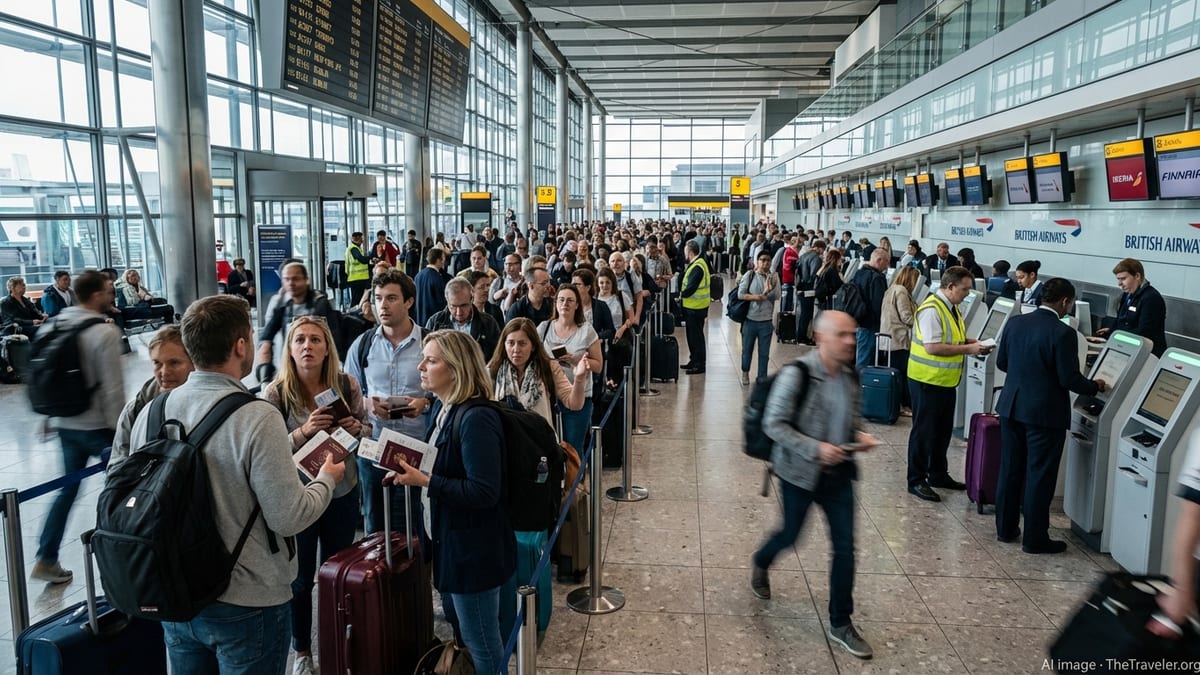
New UK Rules Put Dual Citizens Under Pressure
The immediate flashpoint is a change to UK entry requirements that will force many dual nationals, including thousands of residents of Australia, Canada, the US and Ireland, to carry the exact passport that confers their right of entry when boarding flights to Britain. Under a “no permission, no travel” regime, carriers will be required to verify that passengers hold the correct documentation before allowing them on board, or risk fines and operational penalties if they fly ineligible travellers.
While the measures were flagged previously by the UK Home Office, they have gained widespread attention only in recent weeks as departure dates close in and social media fills with confusion. Dual British and Irish citizens living in Australia have already reported being warned that they may be denied boarding if they turn up at the airport with only an Australian passport, even if they previously entered the UK without issue.
Industry bodies say the late surge in awareness, combined with slow processing times for foreign-issued British passports and certificates of entitlement, has created a perfect storm. Travel agencies in major cities from Sydney and Melbourne to Toronto and New York report being inundated with urgent enquiries as families realise existing travel plans may no longer be compliant with the new rules.
Australia Braces for Holiday Plan Chaos
In Australia, where ties to the UK remain strong and many residents hold British or Irish citizenship through birth or descent, the looming deadline is generating particular alarm. National tourism advisers have warned that travellers who do not hold a valid British or Irish passport, or paperwork explicitly confirming their right of abode, may be turned away at check in for flights to London and other UK gateways.
Australian travel agents say that, in some cases, long-planned holidays and family reunions risk being abandoned or dramatically reworked. Many travellers booked flights months ago with airlines such as Qantas, British Airways and Emirates on the assumption that an Australian passport, together with proof of onward travel and accommodation, would be sufficient for short stays. The clarification that some dual nationals must now travel on the UK-linked passport has left them scrambling to secure new documents.
Processing times for British passports lodged from Australia can range from several weeks to more than a month, according to consular guidance, leaving little margin for error for those with near-term departures. Travel industry leaders in Australia have urged the UK government to consider a grace period or temporary flexibility to prevent airport scenes in which otherwise eligible travellers are denied boarding at the last minute.
Canada and the US Warn of Confusion at Gate
Similar concerns are surfacing in Canada and the United States, where large expatriate communities maintain British and Irish ties. Airlines such as Air Canada and major US carriers that codeshare on transatlantic routes say they are reviewing check in procedures to ensure staff fully understand how to apply the new UK requirements, particularly for complex cases involving multiple nationalities and rights of residence.
Consumer advocates in North America have warned that, although most tourists travelling on Canadian or US passports for short UK visits may see little change, mixed-status families are at higher risk of disruption. A parent travelling on a British passport with a child using a Canadian passport, for example, may find that the child is subject to a different set of pre-clearance checks or visa expectations.
There are also questions around passengers connecting through London Heathrow or Gatwick on their way to Europe or the Middle East with carriers such as British Airways, American Airlines and Emirates. While transit passengers often remain airside, some may technically cross the UK border if they need to recheck baggage or change terminals, making it vital that they and their airlines understand whether the new documentation rules will apply to them as well.
Ireland Caught Between UK and EU Border Systems
Ireland faces a uniquely complex situation because of its intertwined travel arrangements with the UK and its membership of the European Union. Irish citizens have historically enjoyed near-frictionless movement to and from Britain under the Common Travel Area, which predates both countries’ membership of the EU. As the UK tightens the way carriers verify passengers’ rights of entry, questions are being raised in Dublin about how the new approach will interact with existing bilateral agreements.
Irish airports that function as key departure points for UK-bound passengers, including Dublin and Cork, are working with airlines such as Ryanair, Aer Lingus and British Airways to ensure check in staff can distinguish between Irish-only travellers, Irish and British dual citizens, and non-EU nationals connecting through Ireland to the UK. Industry sources say any system errors at the point of departure could quickly translate into queues, missed flights and disputes at airport counters.
At the same time, Irish carriers and port authorities are preparing for the introduction of the European Union’s own Entry Exit System for non-EU visitors to the Schengen area, which is expected to lengthen processing times at many continental borders. That dual shift, UK-side and EU-side, has left Irish travel stakeholders warning of a bumpy period ahead in which passengers may be subject to multiple new biometric or documentation checks on a single trip.
Airlines Tighten Checks as Penalties Loom
For airlines, the UK’s more rigid stance on carrier responsibility is the latest example of governments outsourcing border enforcement to the commercial sector. Under the strengthened “no permission, no travel” model, operators are expected to act as the first line of defence by confirming a passenger’s right to enter before they ever reach a British airport terminal.
Major long haul brands such as British Airways, Qantas and Emirates, as well as transatlantic and low cost players including Virgin Atlantic, Ryanair and Air Canada, are examining whether their current systems can reliably flag when a passenger’s passport alone may not be enough. That could involve updated software at check in desks, retraining of ground staff, and closer integration with government databases where that is permitted.
Airlines warn that in the short term these changes will almost certainly mean longer queues at check in and more frequent cases where travellers are pulled aside for detailed document checks. With penalties and potential repatriation costs hanging over operators that fly inadmissible passengers to the UK, staff may err on the side of caution, leading to more conservative decisions about who is allowed to board.
British Airways, Qantas and Partners Prepare for Operational Strain
British Airways, which relies heavily on feeder traffic from partners in Australia, North America and Europe, is closely watching the rollout. Any spike in last minute denials at overseas airports risks causing knock on disruption at London hubs, as empty seats, missed connections and rebooked passengers ripple through the system. The airline has already faced several years of heightened operational strain related to staffing, air traffic control issues and broader European disruption.
Qantas, which operates flagship services linking Sydney, Melbourne and Perth with London via intermediate stops, is similarly reviewing how its ground teams and third party handlers verify documents at outstations. Australian travel advisers say passengers on Qantas codeshares with Emirates and British Airways are seeking clarity about whether they must present their British passport at the very start of the journey or only when boarding the final UK bound leg.
Virgin Atlantic, which focuses primarily on transatlantic services between the UK and North America, is also expected to be affected by any rise in documentation queries at US and Canadian airports. Industry observers say the airline’s premium leisure clientele, which includes many dual nationals and frequent travellers, is likely to be particularly sensitive to uncertainty about border rules and boarding rights.
Ryanair, Emirates and Air Canada Face Multi-Hub Complications
Low cost giant Ryanair operates an extensive short haul network touching the UK, Ireland and numerous EU destinations, often via secondary airports where staffing is lean and gate space is tight. Any additional complexity in verifying UK entry rights, especially for passengers connecting from non EU countries or holding multiple passports, threatens to slow boarding and erode the airline’s prized quick turnaround times.
Emirates, which funnels significant traffic from Australia, Asia and North America through its Gulf hub to the UK and Ireland, must ensure that document checks are robust both at the origin airport and during transit. Travel agents in Dubai, Sydney and New York report that passengers booked on multi sector journeys via Emirates are increasingly anxious about being caught out by differing rules in each jurisdiction.
Air Canada, meanwhile, sits at the nexus of North American and European traffic, with many of its customers using UK hubs as gateways to the rest of Europe or to Ireland. The carrier is likely to face a high volume of technical queries from dual citizens and permanent residents whose legal status may not be obvious from a quick passport scan, forcing staff to ask more detailed questions at check in.
Industry Calls for Clarity and a Softer Landing
Across the sector, trade bodies and consumer advocates are urging UK authorities to provide clearer, more accessible guidance to travellers before the new rules bite. They argue that placing near total responsibility on airlines to screen documents increases the risk of inconsistent application and leaves ordinary passengers bearing the cost if their trip unravels at the airport.
Some industry figures have suggested that a grace period would help reduce the immediate shock, allowing carriers, border staff and passengers to adjust while minimising mass disruption. Others call for targeted outreach to high risk groups, such as dual citizens living abroad and families with mixed nationalities, who may be at greatest risk of misunderstanding the new requirements.
For now, airlines from British Airways and Qantas to Emirates, Ryanair, Virgin Atlantic and Air Canada are advising customers with upcoming UK travel to check documentation carefully, verify that the passport they intend to use matches their legal right of entry, and allow extra time at the airport in case of longer queues or additional questions. With the changes due to take effect within days, the industry is bracing for a tense period in which even small gaps in communication could translate into very visible disruption at departure gates around the world.