

More news on this day
The UK aviation sector is turning to pilot behaviour as a new front in the drive to cut fuel consumption and carbon emissions, with British Airways highlighting training and performance monitoring and fresh debate emerging over the use of incentives to encourage more efficient flying.
Get the latest news straight to your inbox!
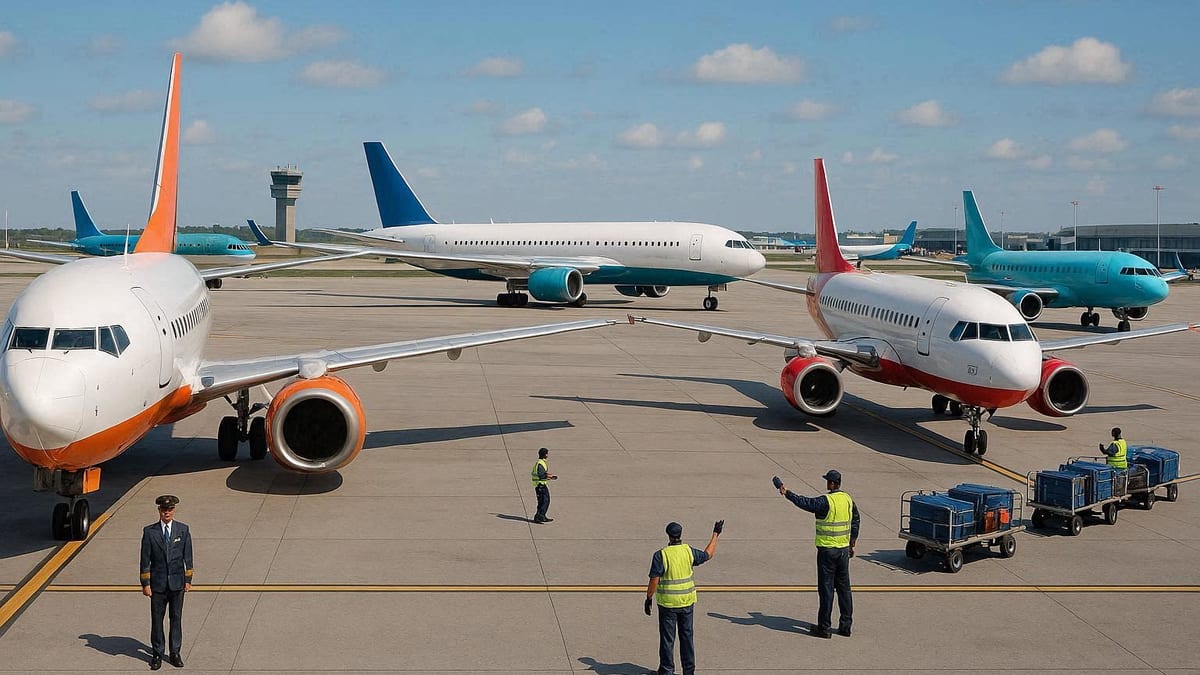
Image by Travel and Tour World – Tourism, Airline, Destination, MICE, Gobal Travel Market, Hotel news that you will find only over here.
Aviation Policy Puts Efficiency in the Climate Spotlight
The UK’s aviation decarbonisation agenda is increasingly focused on squeezing more efficiency out of existing aircraft while longer term technologies such as hydrogen propulsion and large-scale sustainable aviation fuel production mature. Government strategies and the UK Civil Aviation Authority’s climate work emphasise operational improvements alongside cleaner fuels and new aircraft designs as part of the path to net zero by 2050.
Publicly available information on UK policy notes that aviation operators are expected to pursue efficiency gains across the whole system, including through more efficient fleets and better day-to-day operations. Within that package, pilot decision making is seen as a key lever because it directly affects fuel load, speed management, routing and taxi procedures, all of which influence fuel burn on every flight.
At the same time, UK-backed research programmes are examining how operational choices contribute not only to carbon dioxide emissions but also to non-CO2 impacts such as contrails. Trials involving alternative fuels and different flight profiles aim to understand how pilots can reduce the formation of persistent contrails, which scientists link to additional warming.
The growing policy interest in operational behaviour is now intersecting with airline-level initiatives that seek to align individual pilot actions with corporate emissions targets, sharpening the focus on whether and how financial incentives should be used.
British Airways Leans on Training and Data to Change Pilot Habits
British Airways, part of International Airlines Group, has described pilot behaviour as central to its fuel-efficiency and emissions strategy. Public sustainability disclosures indicate that the carrier has integrated environmental topics into pilot training and simulator checks, with modules dedicated to areas such as reduced-engine taxiing and smarter use of discretionary fuel.
Recent sustainability reporting from the airline states that more than 4,000 pilots, representing the vast majority of its flight crew, have completed an annual flight sustainability training programme. That training focuses on techniques that are already permitted within existing safety margins, including optimising taxi procedures, fine-tuning climb and cruise settings, and avoiding unnecessary extra fuel uplift when conditions allow.
British Airways pairs this training with detailed flight data analysis. Operational information from each sector is used to monitor how often recommended fuel-saving techniques are applied. The airline presents this as a “pilot-first” approach, where captains receive feedback on their personal contribution to fuel efficiency and emissions rather than only seeing fleet-wide averages.
The company positions these efforts alongside wider decarbonisation measures such as renewing its fleet with more efficient aircraft, investing in sustainable aviation fuel and purchasing carbon removal credits. However, the specific question of financial incentives for pilots has become more prominent as the industry looks for low-cost ways to drive behavioural change.
Behavioural Science Inspires Incentive-Based Approaches
Interest in pilot incentives has been shaped by earlier behavioural-science trials in the UK, including a well-known study conducted with Virgin Atlantic a decade ago. That randomised experiment tested the impact of giving pilots personalised performance feedback, allowing them to set fuel-saving goals and, in some treatment groups, offering charitable donations when goals were achieved.
Research findings from that project reported that low-cost interventions could deliver significant fuel savings and emissions reductions without altering flight safety rules or onboard service. The study indicated that simply reporting performance back to pilots and enabling goal-setting led to measurable improvements, while the addition of non-cash rewards strengthened the effect.
Although that trial involved a different UK airline, it has influenced thinking across the sector, including at British Airways, about the potential for incentive-style schemes to support efficiency programmes. Behavioural insights specialists argue that pilots, like other professionals, respond to clear goals, timely feedback and meaningful rewards, and that these tools can complement traditional training and procedures.
In practice, modern programmes typically combine advanced data analytics with behavioural techniques. Airlines can now track adherence to fuel-saving procedures in near real time and present tailored dashboards to individual pilots and fleets, raising the possibility of linking performance metrics to recognition schemes, bonuses or other incentives.
Safety Concerns and Regulatory Scrutiny Around Fuel Bonuses
The idea of directly linking pilots’ pay or bonuses to fuel savings has, however, prompted strong debate. Recent online discussions referencing British Airways and other carriers highlight concerns that poorly designed incentive schemes could encourage pilots to take less fuel than they might otherwise choose, potentially narrowing safety margins in abnormal or rapidly changing conditions.
Critics argue that any financial reward tied explicitly to fuel quantities risks creating a perceived conflict between cost savings and the conservative fuel-planning philosophy that underpins commercial aviation safety. Airline pilots commenting publicly often stress that performance programmes must never penalise captains for carrying extra fuel when they judge it necessary for weather, traffic, diversion risks or other operational uncertainties.
Regulators in the UK and elsewhere have not issued blanket bans on incentives, but available guidance and industry commentary consistently emphasise that safety requirements and fuel reserve rules cannot be compromised. Schemes that focus on adherence to approved best practices, rather than absolute reductions in fuel uplift, are generally viewed as more acceptable.
As attention grows on incentive-based approaches, the UK Civil Aviation Authority’s broader work on aviation sustainability and safety oversight provides the framework within which any such programmes must operate. Industry observers expect regulators to continue scrutinising how airlines design and communicate incentives so that efficiency gains do not erode the longstanding safety culture.
Implications for Passengers and the UK’s Net Zero Path
For travellers, most of these changes are largely invisible. Fuel-efficiency initiatives driven by pilot behaviour typically play out behind the scenes, influencing how flights are planned and operated rather than altering the passenger experience in obvious ways. In some cases, passengers may notice small differences, such as shorter taxi times with one engine shut down or cruise profiles that feel slightly different from past journeys.
From a climate perspective, however, the cumulative impact of incremental savings across thousands of flights can be substantial. Studies of behaviour-focused trials suggest that operational changes can remove tens of thousands of tonnes of carbon dioxide at relatively low cost, making them an attractive complement to more capital-intensive measures such as new aircraft and fuel production facilities.
Within the UK’s wider Jet Zero ambition, pilot incentives and behaviour programmes are likely to remain one piece of a larger puzzle that includes sustainable aviation fuel mandates, hydrogen and electric aircraft development, renewable energy use at airports and market-based carbon measures. Efficiency gains achieved through cockpit decisions cannot on their own neutralise aviation’s climate footprint, but they can buy time and reduce emissions while longer-term technologies scale up.
As British Airways and other UK carriers refine their approaches, the balance between incentivising fuel savings and safeguarding conservative fuel planning will be closely watched. The outcome may shape not only corporate emissions trajectories but also public confidence in how airlines pursue efficiency in an era of heightened climate scrutiny.