

More news on this day
Greece’s tourism sector has posted another record-breaking year, with new data showing that visitors from the United Kingdom have overtaken those from Turkey, Germany, the United States, France and other major markets as the strongest driver of growth in international arrivals, contributing to an overall increase of more than five percent.
Get the latest news straight to your inbox!
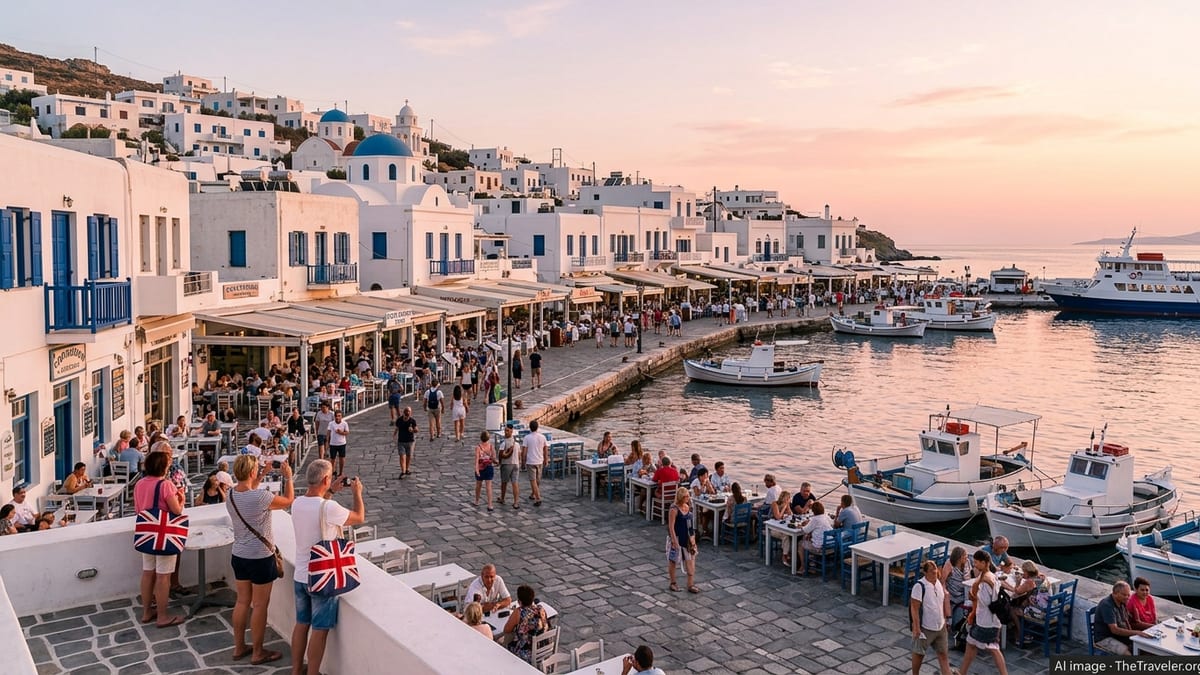
UK Emerges as Top Growth Engine for Greek Tourism
According to recent tourism data compiled from Bank of Greece releases and industry analyses, Greece recorded a fresh high in international arrivals, with total visitor numbers rising by more than five percent compared to the previous year. Within that expansion, the United Kingdom has emerged as the single most dynamic source market in terms of additional arrivals, outpacing other traditional leaders such as Germany, Turkey, the United States and France.
Publicly available information indicates that, while Germany and the UK remain among the top markets in absolute visitor numbers and travel receipts, growth in arrivals from the UK has accelerated more sharply in the most recent seasons. In the first half of the latest reporting year, arrivals from the UK advanced by double digits, outstripping the growth rates recorded from Germany, the US and France. This shift has effectively placed the UK at the forefront of Greece’s current upswing in inbound tourism.
Industry reporting highlights that this performance builds on the UK’s already strong position in Greece’s tourism mix. The British market has long ranked among Greece’s top two source markets, but recent figures show UK travelers widening their lead in terms of incremental visitors, giving Greece a powerful boost at a time when some other European source markets are growing more slowly.
Record Arrivals Underscore Greece’s Tourism Momentum
The broader backdrop to the UK’s surge is a tourism industry that has been expanding at a steady pace for several years. Bank of Greece statistics and independent studies point to consecutive records in both arrivals and travel receipts, with the latest full-year data showing inbound visitor numbers climbing well above pre‑pandemic levels and continuing to edge higher.
Across Europe, tourism arrivals have grown at a moderate pace, but Greece’s performance has been described in published coverage as outperforming the regional average. The country has moved into the top tier of Mediterranean destinations for international travelers, helped by an extended season and rising demand for both island and mainland destinations.
The most recent annual figures place total foreign arrivals in Greece well above 35 million visitors, with preliminary data for the current season suggesting that the country is tracking toward another historic high. The more than five percent rise in arrivals over the latest full year has added further scale to an already sizable tourism base, magnifying the impact of growth from individual source markets such as the UK.
How the UK Pulled Ahead of Other Leading Markets
Several overlapping trends help explain why the UK has overtaken Turkey, Germany, the United States and France in driving Greece’s current tourism growth. Air connectivity between British airports and Greek destinations has expanded significantly, with airlines adding capacity to popular islands and to secondary airports that serve lesser-known regions. This has made it easier for British travelers to choose Greek holidays, particularly during shoulder seasons.
At the same time, publicly available industry reports suggest that British travelers are spreading out beyond long‑established hotspots such as Crete, Rhodes and Corfu into mainland coastal areas and smaller islands. This diversification has created additional local demand across Greece, reinforcing the overall rise in arrivals and making the UK’s contribution more visible across multiple regions rather than concentrated in a handful of resorts.
By contrast, growth from some other major markets has been more modest. Recent Bank of Greece data show that arrivals from Germany and the United States continue to rise, but at lower single‑digit rates, while arrivals from France have at times edged down or remained broadly flat year on year. Earlier analyses of cross‑border travel patterns also indicated that Turkey’s surge in outbound travel to Greece, notable in 2023, has since moderated, allowing the UK to move clearly into the lead in incremental arrivals.
Economic Impact and Spending Patterns
The UK’s role in boosting arrivals is particularly significant because it coincides with shifts in spending patterns. Bank of Greece travel balance figures reported in Greek and international media show that overall tourism receipts have risen faster than arrivals in some recent periods, reflecting higher average spending per trip. Although per‑visitor expenditure from the UK has fluctuated, the high volume of British arrivals means that even modest changes in spending translate into substantial revenue effects.
Germany and the United States remain crucial for high per‑capita spending, but the UK’s position as a leading driver of additional visitors is helping to underpin record tourism revenues. Industry commentary notes that British travelers are increasingly combining traditional beach holidays with higher‑value experiences, such as gastronomy, cultural excursions and nature activities, which can lift total expenditure during a stay.
For the Greek economy, the combination of record arrivals and solid spending has reinforced tourism’s role as a central pillar of growth. Recent estimates place travel receipts at well over 20 billion euros annually, with the latest figures pointing to another near‑double‑digit increase. The UK’s over five percent contribution to the rise in arrivals is therefore not only a statistical milestone but also an important factor in Greece’s broader economic outlook.
Outlook: Sustaining Growth from the UK and Beyond
Looking ahead, analysts following published Bank of Greece and industry data see both opportunities and risks in the UK‑led surge. On the positive side, the depth of the British market and the strong cultural and historical ties between the two countries suggest that demand for Greek holidays is likely to remain resilient. Early bookings data for upcoming seasons reported by travel and aviation operators point to continued strength in UK demand, particularly for island destinations and shoulder‑season travel.
At the same time, the rapid pace of growth raises questions about capacity, infrastructure and sustainability in popular Greek regions. Reports from industry bodies and think tanks have underlined concerns about pressure on coastal ecosystems, water resources and local housing markets, issues that may become more pronounced if arrivals continue to set new records each year.
Policy discussions in Greece have increasingly focused on spreading demand more evenly through the year and across regions, encouraging visitors to discover lesser‑known inland and mainland destinations. If these efforts succeed, the strong appetite from the UK could help support a more balanced tourism model, while continued though slower growth from Germany, the United States, France and Turkey maintains a diversified base of source markets.
For now, the latest statistics confirm that the United Kingdom has become the standout growth engine in Greece’s tourism story, driving a record‑breaking increase in arrivals and underscoring the country’s position as one of Europe’s most sought‑after holiday destinations.