

More news on this day
The United Kingdom has sharply expanded its high-risk foreign travel guidance, grouping Venezuela with Syria, Russia, Egypt, Iran, Belarus, Yemen, Niger, Palestine and dozens of other destinations as conflict in the Middle East and wider security concerns redraw the global map for holidaymakers and business travellers.
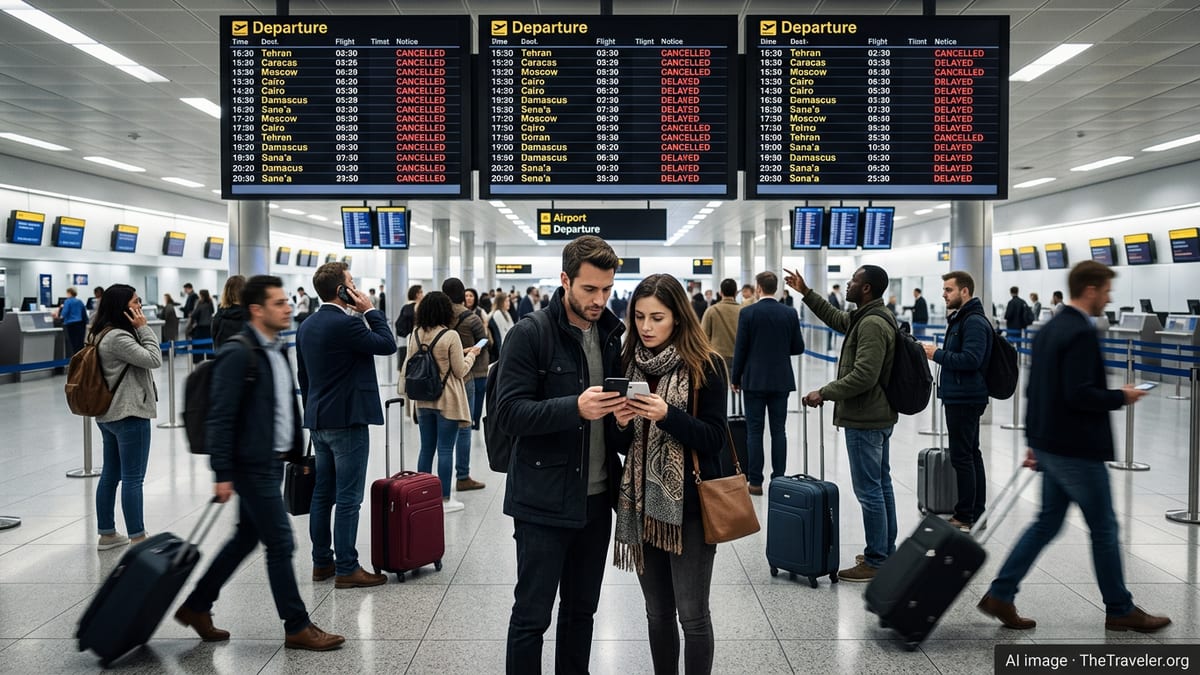
What Has Changed in the UK’s Latest Travel Guidance
The Foreign, Commonwealth and Development Office now flags 76 countries and territories worldwide as having areas where it advises against all travel or all but essential travel, according to new tallies of official guidance updated in early March 2026. These include full “do not travel” warnings for parts of the Middle East and Africa and extensive regional cautions in North Africa, Eastern Europe and the Sahel.
Among the most prominent names are Venezuela, Syria, Russia, Egypt, Iran, Belarus, Yemen, Niger and Palestine, which are either covered by blanket warnings or by extensive restrictions on movement. Many of these advisories have existed for some time, but the latest update consolidates and widens the danger zone, particularly around Iran and neighbouring states following the escalation that began on 28 February 2026.
While the FCDO has not formally issued a single new “list” document, analysis of its country-by-country pages shows a clear expansion in areas designated too dangerous for normal travel by British nationals. Travel experts say this has effectively redrawn the mental map of risk for UK-based tour operators, airlines and insurers, who routinely treat FCDO guidance as the baseline for safety and liability decisions.
The move echoes parallel steps by other governments, with Ireland, the United States and several European states also tightening their foreign travel advice in response to the Iran conflict, heightened terrorism alerts and ongoing wars in Ukraine, Gaza and parts of Africa.
Countries Now in the Highest-Risk Bracket
The countries causing the most immediate concern for UK travellers are those where the FCDO advises against all travel. This group includes Iran, Syria, Yemen, parts of Palestine, Russia, Venezuela, Niger, Belarus, Haiti, Mali, South Sudan and several others that are experiencing active conflict, severe instability or the breakdown of law and order.
In these destinations, British consular help may be extremely limited or effectively unavailable, and commercial flight options have dwindled as airlines reroute around closed airspace and security hotspots. Airports in Iran, Iraq, Kuwait, Israel, Bahrain and Qatar have all seen closures or strict flight limits in recent days, further complicating any remaining travel options through the region.
A larger ring of countries sits in a second tier where the UK advises against all but essential travel in specific regions. This category now stretches across much of the Sahel and parts of North and East Africa, including large areas of Algeria, Libya, Burkina Faso, Nigeria, Cameroon, Chad and Sudan, as well as border areas in Egypt, Saudi Arabia, Turkey and Tunisia. In Europe and its periphery, sections of Ukraine, Georgia, Armenia, Azerbaijan and Moldova remain under similar scrutiny, largely linked to Russia’s invasion of Ukraine and associated tensions.
In Latin America, Venezuela’s long-running economic and political crisis keeps it firmly in the high-risk bracket, alongside Haiti and parts of neighbouring states affected by spillover crime and kidnapping. For many of these countries, the March 2026 update represents a continuation rather than a new designation, but the combined effect underscores how many regions are now considered hazardous for routine tourism.
Why the Iran Conflict Is Reshaping Global Travel Risk
The immediate trigger for the latest tightening of UK guidance was the rapid escalation between the United States, Israel and Iran on 28 February 2026, when large-scale airstrikes on Iranian targets prompted retaliatory missile and drone attacks across the region. This has significantly raised the risk of further military action, airspace closures and attacks on Western interests, including transport infrastructure.
British officials say that the threat environment in the Middle East has changed “fundamentally” in the space of a few days, leading to a wave of updated advisories for Bahrain, Israel, Kuwait, Lebanon, Oman, Qatar, Saudi Arabia, the United Arab Emirates and other Gulf and Levant states. While not all are subject to full “do not travel” warnings, many are now rated as locations where only essential travel should be considered, and even then with detailed contingency planning.
Beyond the Middle East, the UK points to overlapping risks that justify keeping long-standing warnings in place for Russia, Belarus, Ukraine and parts of Eastern Europe. These include the ongoing war in Ukraine, domestic repression in Russia and Belarus, cyber and disinformation activity, and legal risks such as arbitrary detention of foreign nationals. For Syria, Yemen and parts of Iraq, active conflict and terrorism continue to drive the highest level of caution.
Public health, weak infrastructure and natural disasters also factor into some advisories, especially in parts of Africa and the Caribbean, though security threats remain the primary driver for the March 2026 expansion. Officials stress that the guidance is based on security assessments rather than political positions on individual governments.
How Travellers and Airlines Are Reacting
The immediate consequence of the expanded danger zone has been a surge in cancellations, rerouting and last-minute changes to travel plans. UK-based tour operators report fielding thousands of calls from customers worried about upcoming trips to the wider Middle East and nearby regions, with many choosing to postpone or switch destinations rather than travel against official advice.
Several major airlines have already suspended routes to Iran, Syria, parts of Iraq and some Gulf states, while others have introduced longer detours that avoid contested airspace, adding costs and travel time. Flight-search data from booking platforms shows sharp drops in demand for itineraries touching Tehran, Damascus, Sana’a and certain hubs in the Gulf, alongside increased interest in alternative stopovers in Europe and Asia.
Travel insurance has become a critical fault line. Policies sold in the UK typically exclude cover for trips taken against FCDO advice, meaning that a holiday or business trip to a “do not travel” destination may be effectively uninsured. Insurers and brokers are now re-issuing guidance to customers explaining that both cancellation cover and emergency medical support may be void if travellers ignore the new warnings.
At the same time, corporate travel managers are revising risk thresholds for staff travel, with some multinationals temporarily banning non-essential trips not only to the highest-risk states but also to neighbouring countries that share airspace or land borders with them. Universities and study abroad programmes are reviewing placements in affected regions, and humanitarian organisations are activating higher security protocols for staff already on the ground.
What UK and Global Travellers Should Do Now
For travellers with imminent plans to or through affected countries, the single most important step is to check the latest UK FCDO advice for each destination on the exact day of departure. Guidance can change within hours, especially in volatile situations such as the Iran conflict, and airlines, insurers and tour operators will typically refer to the position in place at the time travel begins.
Passengers who booked package holidays to regions now subject to “do not travel” warnings are often entitled to full refunds or alternative trips under UK consumer protection rules, provided the organiser cancels or significantly alters the itinerary. Independent travellers with separate flights and accommodation face a more complex patchwork of airline waivers, hotel policies and credit card protections, so acting quickly and keeping meticulous records of official updates is essential.
Experts recommend avoiding overflying active conflict zones where possible, even if airlines continue to operate, and building in extra time for connections as routes are adjusted at short notice. Travellers already in high-risk areas are urged to register with their embassy or consulate, maintain a low profile, review emergency plans and consider leaving while commercial options remain open.
Looking ahead, the March 2026 reshaping of the global risk map is likely to accelerate a longer-term trend away from certain destinations and transit hubs, shifting tourism and business travel toward regions perceived as more stable. For now, anyone planning international travel in 2026 is being advised to treat official foreign office guidance as a dynamic, daily-checked essential, rather than a footnote at the end of the booking process.