

More news on this day
The United Kingdom is examining fresh ways to detect and defeat fiber-optic guided drones, as military planners weigh how a once niche technology in Ukraine’s war has rapidly become a global concern for air defense and undersea infrastructure security.
Get the latest news straight to your inbox!
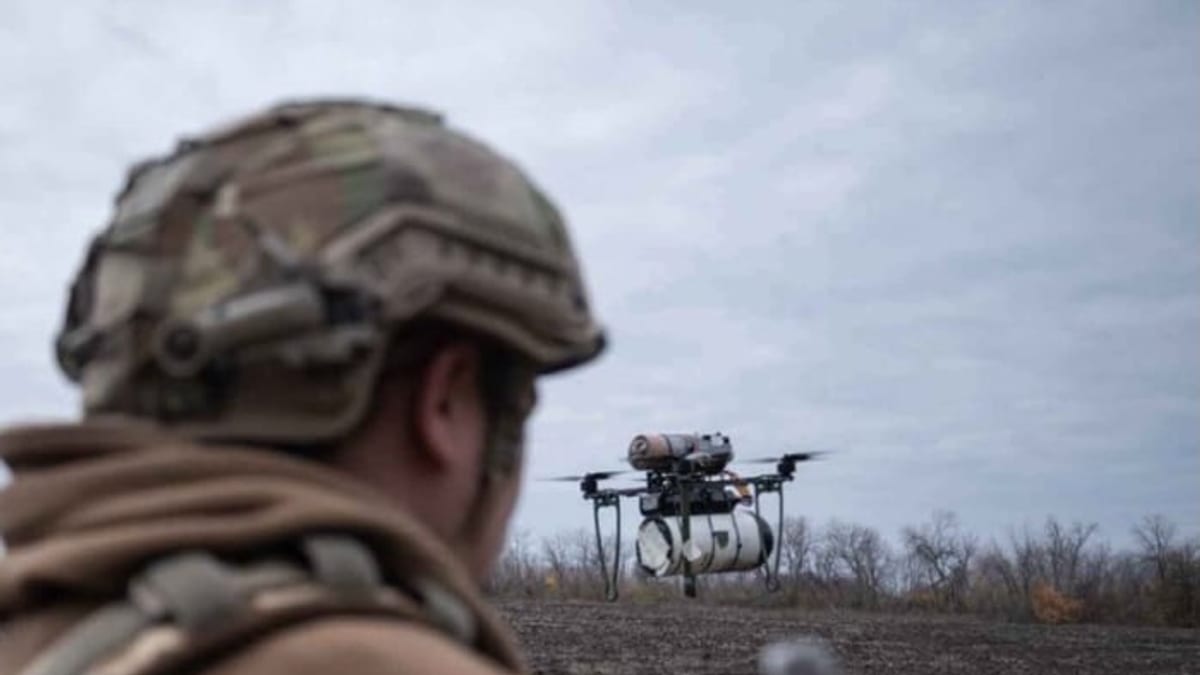
Image by AWN RSS by content source
From Battlefield Experiment To Global Headache
First-person-view attack drones controlled over radio links became a defining weapon of the Ukraine war, but their effectiveness invited a wave of electronic jamming. In response, forces on the battlefield began fielding drones controlled through fiber-optic cables that spool out behind the aircraft, creating a hard-to-disrupt physical link between pilot and machine.
Publicly available reporting from Ukraine’s front lines describes both Russian and Ukrainian units deploying these so-called fiber drones, which are steered by the same type of glass strands that carry high-speed internet traffic. Because their guidance commands travel inside the cable instead of over the air, traditional electronic warfare systems have little effect, forcing defenders to rely on physical interception or gunfire.
Analyses in international media indicate that Russia has pushed the concept further with repeater drones and longer cable runs, extending engagement ranges and complicating any attempt to trace a single line back to its operator. Commentary from open-source intelligence communities has highlighted images of fields littered with discarded fiber coils, undercutting the idea that defenders can simply “follow the wire” to its source.
As these battlefield lessons circulate through NATO and partner militaries, the implications are not limited to Eastern Europe. The UK, which has invested heavily in both air-defense innovation and seabed protection, is now treating fiber-optic drone control as a disruptive challenge that touches everything from land-based bases to the deep ocean floor.
British Programs Pivot Toward Harder-To-Jam Threats
The UK’s response is emerging across several parallel efforts rather than a single flagship program. The Ministry of Defence has publicized work on rapid-deployment counter-drone capabilities, including radio-frequency directed-energy demonstrators such as the RapidDestroyer system, which is designed to track and defeat swarms of small uncrewed aircraft. While these systems were initially conceived to burn out or disrupt drones relying on radio links, planners are now weighing how to adapt them for threats that are physically tethered and partially shielded from electronic attack.
Defence and technology conferences in London and across Europe have begun to feature dedicated sessions on fiber-optic drone tactics, including flight profiles where attack drones skim along the ground or tree lines while their cables trail behind. Technical papers and briefings describe how low-altitude flight and thin, hard-to-see fibers compress the reaction time available to ground defenders, making early detection a critical requirement.
In response, UK and NATO discussions are placing greater emphasis on integrating multiple sensing layers: acoustic signatures from small electric motors, optical tracking of tiny, fast-moving objects, and radar tuned to distinguish plastic-and-composite airframes from background clutter. The goal is to spot a fiber-connected drone far enough away that conventional guns, missiles, or directed-energy weapons can engage it before it reaches critical assets.
British industry is also positioning itself as a supplier of defensive technologies. Companies involved in radar, electro-optical sensors, and artificial intelligence classification tools are promoting software updates that claim improved performance against small, low-observable drones, regardless of whether they are controlled by radio or fiber link. Public statements from defense contractors increasingly reference the fiber-optic challenge as a key driver for new research and development spending.
Protecting Undersea Cables From Dual Fiber Threats
The UK’s anxiety over fiber-optic drones is sharpened by its dependence on undersea telecommunications cables, many of which land on British shores and carry vast volumes of global data. Recent incidents in the Baltic Sea and elsewhere, where fiber-optic links were damaged or severed, have underscored how vulnerable this infrastructure can be to accident or deliberate sabotage.
To address that risk, Britain is bringing new surveillance assets online, including a Multi-Role Ocean Surveillance Ship operated by the Royal Fleet Auxiliary. Publicly available information indicates that this class of vessel is designed to protect seabed infrastructure and can deploy remotely operated vehicles and autonomous undersea drones to investigate suspicious activity around cables and pipelines.
Analysts note that fiber-optic technology sits at the heart of both the threat and the defense. The same kind of optical fibers that guide unjammable drones in the air also form the backbone of the global internet across the ocean floor. Research groups and commercial firms are now demonstrating distributed acoustic sensing systems, which can use existing submerged fibers as long listening devices, detecting vibrations from ships, anchors, or tools that might be tampering with cables.
For the UK, combining seabed surveillance ships, autonomous maritime drones, and fiber-based sensing could create an overlapping security net across key cable routes. However, officials and experts caution in public reporting that these systems are still maturing, and that tracking a small underwater drone or diver near a cable in the open ocean remains a complex technical problem.
NATO Cooperation Shapes London’s Next Moves
Britain is not addressing the fiber-optic drone issue in isolation. Within NATO, specialized working groups focused on uncrewed systems and electronic warfare are already studying how Russian use of cabled drones in Ukraine eroded traditional jamming advantages. Defence-focused outlets report that the alliance is sponsoring trials to evaluate detection systems capable of spotting small, fast targets at short range while staying affordable enough for wide deployment.
These alliance initiatives are directly relevant to UK planning. British forces are deeply integrated into NATO’s air-defense and intelligence networks, and London often leverages multinational projects to speed up testing and procurement. Observers expect UK laboratories and test ranges to participate in upcoming alliance experiments that measure how radar, acoustic arrays, and optical trackers perform when confronted with fiber-guided drones.
Policy debates in London are also shaped by allied experience beyond Europe. Reporting from the United States shows its armed services experimenting with fiber-linked first-person-view drones of their own, framed as a way to survive in heavily jammed theaters. That trend reinforces the idea that cabled control is not a temporary workaround but a feature of future conflicts, making dedicated countermeasures a long-term requirement rather than a passing concern.
As NATO members compare notes, one recurring theme is the need to protect rear-area infrastructure as carefully as front-line units. For the UK, that means anchoring new counter-drone concepts not only around deployed forces but also around ports, energy terminals, data centers, and the coastal nodes where undersea fiber meets land-based networks.
A Shifting Balance Between Offense And Defense
Experts who track military innovation often describe a cycle in which new offensive technologies briefly outpace defenses before countermeasures catch up. Fiber-optic drones appear to represent such a moment. They exploit a gap in traditional electronic warfare, forcing countries like the UK to revisit assumptions about how easily small uncrewed aircraft can be jammed or hijacked.
British planners now face a series of trade-offs. Investing heavily in kinetic and directed-energy options offers a more universal answer to both radio-linked and fiber-guided drones, but these systems can be expensive to build, crew, and sustain. On the other hand, more focused sensor and software upgrades might prove cheaper and quicker to field, yet could struggle against swarms or more sophisticated tactics such as repeater drones and coordinated decoys.
Public debate in the UK is beginning to reflect these dilemmas, particularly as the same fiber technology at the center of the threat also underpins economic growth, digital services, and research. Security specialists argue in open commentary that future policy will have to balance resilience and openness, accepting that fiber will remain indispensable even as it becomes a contested domain.
For now, Britain is signaling through its shipbuilding plans, research programs, and alliance diplomacy that it intends to stay near the forefront of the contest. Whether those efforts are enough to keep pace with rapidly evolving fiber-optic drone tactics will become clearer as new systems move from trial ranges and conference halls into real-world operations.