

More news on this day
Passengers across the UK faced hours of disruption as 420 delays and 27 cancellations were recorded at London, Manchester, Birmingham and Gatwick, with major European carriers including British Airways, easyJet, Ryanair, Air France and Lufthansa reporting widespread schedule upheaval and passengers left stranded in terminals.
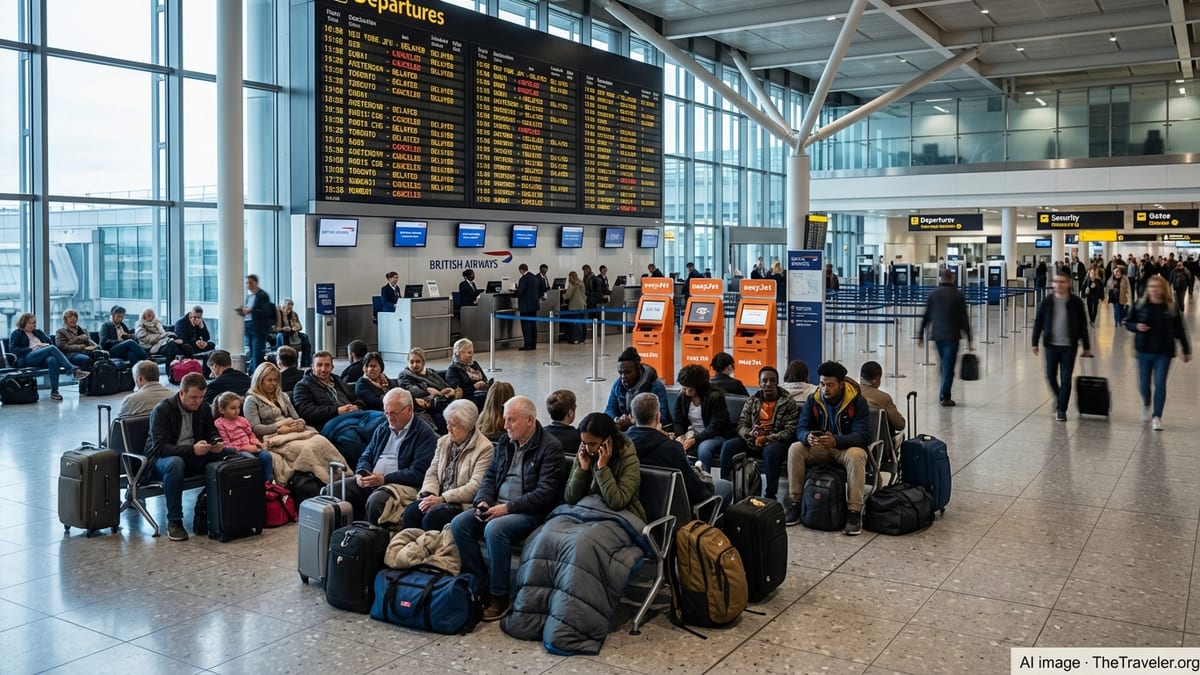
Major UK Hubs Grapple With a Fresh Wave of Disruption
The latest bout of disruption has underscored just how fragile UK air travel remains at the height of the winter timetable. Operational data from London, Manchester, Birmingham and Gatwick showed a combined 420 delayed departures and arrivals alongside 27 outright cancellations, creating long queues at check-in desks, security lanes and airline help counters.
While the four airports regularly handle high volumes, aviation analysts noted that the sheer clustering of delays in a single operating window turned routine congestion into system-wide gridlock. Minor lateness early in the day quickly snowballed into missed slots, crew duties reaching their limits and aircraft falling out of rotation, leaving passengers facing missed connections and abandoned itineraries.
Airport managers stressed that safety was never compromised, but acknowledged that recovery stretched well into the evening as ground crews, air traffic controllers and airline operations centres worked to re-sequence flights and reposition aircraft. For many travellers, however, the effort arrived too late to save weekend breaks, business meetings or onward long-haul connections.
British Airways, easyJet and Ryanair at the Centre of the Turmoil
Among the airlines most heavily affected were British Airways, easyJet and Ryanair, all of which operate dense short haul networks that leave little room for error when disruption hits. British Airways, the dominant carrier at London Heathrow and a key operator at other UK hubs, saw a cluster of delays linked to congested airspace and aircraft availability, compounding ongoing schedule pressures built up over recent weeks.
At Gatwick and Manchester, easyJet bore the brunt of the delays and a notable share of the cancellations. The low cost carrier’s turnarounds, normally measured in tight blocks of minutes, were repeatedly pushed back as aircraft arrived late from earlier sectors. Each late inbound translated into further outbound disruption, stranding passengers in crowded departure lounges and forcing some to queue for hours to secure rebooking or overnight accommodation.
Ryanair, Europe’s largest budget airline by passenger numbers, was similarly affected on key UK routes, particularly those feeding major European hubs where knock on effects from weather and congestion on the continent rippled into British schedules. Although the airline has historically maintained high completion rates, even its robust buffers were insufficient to prevent a string of delays that left customers voicing frustration at information gaps and limited options for same day alternatives.
Air France and Lufthansa Feel the Strain of Continental Knock-On Effects
The disruption was not confined to UK based carriers. Air France and Lufthansa, both key operators on cross Channel and continental routes, reported schedule pressures tied to wider operational challenges across Europe in recent weeks, including adverse weather events and recurring air traffic control constraints in several member states.
Air France services linking London and regional UK airports with Paris were hit by a mix of late arrivals from the French capital and slot restrictions at congested European hubs. Passengers connecting through Paris found themselves particularly exposed, with some missing onward long haul departures and facing lengthy rebooking queues at transfer desks as staff scrambled to secure spare seats on later flights.
Lufthansa, which relies on UK feeder traffic into its hubs in Germany, also saw disruptive delays on routes into and out of London and Manchester. Aircraft arriving late from Frankfurt and Munich shortened turnaround windows and pushed departure times back across the day. Though cancellation numbers for both Air France and Lufthansa remained limited, aviation experts warned that repeated small shocks to their UK operations are eroding traveller confidence in the reliability of key business routes.
Scenes of Frustration as Passengers Sleep in Terminals
Inside the terminals, the human impact of 420 delays and 27 cancellations was clear. Families returning from holidays, students heading back to universities and business travellers on tight schedules were left hunting for sparse seating and power outlets as departure boards flickered with rolling updates. Airport staff reported a noticeable rise in visibly distressed passengers as the day wore on and the scale of the disruption became clear.
At London airports, passengers described queues snaking through terminal concourses as people waited to speak with airline agents about rebooking and overnight arrangements. Some travellers, particularly those on low cost carriers with limited interline agreements, faced the choice of purchasing last minute tickets on rival airlines or resigning themselves to overnight stays on terminal floors when nearby hotels quickly reached capacity.
In Manchester and Birmingham, local volunteers and airport teams distributed water and basic snacks as delays extended into late evening. Public address announcements urged passengers to remain patient while reminding them of their entitlements to assistance and, in some cases, financial compensation. For stranded travellers with early morning obligations, such as work shifts or medical appointments, those reassurances often rang hollow against the reality of missed commitments and additional costs.
Operational and Weather Pressures Converge on UK Schedules
Aviation analysts pointed to a familiar cocktail of causes behind the latest disruption: seasonal weather systems affecting visibility and wind conditions, air traffic control restrictions in busy corridors over western Europe and tight airline staffing and fleet plans that leave little headroom when things go wrong. Each factor alone is manageable, but in combination they have the power to bring even sophisticated operations to a near standstill.
Recent winters have already seen several days in which widespread delays and cancellations swept across Europe, affecting major hubs from Amsterdam and Frankfurt to Paris and London. Data from industry trackers has shown spikes in weather related cancellations and prolonged ground handling times when snow, fog or strong winds set in, as well as recurrent bottlenecks in air traffic control that force airlines to reduce the number of flights scheduled through sensitive airspace.
Industry observers note that as carrier networks have grown denser and aircraft utilisation has risen, the margin for contingency has narrowed. Airlines have been trimming spare capacity in aircraft and crews to keep costs down, a strategy that boosts efficiency in normal conditions but magnifies the effect of any disruption. The result is a system in which a relatively small number of initial delays can cascade into hundreds of affected flights within hours.
What Stranded Passengers Are Entitled to Under EU and UK Rules
For many passengers caught up in the latest wave of disruption, the immediate questions centred on what assistance and compensation they were entitled to receive. Under long standing European regulations, mirrored in post Brexit UK law, travellers departing from UK airports or flying to the UK on European carriers generally enjoy strong protections when flights are significantly delayed or cancelled for reasons within an airline’s control.
Broadly, airlines must provide care and assistance, including meals, refreshments and access to communication, once delays pass certain thresholds based on flight length. When an overnight stay is required, they are expected to arrange and pay for hotel accommodation and local transport to and from the airport. In the case of cancellations or very long delays, passengers may be entitled to reimbursement of the unused ticket or rerouting at the earliest opportunity, as well as fixed sum compensation in cash where the disruption is not caused by extraordinary circumstances such as severe weather or air traffic control strikes.
Consumer advocates urged passengers to keep all receipts for additional costs, document the timing of delay notifications and retain boarding passes and booking confirmations. They also encouraged travellers not to rely solely on verbal assurances at the airport, recommending that all commitments from airlines be confirmed in writing where possible. With claims companies and legal platforms increasingly active in this space, experts said it is now easier for passengers to pursue redress, though they cautioned that processing times can still stretch into weeks or months.
Digital Tools Help Some Travellers Navigate the Chaos
While the disruption left many passengers feeling powerless, those using real time flight tracking and travel planning apps reported a modest edge. By monitoring live departure boards and airspace data, some travellers were able to anticipate likely missed connections and contact airlines or booking platforms before official notifications were issued, increasing their chances of securing seats on alternative services.
Mobile applications that aggregate schedule information from multiple airlines and airports also proved valuable for comparing rerouting options, particularly when original carriers could not offer timely alternatives. Savvy travellers used these tools to identify nearby airports with spare capacity or later departures, then approached airline agents with specific rerouting requests rather than waiting passively in queues.
However, digital advantages had limits. In many cases, the sheer scale of delays and the concentration of cancellations meant that no realistic same day options were available, regardless of how quickly passengers acted. Moreover, patchy airport Wi Fi and congested mobile networks at peak times occasionally hampered efforts to access live data, reinforcing the importance of clear and frequent public announcements by airport authorities.
Industry Under Pressure to Build More Resilience
The latest disruption is intensifying pressure on airlines and regulators to build greater resilience into European air travel. Analysts argue that while extreme weather and air traffic control constraints cannot be eliminated, their impact on passengers can be reduced through more conservative scheduling, increased staffing buffers and investment in technology that optimises aircraft and crew deployment in real time.
Some carriers have already trimmed marginal routes or adjusted timetables to allow longer ground times at congested hubs, sacrificing some efficiency for greater reliability. Airport operators are also exploring upgrades to de icing capacity, stand allocation systems and passenger information platforms, seeking to speed up recovery when operations are thrown off balance.
Regulators in the UK and across Europe, meanwhile, are reviewing passenger rights frameworks and industry performance data amid growing public scrutiny of delays and cancellations. For travellers caught in the latest bout of chaos, such long term reforms offer little immediate comfort. Yet as the tally of disrupted flights grows, pressure is likely to mount on all parts of the aviation ecosystem to ensure that days marked by hundreds of delays and dozens of cancellations become the rare exception rather than a recurring feature of European air travel.