

More news on this day
Air travel to and from the United Kingdom faced renewed disruption on March 28, 2026, as British Airways, Gulf Air, easyJet, United Airlines and other carriers canceled at least 40 flights, affecting links between London, Manchester and a string of key hubs including Pittsburgh, Chicago, New York, Doha, Bahrain, Tel Aviv, Zurich and Berlin.
Get the latest news straight to your inbox!
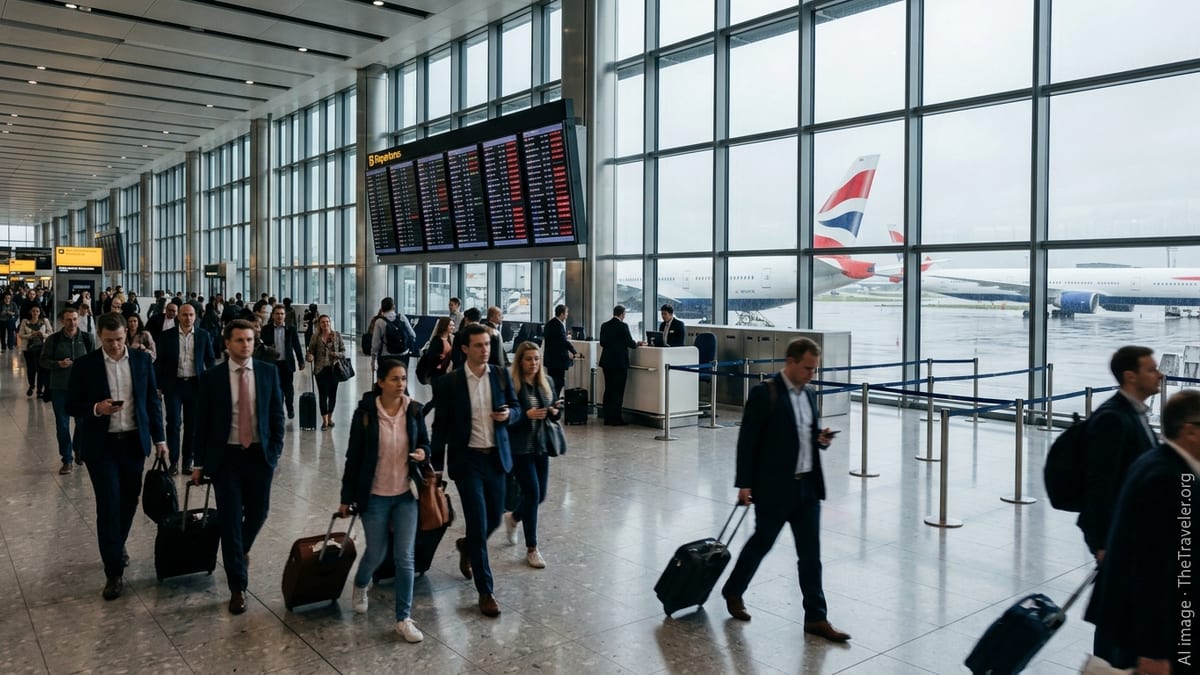
Wave of Cancellations Hits UK and Transatlantic Routes
Published airline schedules and live tracking data on March 28 indicate that British Airways scrubbed multiple departures from London Heathrow and Gatwick to European and North American destinations, including services touching Pittsburgh, Chicago and New York. Several returns to the UK were also removed from timetables, reducing capacity on already busy weekend corridors.
United Airlines and other US carriers scaled back selected transatlantic rotations to London and Manchester, adding to the disruption for travelers heading into or out of the UK. Publicly available airport departure boards showed gaps on some Chicago and New York services into London, as well as altered timings and consolidation of flights where aircraft and crew were available.
The transatlantic impact was felt on both point to point and connecting traffic. British Airways has marketed Pittsburgh as a gateway into its wider European network, with onward links to cities such as Manchester, Berlin and Zurich, so cancellations on that route have knock-on effects for passengers relying on connections through London.
Some passengers reported that rebooking options were limited or pushed several days ahead, particularly for economy cabins on popular US routes. Airlines highlighted constrained aircraft availability and crew positioning challenges as key reasons for the reduced schedules.
Middle East Tensions and Airspace Restrictions Disrupt Doha and Bahrain Links
The latest UK flight disruption is unfolding against a backdrop of wider upheaval across Middle Eastern airspace. Following Iranian strikes affecting Qatar in late February, Qatari authorities initially closed national airspace, with passenger services through Doha’s Hamad International Airport heavily curtailed. Although limited emergency operations have since resumed, standard commercial traffic has remained significantly reduced, contributing to a cascade of schedule changes for global carriers using Doha as a hub.
Industry analyses published in March show that many international airlines have suspended or sharply reduced flights to Doha and neighboring Gulf gateways, with some estimates citing tens of thousands of cancellations across regional airports since late February. British Airways and Gulf Air are among the carriers that have adjusted operations, with Gulf Air flights routed through Bahrain particularly exposed to the regional disruption.
Travelers flying between the UK and destinations such as Doha and Bahrain have faced repeated short-notice cancellations and rebookings. Publicly shared passenger accounts describe multiple iterations of itineraries being altered, as routes via Bahrain are dropped and availability shifts toward alternative hubs that still have open airspace and sufficient handling capacity.
Guidance from travel risk and aviation advisory firms notes that Tel Aviv, Kuwait and other regional airports are also experiencing congestion and periodic schedule changes as airlines navigate changing overflight permissions and security considerations. This, in turn, is increasing pressure on UK services that traditionally connect through Gulf hubs.
European Services to Zurich, Berlin and Tel Aviv Under Strain
Within Europe, short haul networks have not been spared. British Airways, easyJet and other carriers trimmed frequencies on certain flights linking London to Zurich and Berlin, based on day-of-operations information from airline and airport sources. While many services continued to operate, cancellations concentrated on off-peak departures reduced flexibility for business and leisure travelers.
Flights to and from Tel Aviv have been particularly volatile. Data compiled by aviation consultancies earlier in March recorded elevated cancellation levels on Israel routes across a range of European and Gulf airlines, reflecting security concerns and airspace limitations. Several major European groups, including British Airways and Lufthansa affiliates, have periodically suspended Tel Aviv services or limited operations, affecting connections via London and other hubs.
Passengers with onward links from Tel Aviv through London to cities such as Manchester, Chicago or New York have therefore faced multi leg disruption, where a single cancellation on the Middle East segment can cause missed transatlantic journeys and overnight delays. Airline waiver policies have allowed some flexibility to change dates or destinations, but capacity constraints at alternative hubs have made it difficult to accommodate all affected travelers promptly.
For continental European cities such as Zurich and Berlin, the main challenge on March 28 appeared to be tactical cancellations rather than wholesale suspension. However, frequent last minute changes have complicated planning for travelers connecting through London to long haul flights, increasing the risk of misaligned itineraries.
Weather, Operational Pressures and Wider System Strain
The UK and parts of Western Europe have also been contending with episodes of severe weather during the 2025 to 2026 winter season, with powerful windstorms and heavy snowfall periodically disrupting road, rail and air transport. Recent storms have caused power outages and operational challenges that can quickly cascade into flight delays and cancellations, particularly at congested hub airports.
Airlines are operating against a tight backdrop of aircraft and crew availability after years of fleet optimization and staff changes. When weather, airspace restrictions and technical issues occur simultaneously, the result is a system that has limited slack to absorb disruption. Industry commentary in March has highlighted how rapidly problems in one region, such as the Gulf, can reverberate through schedules in Europe and North America.
On March 28, these combined pressures translated into more than 40 flight cancellations across a cluster of airlines serving the UK, according to aggregated schedule snapshots and media monitoring of affected routes. While that figure represents a small fraction of overall daily operations, it disproportionately affects travelers on specific links, especially long haul flights that may operate only once per day on certain city pairs.
Operational adjustments, such as swapping larger aircraft onto high demand services or consolidating departures, have softened the impact in some cases. Yet the underlying strain on global networks remains evident, with carriers continuing to review schedules on a rolling basis.
What Travelers on Affected Routes Should Expect
Passengers booked on services involving London, Manchester, Pittsburgh, Chicago, New York, Doha, Bahrain, Tel Aviv, Zurich or Berlin are being urged by travel providers to monitor their bookings closely on March 28 and in the days ahead. Public advisories from airlines and travel management companies stress the importance of checking flight status before leaving for the airport, as same day schedule changes remain possible.
Rebooking remains the primary remedy when flights are canceled. Where seats are available, airlines have been offering alternative routings via different hubs or on partner carriers, although some travelers report longer than normal journey times and layovers. In heavily affected Middle East markets, options can be particularly limited because multiple carriers are reducing or suspending operations simultaneously.
In the UK and European Union, consumer rules such as UK261 and EU261 may provide compensation or care obligations in certain circumstances, depending on the cause of the disruption and whether it is deemed within the airline’s control. Travelers are being advised by consumer advocates to keep records of receipts and communications in case they later submit claims.
With conditions in key regions still evolving, industry observers expect airlines to continue fine tuning schedules across the UK, Europe, North America and the Gulf. Travelers planning to use London or Manchester as gateways to destinations such as Pittsburgh, Chicago, New York, Doha, Bahrain, Tel Aviv, Zurich or Berlin may need to build additional flexibility into their plans while the network adjusts.