

More news on this day
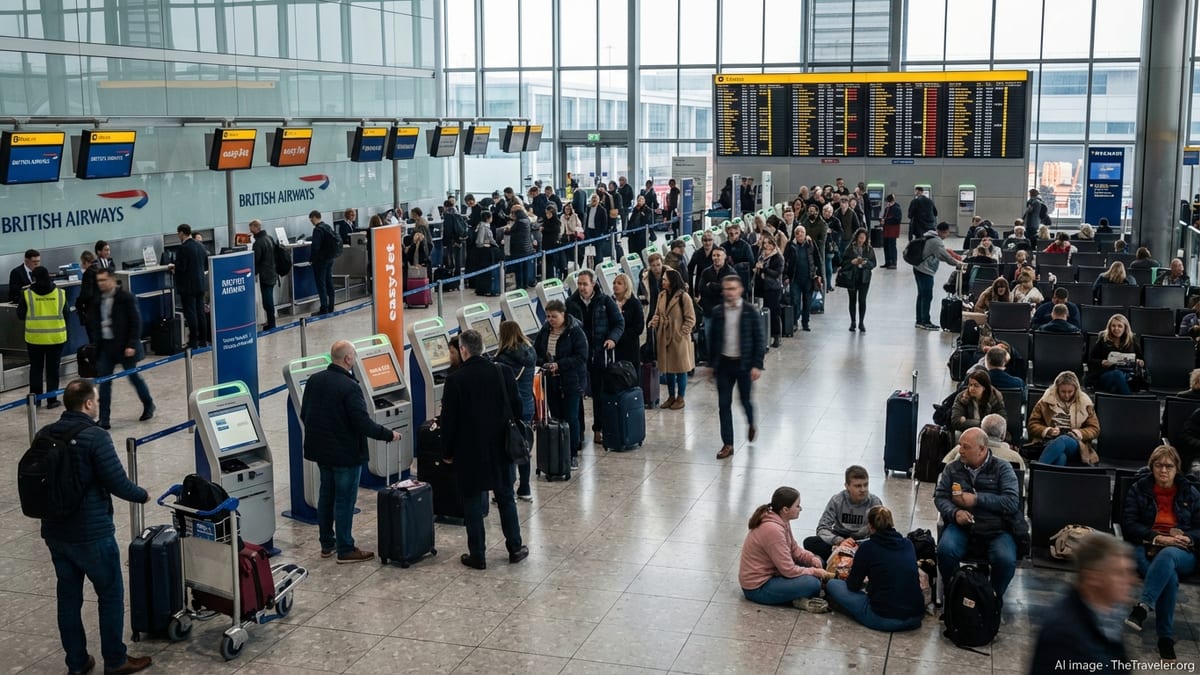
Hundreds of passengers travelling through London Heathrow, London Gatwick and Manchester airports on Saturday faced extensive disruption as 293 flights were delayed and 66 cancelled, snarling British Airways, easyJet, Ryanair and other carriers on busy domestic and international routes including New York, Paris, Dubai, Amsterdam and Edinburgh.
Knock-On Disruption Across Major UK Hubs
The latest wave of disruption added fresh pressure to already stretched European schedules, with Heathrow and Gatwick once again emerging as the worst hit UK airports. Operational data indicated a sharp build-up of delays through the morning peak on February 28, with disruption then spreading into the afternoon as aircraft and crews fell out of position.
At Heathrow, one of Europe’s busiest hubs, rolling delays quickly affected short haul links to cities such as Amsterdam and Paris as well as long haul departures to New York and Dubai. While some services were turned around late, others were scrubbed from the schedule entirely as airlines sought to stabilise their networks rather than risk further knock-on problems into Sunday.
Gatwick, a key base for easyJet and an important leisure gateway, reported similar strain as inbound late-running aircraft led to a cascade of schedule changes. Passengers reported lengthy queues at customer service desks and crowded departure lounges as they awaited rebooking options or updated departure times.
Manchester Airport, the North of England’s primary long haul hub, also saw a cluster of cancellations and lengthening delays, particularly on routes connecting to major European hubs and onward long haul services. Travellers heading to and from Edinburgh were among those most affected, with several domestic rotations heavily delayed or consolidated.
Airlines Juggle Weather, Geopolitics and Capacity
The latest disruption comes against a backdrop of multiple pressures on European aviation, including winter weather systems across the continent and heightened geopolitical tensions affecting flight paths and crew operations. Airlines such as British Airways, easyJet and Ryanair were forced to juggle aircraft allocations and crew duty limits as they responded to changing conditions.
British Airways, which operates a dense schedule from Heathrow, saw a mix of short haul and long haul services impacted. While some flights to key transatlantic destinations such as New York were able to depart with substantial delays, others were cancelled outright, forcing passengers to be rebooked on later services or routed via alternative hubs.
Low cost carriers easyJet and Ryanair contended with particularly acute challenges on their high frequency European networks. With aircraft operating multiple legs per day, an early delay on a morning departure to Amsterdam or Paris could ripple through the schedule, leaving evening services to and from UK bases running significantly behind or facing cancellation.
Industry analysts noted that tight winter schedules leave little slack in fleets, meaning any external shock can quickly translate into widespread delays. Ground handling constraints and air traffic flow management restrictions across parts of Europe compounded the strain on Saturday’s operations.
Passengers Stranded on Routes to New York, Paris, Dubai and Beyond
The impact on travellers was immediate and widespread, particularly on popular city pairs and long haul connections. At Heathrow, passengers bound for New York reported being held at the gate for extended periods before learning that departure times had been pushed back repeatedly or that their flight had been removed from the board altogether.
Similar scenes played out for those headed to Paris and Amsterdam, where short haul flights function as vital feeders into wider global networks. Missed connections left some customers facing overnight stays or complex rerouting via alternative hubs as airlines worked to clear backlogs.
Services to Dubai and other Middle East destinations also experienced disruption, with some departures delayed while operational and airspace considerations were reviewed. For travellers connecting onward from Dubai to Asia and Australasia, even modest departure delays from the UK risked missed onward flights and extended travel times.
Within the UK and nearby Europe, domestic links to Edinburgh and other regional cities were not spared. Business travellers and weekend leisure passengers arriving at Gatwick and Manchester encountered departure boards filled with amber and red status indicators, reflecting rolling delays and a growing list of cancellations.
Guidance for Affected Travellers
Airports and airlines repeatedly urged passengers to check the status of their flights before setting out for Heathrow, Gatwick or Manchester and to rely on official airline apps and airport channels for real time updates. With customer service counters quickly overwhelmed, digital tools became the primary channel for rebooking and compensation queries.
Travellers whose flights were cancelled were typically offered rebooking on the next available service or, where possible, on alternative routings via partner airlines. However, with seat availability tightening as the day progressed, many were left facing significant delays to their travel plans or forced to consider refunds and a complete change of itinerary.
For those whose flights operated but with substantial delays, airline staff reminded passengers of their entitlement to basic care, including refreshments and accommodation where overnight stays were required. Eligibility for monetary compensation depended on the root cause of each disruption and whether it was deemed within the airline’s control under UK and European passenger rights rules.
Travel advisers recommended that passengers keep all receipts for additional expenses, document communication with carriers and consider travel insurance policies that specifically cover delays and missed connections, particularly during the volatile late winter period.
Ongoing Uncertainty as Networks Recover
Operational planners warned that although the bulk of delays and cancellations were concentrated on Saturday, residual disruption could linger into Sunday as aircraft and crews were repositioned and backlogs cleared. Early morning departures on February 29 were identified as particularly vulnerable if aircraft were not able to return to base overnight.
Airlines indicated that they would continue to review schedules from Heathrow, Gatwick and Manchester on a rolling basis, with further tactical cancellations possible in order to restore punctuality on core business and long haul routes. Passengers with flexible travel dates were encouraged, where possible, to move journeys away from peak periods to reduce congestion.
The latest episode of disruption highlights the fragility of European air travel during a season when weather, industrial action and geopolitical events can overlap. For now, travellers using the UK’s busiest hubs are being advised to build in additional time, monitor flight information closely and prepare for the possibility of last minute changes as carriers work to keep increasingly complex networks running.