

More news on this day
Hundreds of UK travellers have faced severe disruption after a fresh wave of operational problems triggered 819 flight delays and 18 cancellations across major airports in London, Belfast, Manchester, Birmingham, Leeds and Bradford, affecting services on Virgin Atlantic, British Airways, Wizz Air, easyJet and several other carriers.
Get the latest news straight to your inbox!
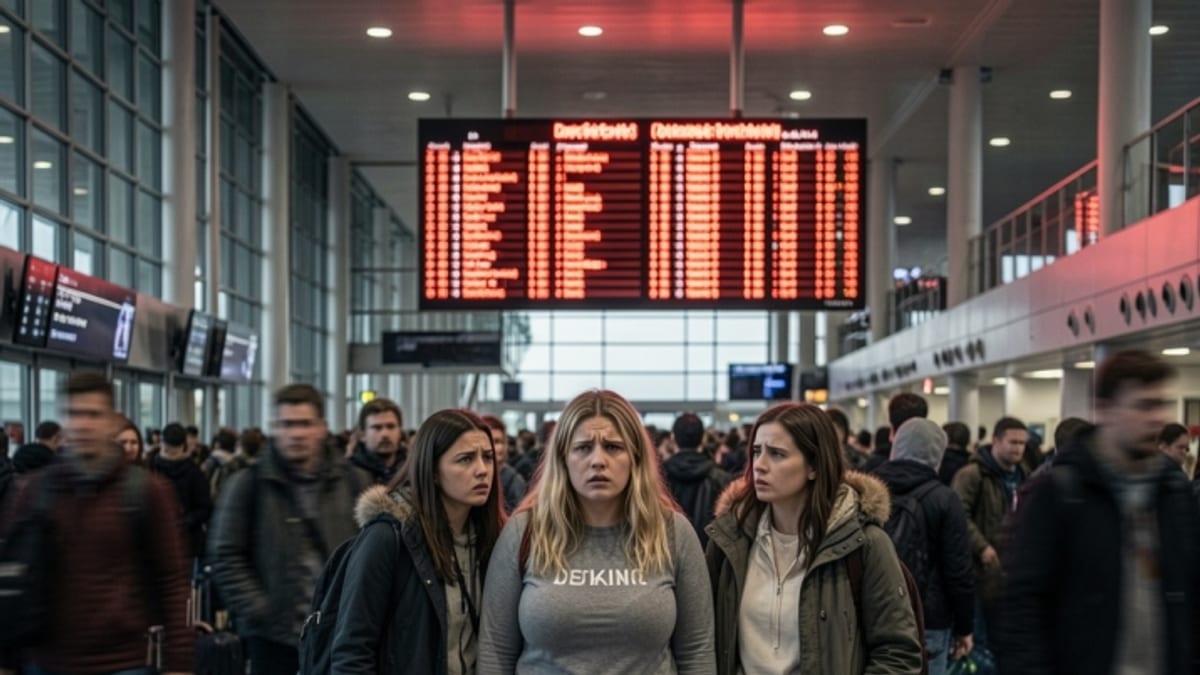
Image by Travel And Tour World
Widespread Disruption Across the UK Network
Operational data and live tracking snapshots indicate that a concentrated spell of delays has swept across some of the UK’s busiest aviation hubs, with more than eight hundred flights running behind schedule and a smaller but significant number being cancelled outright. The disruption has been most visible at the main London airports alongside Manchester, Birmingham, Leeds Bradford and Belfast airports, where tight turnarounds and full late‑March schedules have left little room to recover when problems emerge.
The pattern of delays shows a broad mix of short‑haul and long‑haul services affected, ranging from European city links and leisure routes to transatlantic departures. With several large carriers operating dense schedules from these airports, a delay on a single aircraft has in many cases cascaded into knock‑on disruptions later in the day, compounding the scale of the problem felt by passengers.
Publicly available movement logs suggest that some delays have stretched well beyond one hour, with scattered reports of flights running more than three hours late. While outright cancellations have been limited compared with the overall volume of traffic, they have tended to hit already busy peak periods, intensifying crowding at check‑in, security and rebooking desks.
Travel industry observers note that this spike in disruption is arriving at a time when UK air travel demand is running close to or above pre‑pandemic levels, amplifying the impact on airports that are already operating at high capacity.
Major Carriers Under Pressure
The disruption has been spread across a wide range of airlines, but services from Virgin Atlantic, British Airways, Wizz Air and easyJet have drawn particular attention due to their prominence in the affected airports. These carriers provide a large share of the UK’s domestic links, European networks and long‑haul services, meaning operational issues on their fleets can quickly ripple through schedules.
In the case of easyJet and British Airways, recent punctuality statistics published by UK airport groups and the Civil Aviation Authority show that both typically operate large numbers of daily services from London and Manchester, where congestion and air traffic restrictions can rapidly escalate modest delays into extended knock‑on disruption. Low‑cost operators such as Wizz Air and easyJet also rely heavily on tight aircraft utilisation, increasing exposure when technical checks, crew availability or slot restrictions limit flexibility.
Virgin Atlantic’s long‑haul model means that delays on transatlantic and other intercontinental routes can be particularly disruptive for connecting passengers. When long‑haul departures run late, the aircraft and crew are often out of position for the next rotation, forcing schedule adjustments that can take days to fully unwind.
Other airlines operating from Leeds Bradford, Belfast and Birmingham have also been affected, although the impact is more uneven. Some carriers have managed to keep most departures close to schedule, while others have experienced clusters of delays tied to specific aircraft or route groups.
Operational and Airspace Factors Driving Delays
A combination of operational and airspace pressures appears to be driving the current wave of disruption. UK airport performance reports and recent CAA trend data highlight recurring themes such as air traffic control restrictions in congested European airspace, high demand during peak travel days, and the continuing challenge of rebuilding staffing resilience across ground handling, maintenance and security functions.
Weather remains another critical variable. Even relatively routine conditions such as low cloud, fog or strong winds can trigger stacking, runway spacing and flow‑control measures that slow movements at London and regional hubs. When these constraints overlap with already tight schedules and high passenger loads, delays can expand rapidly through the day.
Fleet availability is also under scrutiny. Industry coverage over recent months has pointed to engine‑related maintenance programmes for certain aircraft types affecting airlines in Europe, including Wizz Air, which has publicly signalled that a portion of its fleet will remain grounded while inspections and repairs continue. When spare aircraft are limited, any unplanned technical issue can result in lengthy delays or cancellations.
Reactionary delays, where one late inbound flight triggers subsequent late departures on the same aircraft, remain a significant contributor. Airport punctuality tables consistently show large shares of delay minutes being recorded as reactionary, underlining how quickly a localised problem can become a network‑wide issue for both airlines and airports.
Impact on Travellers Across Key UK Cities
The disruption has translated into long queues, missed connections and hurried itinerary changes for travellers across the affected cities. At London’s main airports, passengers have reported extended waits at departure gates and arrivals halls as airlines work through backlogs of late‑arriving aircraft and crews. In Manchester and Birmingham, busy leisure and city‑break routes have seen families and short‑stay travellers scrambling to rearrange accommodation and transfers.
Leeds Bradford and Belfast passengers have been particularly exposed where services operate at lower frequencies. On routes with only one or two daily flights, a single cancellation or multi‑hour delay can mean an unplanned overnight stay or a lengthy diversion through another hub. Publicly available accounts from recent weeks already show how last‑minute timetable changes on some carriers can leave travellers with limited on‑the‑spot alternatives.
Consumer advocates point out that such disruption can be especially costly for those travelling to fixed‑time events such as cruises, weddings or business meetings, where even short delays can trigger knock‑on expenses for missed connections and non‑refundable bookings. The uneven distribution of disruption across airlines also means that some passengers are being rebooked relatively quickly, while others face more complex rerouting.
Social media and travel forums have continued to serve as informal early‑warning systems, with passengers sharing real‑time updates on delayed boarding, aircraft rotations and gate changes. While not always comprehensive, these reports have helped some travellers spot emerging problems and adjust their plans before official notifications filter through.
What Travellers Can Do as Disruptions Continue
With UK flight schedules still running close to full capacity, industry analysts expect intermittent clusters of delays and small numbers of cancellations to remain a feature of travel in the coming weeks. Travellers flying from London, Belfast, Manchester, Birmingham, Leeds and Bradford are being advised by consumer organisations and travel advisers to build in extra time for transfers and to monitor flight status closely in the days and hours before departure.
Public guidance from aviation regulators and passenger rights groups highlights the importance of checking the specific terms of UK and EU air passenger protection rules, which may provide entitlement to care, rerouting and, in some circumstances, compensation when long delays or cancellations occur. The level of support varies depending on the cause of the disruption, the operating carrier and the route, so individual circumstances remain decisive.
Travel planners also recommend keeping booking details, receipts and any written communication from airlines, as these can be important if travellers later decide to pursue claims for out‑of‑pocket costs. For complex itineraries involving multiple carriers or self‑connected tickets, additional travel insurance with clear disruption cover is being presented as a useful safeguard.
While the current episode of 819 delays and 18 cancellations represents only a fraction of overall UK flight movements, it underscores the continued fragility of airline and airport operations during peak periods. For now, passengers across the UK’s major cities are being encouraged to stay alert to changing schedules and to prepare for the possibility of further disruption as airlines and airports work to stabilise performance.