

More news on this day
Hundreds of air passengers were left stranded across the UK on Friday as rolling disruption at Heathrow, Manchester, Edinburgh and Stansted triggered 732 flight delays and 16 cancellations, snarling operations for major carriers including Ryanair, easyJet and British Airways and rippling out to airports in London, Manchester, Edinburgh, Glasgow, Birmingham, Liverpool and Bristol.
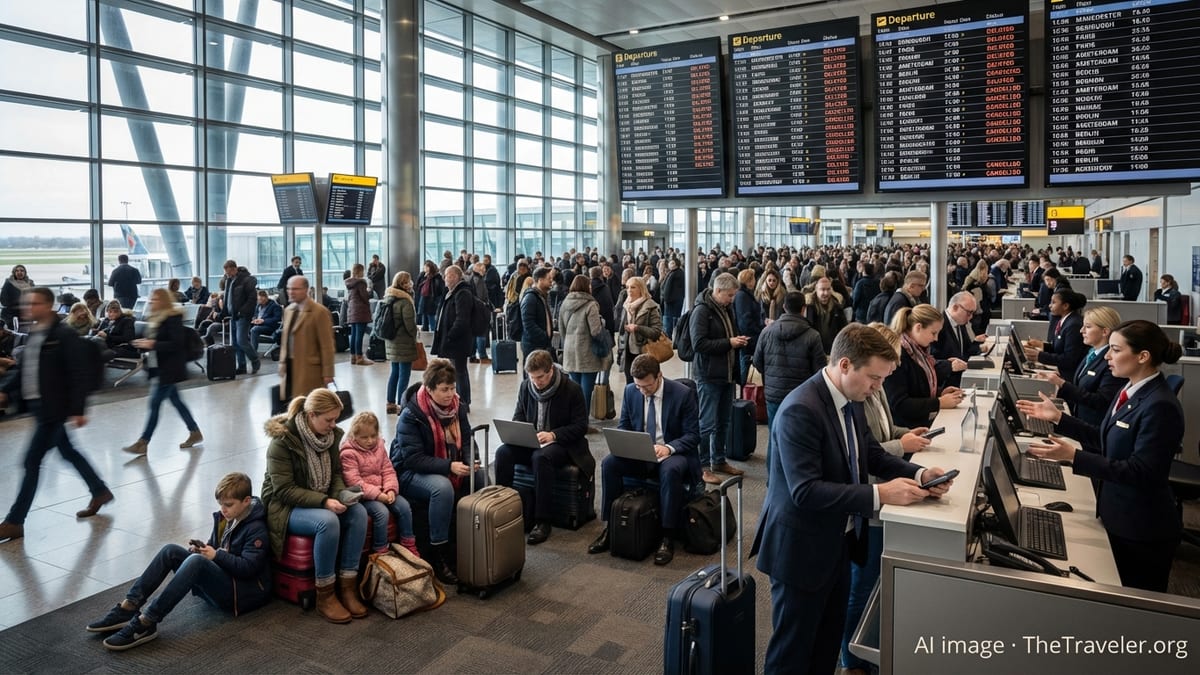
Disruption Spreads Across the UK’s Busiest Air Corridors
The latest wave of disruption swept through several of Britain’s major aviation hubs, compounding a bruising winter period for European air travel. While Heathrow and Manchester absorbed the largest share of impacted flights, regional gateways including Edinburgh, Glasgow, Birmingham, Liverpool and Bristol also reported packed departure halls, long queues and mounting delays as schedules slipped throughout the day.
Operational data from live flight-tracking and airport-status feeds indicated a total of 732 delayed flights and 16 outright cancellations across the affected UK airports, with the bulk of disruption hitting short-haul European services and domestic links between England and Scotland. Passengers described seeing departure boards “wallpapered with orange and red” as on-time departures became the exception rather than the rule.
The latest turbulence follows a broader pattern of rolling disruption across Europe this week, as wintry weather, congestion and operational strains have pushed air-traffic systems to the limit. Industry analysts note that UK hubs have been particularly exposed, functioning both as origin points for outbound holiday and business traffic and as key connection points for passengers transiting between North America and the rest of Europe.
In terminal concourses from London to Scotland’s central belt, the immediate impact was visible in snaking queues at check-in, customer-service desks and security lanes. Ground staff deployed extra personnel where possible, but acknowledged that once delays reach a critical mass, recovery becomes a multi-hour effort affecting subsequent rotations and late-evening services.
Heathrow and Manchester Bear the Brunt
Heathrow, the UK’s largest and busiest airport, again emerged as a focal point for disruption. Recent data has already shown the hub facing sustained pressure, with earlier in the week seeing more than 140 delays and several cancellations as a fast-moving winter storm and air-traffic constraints rippled through the schedule. On Friday, fresh delays built through the morning peak and into the afternoon as inbound aircraft arrived out of position and turnaround times lengthened.
Manchester, which has experienced repeated operational stress in recent weeks, was also among the hardest hit. Previous days have seen the airport tally dozens of delays as weather systems and capacity issues in continental Europe fed into local congestion. Passengers at Terminals 1 and 2 reported long waits, intermittent gate changes and a shortage of updated information as airlines attempted to reshuffle aircraft and crews to keep some level of schedule integrity.
While neither Heathrow nor Manchester reported a single catastrophic failure, such as a full power outage or total airspace closure, aviation experts say the effect can be just as punishing when multiple, smaller constraints converge. Minor weather-related flow restrictions, modest crew shortages, de-icing requirements and tight turnaround windows can interact to generate large-scale disruption once traffic volumes reach midwinter peaks.
In practical terms, that meant many passengers at the two hubs facing delays ranging from 45 minutes to more than three hours. For some, late departures translated into missed connections to onward long-haul services, forcing overnight stays or rebookings on already heavily booked weekend flights.
Edinburgh and Stansted Face Knock-On Chaos
Further north, Edinburgh Airport struggled to recover from a growing stack of delays that initially began with air-traffic constraints earlier in the winter season. Only weeks ago, the Scottish hub saw all flights temporarily halted due to an air-traffic control IT fault, a reminder of how vulnerable tightly scheduled operations can be to even brief technical issues. Although no comparable shutdown occurred on Friday, the airport’s schedule again came under pressure as late inbound arrivals cascaded into late departures.
Passengers at Edinburgh described early morning delays that bled into the afternoon, affecting departures to London, the European mainland and regional UK cities. Aircraft arriving from weather-beaten hubs on the continent often landed well behind schedule, forcing quick turnarounds for crews who were already approaching duty-time limits. Airlines responded by trimming rotations and consolidating passengers where possible, but this provided little comfort to those facing missed hotel bookings or lost days of work.
At Stansted, a crucial base for low-cost carriers serving Europe, the story was similar. While the outright number of canceled flights remained limited, multiple departures were pushed back significantly as operators reorganized aircraft and crews that had been delayed at airports further along their route networks. For a hub that relies heavily on rapid aircraft utilisation, even modest slowdowns can leave gaps in the schedule that take hours to repair.
The result was a familiar picture: passengers clustered around crowded gates, children asleep on cabin bags, and ground staff fielding a constant stream of queries about revised departure times. For travelers attempting same-day returns or onward rail connections, a two-hour delay could upend carefully planned itineraries across the UK and mainland Europe.
Major Airlines Scramble to Contain the Impact
The latest disruption again spotlighted the strain on airline operations this winter. Low-cost giants Ryanair and easyJet, which together operate hundreds of daily departures from UK airports including Stansted, Manchester, Edinburgh, Liverpool, Bristol and London-area bases, saw dozens of services arrive and depart outside their scheduled windows. Their business models are built on quick turnarounds and tight aircraft utilisation, which means they can be particularly exposed when a region-wide pattern of delays emerges.
Legacy carrier British Airways, with its primary hub at Heathrow and a strong presence at other UK airports, also contended with rolling delays across short-haul European and domestic routes. Recent data from European flight-disruption trackers has already placed BA among the significant carriers dealing with elevated levels of lateness and select cancellations as winter storms passed through Western and Northern Europe earlier in the week.
Other airlines serving UK hubs were pulled into the disruption as well. European network carriers such as Air France, KLM and Lufthansa have all reported high counts of delays and a handful of cancellations at key airports like Amsterdam, Paris and Frankfurt in recent days, with knock-on effects for their UK services. Irish carrier Aer Lingus and hybrid and regional operators including Wizz Air and Jet2 also experienced rolling timetable adjustments.
Airlines generally sought to prioritise long-haul departures and final flights of the day, sometimes at the expense of intra-European sectors that could be consolidated or re-accommodated. In some cases, passengers were moved to slightly later services, offered rebookings at no additional charge, or provided hotel and meal vouchers where delays extended overnight or where cancellations could not be avoided.
Weather, Staffing and Network Strain Combine
Behind the scenes, the causes of the latest turbulence were multilayered. Winter weather has played a central role, with snow, ice and low visibility hampering operations across multiple countries this week. Airports and airlines in the Netherlands, Germany, Spain, Italy and the UK have all reported large numbers of delayed flights as crews waited for de-icing, taxiways were cleared and air-traffic controllers slowed the rate of arrivals and departures for safety reasons.
But meteorology tells only part of the story. Industry observers point to staffing and operational resilience as equally important factors. Several UK hubs, including Heathrow and Manchester, have in recent months acknowledged “significant pressure” on resources as they balance strong demand for travel with the lingering aftershocks of pandemic-era staffing cuts and training bottlenecks. When schedules are built close to capacity, there is little margin to absorb unexpected shocks.
Europe-wide data from the past few days underscores how thin that margin has become. In one recent 24-hour period, more than 2,000 flights were delayed across Europe, with hundreds more canceled, as airlines grappled with a mix of weather and operational constraints. The UK’s share of that total has been disproportionately high for its size, reflecting its role as a dense hub for short-haul connections feeding long-haul traffic.
Analysts warn that the networked nature of modern aviation means that a delay or cancellation in one country can easily propagate across borders. An aircraft that arrives late into Manchester from Amsterdam, for example, may be scheduled to operate a later sector to Edinburgh or Dublin. If the crew nears legal duty-time limits, that final leg may need to be delayed, re-crewed or canceled altogether, turning a single late arrival into a chain of stranded passengers across multiple airports.
Passengers Face Long Queues, Patchy Information and Limited Options
For travelers caught up in the disruption, the experience on the ground was familiar and frustrating. At Heathrow and Manchester, long lines formed early in the day at airline service desks as passengers whose flights had already been flagged for significant delays sought rebooking options or reassurance about connections. In Edinburgh and Stansted, social media posts showed crowded departure halls, with some passengers sitting on the floor near power sockets to keep phones and laptops charged.
Many travelers reported patchy information about the precise cause or likely duration of delays. While airlines increasingly use mobile apps and text alerts to push updates, those systems are only as accurate as the underlying operational data. When weather conditions and air-traffic restrictions change on short notice, estimates for new departure times frequently need to be revised, resulting in cycles of rolling delay notices that undermine passenger confidence.
Consumer advocates in the UK have reiterated calls for clearer communication standards and more proactive support from airlines during major disruption events. Under UK and European regulations, passengers are generally entitled to meals, refreshments and, where necessary, hotel accommodation when delays or cancellations meet certain thresholds. However, real-world experiences vary widely, particularly when disruption is attributed to extraordinary circumstances such as severe weather or air-traffic control failures.
In interviews at several UK airports, affected passengers cited a mix of sympathetic frontline staff and system-level shortcomings. While many praised individual employees for their efforts in challenging conditions, they expressed frustration with limited rebooking options on already full flights, confusion over compensation rights and a general sense of being left to “figure it out alone” once delays stretched into hours.
Regional Hubs from Glasgow to Bristol Feel the Ripple Effects
Although the spotlight often falls on Heathrow and Manchester, Friday’s disruption also underlined the vulnerability of regional airports across the UK. Glasgow, Birmingham, Liverpool and Bristol all reported elevated levels of delay as aircraft and crew arriving from more severely affected hubs reached their stands late, compressing turnaround times and pushing back subsequent departures.
For these airports, which serve as crucial links for both business and leisure travelers in their respective regions, the challenge lies in their dependence on a smaller number of daily services. When a single flight from a major hub arrives late or is canceled, the local impact can be outsized, depriving passengers of alternative same-day options and forcing them to route through other cities or postpone trips entirely.
In Birmingham and Bristol, travelers bound for European city breaks reported spending much of the day monitoring departure boards and airline apps, unsure whether to clear security, seek rebooking or start looking for rail alternatives. At Liverpool, where a significant portion of traffic is operated by low-cost carriers, late-evening rotations proved particularly fragile as earlier delays across Europe fed into already compressed schedules.
Airport operators stressed that they were working closely with airlines and handling agents to ease crowding, deploy additional customer-service staff and keep passengers informed. Nonetheless, the lack of spare capacity in peak season meant that even the best local efforts could do little to alter the fundamental constraints imposed by weather, airspace limitations and crew availability across the wider network.
What Travelers Can Expect in the Coming Days
Aviation planners warn that while Friday’s disruption figures are sobering, they may not represent a one-off shock. With winter conditions persisting across parts of Europe and school holidays driving elevated passenger numbers, UK airports could face further days of heavy delay and selective cancellations as airlines work to stabilise their networks.
Passengers with flights over the weekend and into early next week are being urged to monitor their airline’s app or website closely before leaving for the airport, build extra time into connections and consider travel insurance that specifically covers significant delays and missed onward journeys. Those flying on tightly timed itineraries, such as cruises or tour departures, are being advised to consider arriving a day early where possible.
Industry experts say that while the worst bottlenecks may ease as weather systems move on and airlines complete schedule adjustments, structural pressures in the aviation ecosystem remain. Any new shock, whether from further storms, air-traffic control restrictions or infrastructure glitches, could quickly translate into another spike in delays and cancellations across the UK’s key hubs.
For now, the hundreds of passengers still bedding down on terminal floors or queuing for rebookings at Heathrow, Manchester, Edinburgh, Stansted and their regional counterparts are a vivid reminder that, in a tightly wound global air network, even a relatively small number of cancellations and several hundred delayed flights can be enough to bring travel plans for thousands of people to a standstill.