

More news on this day
Hundreds of passengers were left stranded on Tuesday and Wednesday as at least 33 flights were cancelled and 11 delayed at London Heathrow and Manchester airports, severing key connections from the United Kingdom to Doha, Dubai, Abu Dhabi, Brussels and Frankfurt and deepening the global travel fallout from the escalating Middle East crisis.
Get the latest news straight to your inbox!
Disruption Mounts at Key UK Hubs
Operational data compiled on 10 and 11 March show London Heathrow, the UK’s busiest hub, and Manchester Airport among the worst affected in a new wave of schedule cuts, with scores of travelers forced into last minute scrambles for alternative routes or overnight accommodation. Flights linking Britain to major Gulf hubs and European transfer points were particularly hard hit, underscoring the knock-on effect of regional airspace restrictions on long haul itineraries.
Across the two airports, 33 services were cancelled outright while 11 more suffered extended delays, according to industry trackers and airport advisories. Among the disrupted routes were departures bound for Doha, Dubai and Abu Dhabi, along with key European connections to Brussels and Frankfurt that many travelers rely on for onward links to Africa, Asia and the Americas.
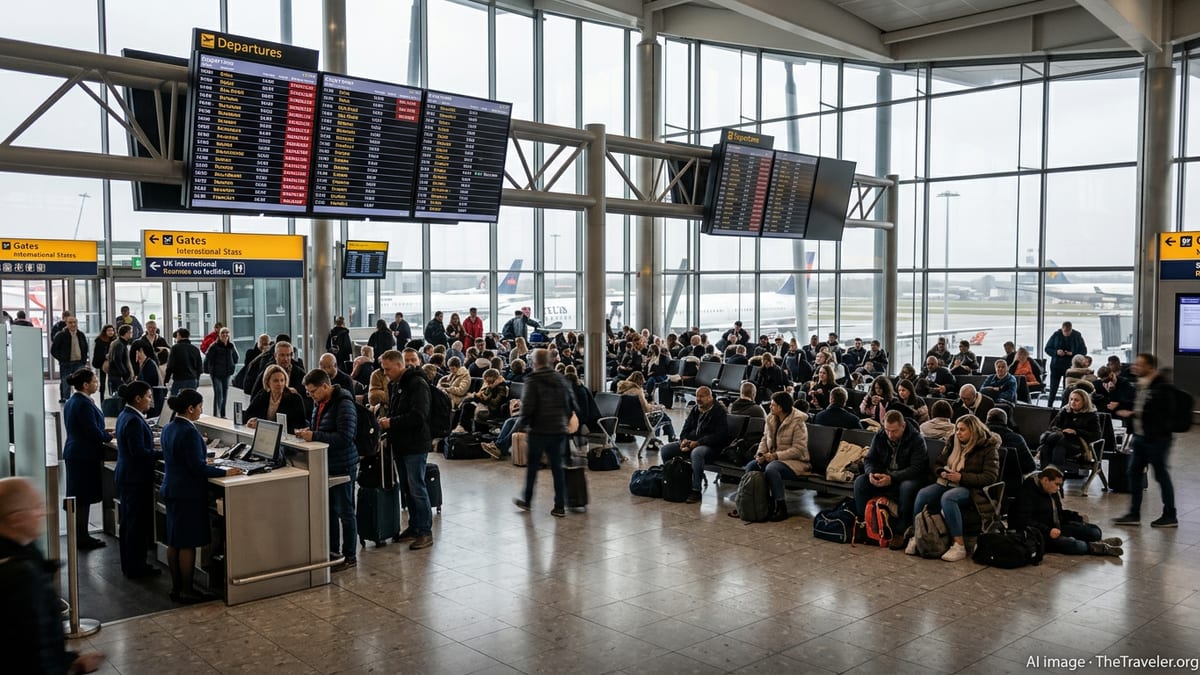
Check in halls at both airports saw long queues form as departure boards flashed red. With some cancellations confirmed only hours before scheduled pushback, passengers reported being advised to “stand by” for potential rebooking while others were handed meal vouchers and hotel slips as airlines struggled to find spare seats on remaining services.
Airport spokespeople stressed that terminals remained open and operational, but acknowledged “significant disruption” across multiple carriers and urged passengers to verify their flight status before setting out for the airport.
Middle East Airspace Crisis Ripples Into Europe
The latest wave of cancellations is closely tied to the ongoing closure and restriction of key air corridors across parts of the Middle East following strikes and heightened military tensions in the region. Airlines serving the Gulf have been forced to reroute or ground services as they navigate shifting safety assessments, regulatory approvals and the limited corridors that remain available.
British Airways has already suspended its scheduled flights to Doha, Dubai and other Gulf destinations through at least mid March, while maintaining a small number of repatriation rotations on select routes to bring stranded travelers back to the UK. Other European carriers, including those operating via Brussels and Frankfurt, have cut or consolidated services to destinations in the wider Middle East, reshaping their timetables with little notice.
For UK travelers, the impact is twofold. Direct flights from Heathrow and Manchester to Gulf hubs have disappeared from schedules on some days, while connecting options via European gateways have also been reduced, shrinking the number of available paths to key markets in Asia and Oceania. Travel agents report that itineraries which once relied on relatively short connections now require complex multi stop journeys or substantial date changes.
Analysts say that while airlines had contingency plans in place for diversions around conflict zones, the breadth and duration of the current restrictions are stretching fleets, crews and scheduling teams. Aircraft that would typically operate multiple daily rotations between Europe and the Gulf are instead being redeployed on shorter European sectors or held in reserve as carriers wait for clearer guidance.
Stranded Passengers Face Long Waits and Limited Options
For passengers at Heathrow and Manchester, the statistics translate into disrupted holidays, missed business meetings and family reunions postponed. Many of those affected were connecting onward from Doha, Dubai or Abu Dhabi to destinations as far flung as Sydney, Bangkok and Johannesburg, only learning of their cancelled UK departure when they attempted to check in or received last minute notifications on their phones.
With Gulf based carriers also operating at reduced capacity and repatriation flights heavily subscribed, rebooking options have been scarce. Some travelers reported being offered new itineraries several days later than their original plans, often with additional stops in continental Europe. Others have opted for refunds and are now searching for alternative routings on airlines that continue to operate via other hubs.
Families with young children, elderly passengers and those travelling on time sensitive trips have been among the most severely affected. Social media posts from both airports showed passengers camped out on terminal floors or clustered around customer service desks, while some described waiting several hours to speak with airline representatives as call centers and airport teams faced overwhelming demand.
Consumer advocates have urged affected travelers to keep careful records of communications with airlines, including confirmation of cancellations and any costs incurred for food, accommodation or alternative transport, noting that eligibility for compensation or reimbursement will depend on the carrier involved and the specific regulations that apply to each itinerary.
Airlines Offer Flexibility but Warn of Ongoing Volatility
In statements issued this week, multiple airlines acknowledged the disruption for customers and pledged to provide flexible options for those whose plans have been upended. Measures include waiving change fees, extending travel validity periods and allowing rerouting via alternative hubs where space permits, particularly for passengers whose journeys touched Doha, Dubai or Abu Dhabi.
However, carriers have also cautioned that schedules may remain fluid over the coming days as they respond to evolving airspace restrictions and coordination with civil aviation authorities. Operations teams are running frequent assessments to determine which flights can safely operate and which must be trimmed, a process that can lead to rolling updates on departure boards at short notice.
Industry observers note that airlines are walking a tightrope between maintaining connectivity and avoiding last minute diversions that could strand passengers mid journey or significantly extend flight times. Proactive cancellations, while disruptive, are being framed by some carriers as the safest and most transparent option under current conditions, especially on routes that would otherwise have to make lengthy detours around restricted zones.
Travel management companies advising corporate clients say they are encouraging businesses to build greater flexibility into travel plans, consider virtual alternatives to in person meetings in the affected region, and prepare for the possibility of employees being delayed abroad if return flights are cancelled or rescheduled.
What Travelers Should Do Next
With further adjustments likely, travelers booked to fly from Heathrow or Manchester to Doha, Dubai, Abu Dhabi, Brussels or Frankfurt in the coming days are being urged to monitor their bookings closely and avoid assuming that flights will operate as originally scheduled. Airlines are directing customers to manage their trips through official apps and booking portals, where real time updates and rebooking tools are typically available.
Experts recommend that passengers avoid making non refundable onward arrangements, such as separate tickets on low cost carriers or non changeable hotel reservations, until they are confident their long haul sectors will operate. Those already at the airport are advised to approach airline desks early, as same day rebooking options on alternative flights or via different hubs are generally allocated on a first come, first served basis.
For would be travelers who have not yet departed, travel agents are suggesting that, where possible, itineraries to long haul destinations be routed via hubs outside the most affected airspace or postponed until schedules stabilize. While such changes may involve additional cost or longer total journey times, they can reduce the risk of being stranded mid route.
Officials at both Heathrow and Manchester say they are working closely with airlines and ground handling teams to manage crowding, provide clear information and support vulnerable passengers. Yet with geopolitical tensions showing few signs of easing, industry insiders warn that UK travelers should brace for continued volatility on routes to the Gulf and beyond.