

More news on this day
Thousands of air passengers have been left stranded or forced to abandon travel plans across the United Kingdom as severe disruption at Heathrow, Gatwick and Manchester saw more than 300 flights delayed or cancelled, hitting major carriers including British Airways, Emirates, Qatar Airways and KLM on routes to cities such as Barcelona, Paris, Dublin and Los Angeles.
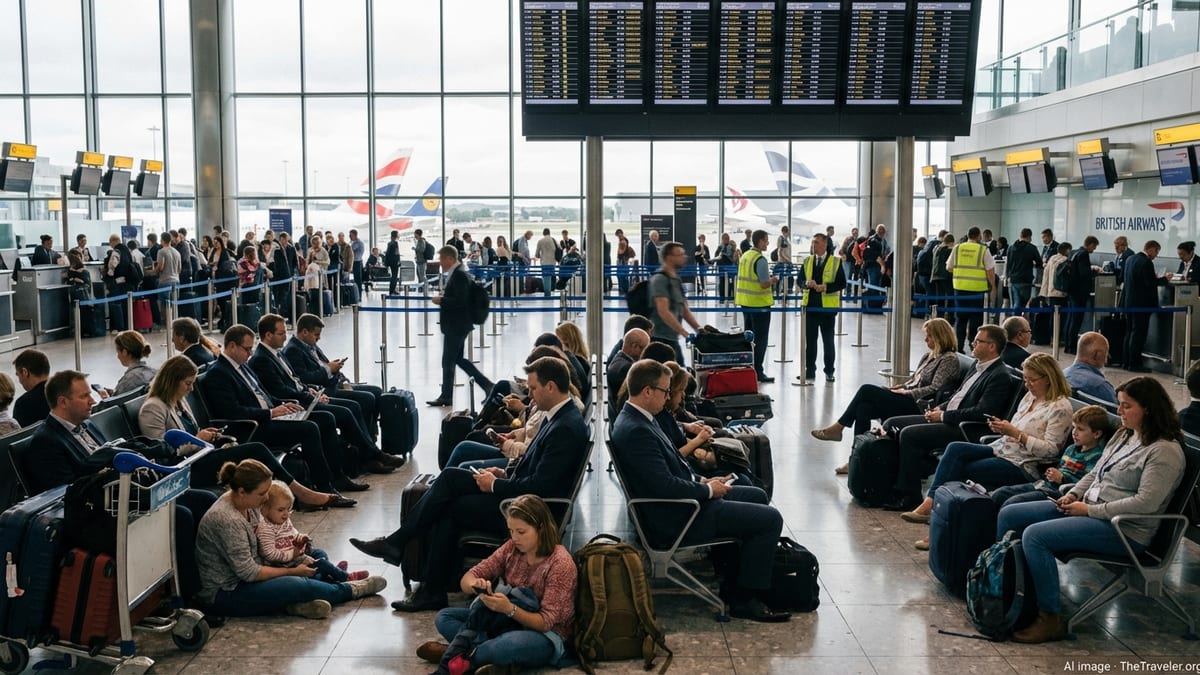
Fresh Wave of Disruption Across Major UK Hubs
Britain’s busiest airports entered a new week under intense pressure as rolling delays and cancellations continued into Monday 2 March. Live operational data and aviation analytics show hundreds of flights affected over the weekend and into today, with Heathrow, Gatwick and Manchester bearing the brunt of the turmoil.
In recent days, disruption tallied at these three hubs has climbed into the hundreds, with well over 300 flights delayed or cancelled. One snapshot from industry monitoring cited 245 delays and 115 cancellations in a single day across the three airports, while another reported 293 delays and 66 cancellations during an earlier spell. The latest figures point to a continuing pattern of instability rather than an isolated incident.
The knock-on effect has been acutely felt by passengers at departure halls and baggage carousels, where families, business travellers and transit passengers have been forced into long queues and last-minute rebooking. Many reported being given little information about when or how they would reach their destinations.
Airport operators have urged travellers to arrive early, stay in close contact with their airlines and prepare for potential last-minute changes, as control rooms grapple with fast-moving flight schedules and aircraft repositioning challenges.
Middle East Airspace Closures Deepen Global Route Disruption
The latest wave of UK disruption is closely tied to escalating conflict in the Middle East, which triggered widespread airspace closures over the weekend. Those closures have forced airlines to suspend or reroute services between the UK and key Gulf and Levant hubs, creating a ripple effect across long haul networks that extend to Europe, Asia and North America.
At Heathrow, nearly half of scheduled flights to the Middle East were cancelled on Sunday 1 March, with departures to Israel and Bahrain halted and the majority of services to Qatar and the United Arab Emirates axed. Airlines including Emirates, Etihad and Qatar Airways have announced temporary suspensions of operations in and out of their home hubs while regional skies remain restricted.
Gatwick has also warned passengers of disruption to Qatar Airways and Emirates services, cautioning that delays and cancellations are likely while airlines adjust to the developing security situation. At both London airports, long haul schedules have been thinned, aircraft have been diverted or parked, and crews have been left out of position, compounding the operational strain.
The closure of vital air corridors has affected not only direct services between the UK and the Gulf but also connecting itineraries, as passengers bound for destinations in Asia, Africa and Australasia find their transit points in Dubai, Doha and Abu Dhabi temporarily out of reach.
European and Transatlantic Routes Also Hit
While Middle East links have seen some of the sharpest cuts, disruption has spread far beyond the Gulf region. British Airways, easyJet, Ryanair, KLM and other European carriers have all faced schedule upheaval on short haul and transatlantic routes into and out of UK hubs.
Recent data show flights to major European cities such as Barcelona, Paris, Amsterdam and Dublin among those delayed or cancelled. These high-frequency routes are crucial for both leisure and business travel, and any sustained disruption can quickly cascade into missed connections, particularly for passengers transferring onto long haul services.
Transatlantic operations have also felt the strain, with flights to New York and other North American gateways experiencing delays as aircraft and crews are shuffled to cover gaps created by suspended Middle East rotations. Airline planners have had to make rapid decisions about which destinations to prioritise, leading to frustration among passengers whose flights were cut at short notice.
For some travellers, the disruption has meant enforced overnight stays at airport hotels or in nearby cities, while others have opted to abandon their trips entirely, seeking refunds or future travel credits as uncertainty over when schedules will stabilise persists.
Passengers Left “Abandoned” Amid Patchy Support
Across social media and in terminal concourses, passengers have described feeling “abandoned” as they tried to navigate the chaos. Long queues at customer service desks, jammed phone lines and overloaded airline apps have left many struggling to secure clear information or alternative travel options.
Families returning from half-term holidays, students attempting to get back to university, and business travellers heading for key meetings have all reported hours spent in crowded departure halls, often without access to hotel vouchers or meal assistance while they waited for decisions on their flights. Some recounted being advised to collect luggage and leave the airport without firm rebooking plans.
Consumer advocates have reminded UK travellers that, under current air passenger protection rules, airlines may owe assistance, re-routing and in some cases compensation, depending on whether the cause of a cancellation is considered outside the carrier’s control. However, the complexity of the current crisis, rooted in sudden airspace closures driven by security concerns, makes the picture more complicated than a standard weather or technical delay scenario.
Passengers have been urged to keep all receipts for accommodation, meals and ground transport, document communications with airlines, and check the latest guidance from the Civil Aviation Authority and the Foreign Office, especially if their itineraries touch destinations in the Middle East.
Outlook: Turbulent Days Ahead for UK Air Travel
Operational planners at Heathrow, Gatwick and Manchester caution that disruption could linger even after Middle East airspace gradually reopens. Aircraft and crews will need to be repositioned, and backlogs of stranded passengers cleared, before schedules can return to anything resembling normality.
Airlines are already trimming frequencies, consolidating lightly booked services and prioritising core routes to manage limited capacity. For major carriers such as British Airways, Emirates, Qatar Airways and KLM, each cancelled or heavily delayed long haul flight can disrupt hundreds of onward connections, making recovery a complex logistical puzzle.
Short haul travellers within Europe may also see continuing knock-on effects, as aircraft that usually operate busy city pairs are redeployed to cover long haul gaps or maintenance windows delayed by the crisis. Industry analysts warn that punctuality statistics for early March are likely to remain poor and that further rolling cancellations are possible.
For now, the advice to passengers is cautious and pragmatic: avoid non-essential travel through affected hubs where possible, build generous buffers into any necessary itineraries, and assume that departure boards may change with little warning as the situation in the Middle East and across global airspace continues to evolve.