

More news on this day
Air travellers in the United Kingdom faced fresh disruption today as more than 30 international flights were cancelled or heavily delayed, with services operated by carriers including Gulf Air, El Al, Ryanair and SAS affected on routes linking London and regional airports with Bahrain, Tel Aviv, Berlin, Dubai, Doha, Paris, New York and other major hubs.
Get the latest news straight to your inbox!
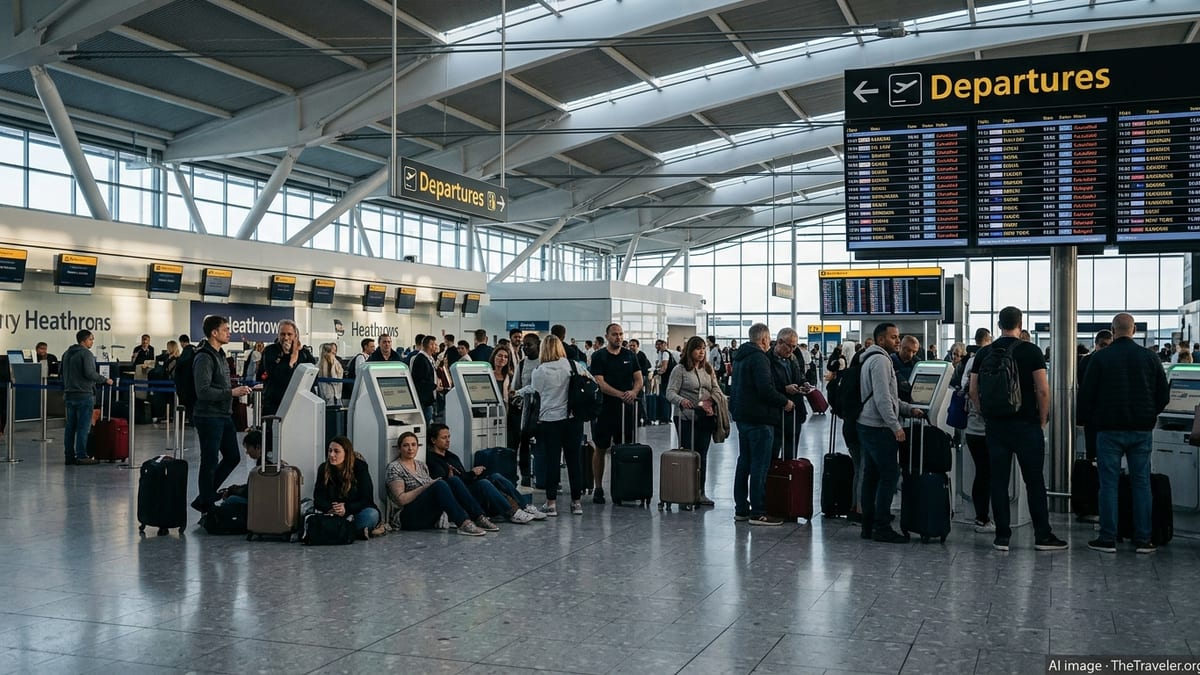
Ripple Effects From Middle East Tensions Hit UK Skies
Published coverage indicates that the latest wave of cancellations is closely tied to the continuing security crisis in the Gulf region and parts of the Middle East, which has led to repeated airspace closures, restricted flight corridors and schedule overhauls by global airlines. With UK airports serving as key gateways between Europe, North America and the Gulf, any tightening of airspace in or around Bahrain, Qatar, the United Arab Emirates and Israel is quickly felt on British departure boards.
Recent reporting on Iranian missile and drone strikes targeting Gulf states, including Bahrain and Qatar, has described widespread disruption to civil aviation, with airports such as Doha and Dubai periodically suspending or curbing commercial operations. When carriers adjust or cancel services in and out of those hubs, knock-on effects are often seen in London and other major European cities, where connecting flights are thinned out or pulled entirely for safety and operational reasons.
Airlines have been rerouting around sensitive airspace and in some cases have suspended certain destinations for days at a time, lengthening flight times, constraining aircraft and crew availability and complicating onward connections. As capacity tightens on remaining services, UK routes that rely heavily on Middle East or Eastern Mediterranean connections have become particularly vulnerable to cancellation at short notice.
The latest disruption comes on top of several weeks of irregular operations, leaving many passengers on UK–Gulf and UK–Levant corridors facing a mix of rolling cancellations, last-minute rebookings and substantial delays. Travel agents report that even when replacements are offered, seats on alternative departures can be extremely limited, especially for those needing to reach Asia, Australia or southern Africa via Dubai or Doha.
Gulf Air and El Al Among Carriers Adjusting UK Services
According to publicly available schedules and airline advisories, Gulf Air has been among the carriers most affected by the evolving situation in the Gulf, as its Bahrain hub lies close to areas of recent military activity. The airline’s links between Bahrain and the UK have already seen multiple cancellations this month, and further changes remain possible as Bahraini authorities periodically review airspace conditions and as regional traffic flows are rebalanced.
Passengers travelling between London and destinations in the wider region report that services that would normally route via Bahrain are being cancelled or re-accommodated via alternative hubs where possible. Some connecting itineraries from UK airports to South and Southeast Asia have been particularly exposed, since they depend on punctual operations through a single Gulf transfer point. Where cancellations occur close to departure, rebooking options can be limited if other Gulf carriers are themselves trimming schedules or operating under constrained capacity.
El Al’s UK operations have also been affected by the turbulent security environment. Routes linking London with Tel Aviv have been periodically suspended or curtailed by a range of international airlines in recent weeks, and Israel’s main gateway has experienced repeated periods of reduced traffic. As flights to and from Tel Aviv are adjusted, UK-based travellers heading onward to North America, the Balkans or the Caucasus through Israel may find their journeys disrupted, even if their original ticket was issued months earlier.
With both Gulf Air and El Al adapting their schedules in response to developments on the ground, passengers holding UK itineraries that depend on either Bahrain or Tel Aviv as transit points are being urged by airlines and booking platforms to monitor their reservations closely on the day of travel. Same-day cancellations are not uncommon when airspace alerts or operational constraints emerge suddenly.
European Carriers Cut and Consolidate Departures
The disruption is not confined to Middle Eastern airlines. Major European carriers including low-cost and network operators have been revising their links between the UK and destinations such as Berlin, Paris and Scandinavian cities as they reposition aircraft and crews away from affected routes. Publicly available flight data show that several departures to Berlin and Paris were withdrawn from UK schedules as airlines grappled with aircraft that are out of position due to earlier long-haul cancellations.
Ryanair, with its extensive short-haul network, has cancelled multiple rotations on intra-European routes touching the UK, including some services to Berlin and other continental cities, according to online flight trackers. While these flights are not directly overflying conflict zones, they can still be disrupted when aircraft arriving from the Middle East or North Africa miss their assigned slots, forcing airlines to reshuffle fleets and cut lower-yielding services.
SAS and other northern European carriers have similarly thinned their UK frequencies on select routes, including services linking London with Scandinavian capitals. Reports indicate that some of these cancellations stem from wider operational challenges, such as crew duty-time limitations following extended diversions, as well as the need to reroute long-haul services around restricted airspace, which uses up additional aircraft hours.
For UK travellers booked on European city breaks or business trips, this consolidation can translate into fewer departure options throughout the day and a higher likelihood that a single cancellation will wipe out a planned same-day return. As remaining flights fill up, last-minute one-way fares between the UK and nearby European hubs have risen, adding a financial sting to the logistical disruption.
Long-Haul Links to Dubai, Doha and New York Under Strain
Long-haul connections between the UK and major intercontinental hubs have borne the brunt of the disruption. Public information from airport departure boards and aviation data providers shows cancellations and extended delays on flights between the UK and Dubai, Doha and other Gulf cities in recent weeks, as airlines respond to airspace closures around key fuel and logistics hubs in the region.
Where services are still operating, many flights between the UK and the Gulf are taking longer routes to avoid sensitive airspace, increasing flight times and complicating onward connections to Asia and Australasia. This in turn has ripple effects on aircraft utilization, making it harder for carriers to maintain full schedules to secondary destinations or to operate additional frequencies between London and Gulf hubs.
Transatlantic services are not immune. As flights from Tel Aviv or Gulf hubs into London are cancelled or significantly delayed, some onward connections to North America, including routes to New York, have been disrupted. In several recent instances, UK–New York departures that rely on inbound aircraft from the Middle East or Mediterranean region have been cancelled, leading to crowds at rebooking desks and longer queues at customer service points in London.
While core non-stop UK–New York services operated by the largest transatlantic carriers continue in significant numbers, the loss of certain feeder flights and code-share connections has reduced flexibility for passengers travelling from secondary UK cities. Those relying on intricate multi-leg itineraries involving Gulf or Israeli carriers may face the toughest rebooking challenges when any one segment in the chain is pulled.
Travellers Urged to Build in Flexibility and Monitor Status
Travel experts and consumer watchdogs tracking the situation note that the pattern of cancellations points to a period of continuing volatility for UK travellers whose journeys intersect with the Middle East or Eastern Mediterranean. With more than 30 flights scrubbed in a single day and many more operating with heavy delays, the situation underscores how quickly regional security tensions can cascade into global aviation disruption.
Publicly available guidance from airlines and airports emphasises the importance of checking flight status regularly, both in the days before departure and again on the way to the airport. Many carriers are offering flexible rebooking policies or fee waivers for affected destinations, though the exact terms vary widely by ticket type, route and operating airline.
Analysts observing current schedules suggest that travellers planning new trips involving Bahrain, Dubai, Doha, Tel Aviv or nearby hubs should allow extra time for connections, avoid tight same-day transfers where possible and consider routing options that provide at least one backup flight on the same calendar day. Those heading to European cities such as Berlin or Paris on short trips may also wish to opt for early departures to preserve more recovery options in case their original flight is cancelled.
With the regional security environment still fluid and airspace restrictions subject to rapid change, further disruption to UK flight schedules remains possible in the coming days. For now, the experience of passengers caught up in the latest round of cancellations serves as a reminder that long-haul and connecting travel plans can be highly sensitive to events playing out hundreds or even thousands of miles from British shores.